

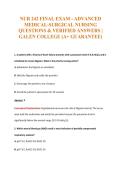
NUR 242 FINAL EXAM - ADVANCED
MEDICAL-SURGICAL NURSING
QUESTIONS & VERIFIED ANSWERS |
GALEN COLLEGE (A+ GUARANTEE)
1. A patient with a history of heart failure presents with a potassium level of 2.8 mEq/L and is
scheduled to receive Digoxin. What is the priority nursing action?
A. Administer the Digoxin as scheduled
B. Hold the Digoxin and notify the provider
C. Encourage the patient to eat a banana
D. Check the patient’s apical pulse for 30 seconds
Answer: B
Conceptual Explanation: Hypokalemia increases the risk of Digoxin toxicity. The nurse
must hold the medication and notify the provider because the potassium level is
significantly below the normal range (3.5-5.0 mEq/L).
2. Which arterial blood gas (ABG) result is most indicative of partially compensated
respiratory acidosis?
A. pH 7.32, PaCO2 50, HCO3 30
B. pH 7.42, PaCO2 38, HCO3 24
,C. pH 7.30, PaCO2 55, HCO3 22
D. pH 7.48, PaCO2 30, HCO3 22
Answer: A
Conceptual Explanation: In partially compensated respiratory acidosis, the pH is still
acidic (<7.35), the PaCO2 is high (>45), and the HCO3 has risen (>26) to attempt to buffer
the acidity.
3. A patient is admitted with suspected Acute Respiratory Distress Syndrome (ARDS). Which
clinical finding is a hallmark sign of this condition?
A. Increased lung compliance
B. Bradypnea
C. Refractory hypoxemia
D. Respiratory alkalosis in the late stage
Answer: C
Conceptual Explanation: Refractory hypoxemia—hypoxemia that does not respond to
increased levels of inspired oxygen—is a classic sign of ARDS due to significant shunting
and alveolar collapse.
4. The nurse is caring for a patient with a traumatic brain injury. Which assessment finding is
the earliest indicator of increased intracranial pressure (ICP)?
A. Cushing’s triad
, B. Fixed and dilated pupils
C. Decerebrate posturing
D. Change in level of consciousness (LOC)
Answer: D
Conceptual Explanation: A change in LOC is the most sensitive and earliest indicator of
increased ICP. Cushing’s triad and posturing are late signs indicating impending herniation.
5. A patient with Type 1 Diabetes is admitted with a blood glucose of 600 mg/dL, ketones in
the urine, and Kussmaul respirations. What is the priority intervention?
A. Administer IV bicarbonate
B. Administer IV regular insulin
C. Begin a potassium infusion
D. Start IV fluid resuscitation with 0.9% Normal Saline
Answer: D
Conceptual Explanation: In Diabetic Ketoacidosis (DKA), the immediate priority is fluid
resuscitation to restore circulatory volume and perfusion before correcting the glucose
with insulin.
6. A patient is 24 hours post-operative following a thyroidectomy. The patient reports
numbness and tingling around the mouth. Which action should the nurse take first?
A. Administer prescribed analgesics
MEDICAL-SURGICAL NURSING
QUESTIONS & VERIFIED ANSWERS |
GALEN COLLEGE (A+ GUARANTEE)
1. A patient with a history of heart failure presents with a potassium level of 2.8 mEq/L and is
scheduled to receive Digoxin. What is the priority nursing action?
A. Administer the Digoxin as scheduled
B. Hold the Digoxin and notify the provider
C. Encourage the patient to eat a banana
D. Check the patient’s apical pulse for 30 seconds
Answer: B
Conceptual Explanation: Hypokalemia increases the risk of Digoxin toxicity. The nurse
must hold the medication and notify the provider because the potassium level is
significantly below the normal range (3.5-5.0 mEq/L).
2. Which arterial blood gas (ABG) result is most indicative of partially compensated
respiratory acidosis?
A. pH 7.32, PaCO2 50, HCO3 30
B. pH 7.42, PaCO2 38, HCO3 24
,C. pH 7.30, PaCO2 55, HCO3 22
D. pH 7.48, PaCO2 30, HCO3 22
Answer: A
Conceptual Explanation: In partially compensated respiratory acidosis, the pH is still
acidic (<7.35), the PaCO2 is high (>45), and the HCO3 has risen (>26) to attempt to buffer
the acidity.
3. A patient is admitted with suspected Acute Respiratory Distress Syndrome (ARDS). Which
clinical finding is a hallmark sign of this condition?
A. Increased lung compliance
B. Bradypnea
C. Refractory hypoxemia
D. Respiratory alkalosis in the late stage
Answer: C
Conceptual Explanation: Refractory hypoxemia—hypoxemia that does not respond to
increased levels of inspired oxygen—is a classic sign of ARDS due to significant shunting
and alveolar collapse.
4. The nurse is caring for a patient with a traumatic brain injury. Which assessment finding is
the earliest indicator of increased intracranial pressure (ICP)?
A. Cushing’s triad
, B. Fixed and dilated pupils
C. Decerebrate posturing
D. Change in level of consciousness (LOC)
Answer: D
Conceptual Explanation: A change in LOC is the most sensitive and earliest indicator of
increased ICP. Cushing’s triad and posturing are late signs indicating impending herniation.
5. A patient with Type 1 Diabetes is admitted with a blood glucose of 600 mg/dL, ketones in
the urine, and Kussmaul respirations. What is the priority intervention?
A. Administer IV bicarbonate
B. Administer IV regular insulin
C. Begin a potassium infusion
D. Start IV fluid resuscitation with 0.9% Normal Saline
Answer: D
Conceptual Explanation: In Diabetic Ketoacidosis (DKA), the immediate priority is fluid
resuscitation to restore circulatory volume and perfusion before correcting the glucose
with insulin.
6. A patient is 24 hours post-operative following a thyroidectomy. The patient reports
numbness and tingling around the mouth. Which action should the nurse take first?
A. Administer prescribed analgesics


