[STUDY GUIDE] • HIGH-YIELD PRACTICE & REVIEW EDITION
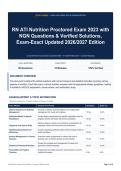
RN ATI Nutrition Proctored Exam 2023 with
NGN Questions & Verified Solutions,
Exam-Exact Updated 2026/2027 Edition
Comprehensive Examination Question Bank • In-Depth Rationales • Concept Mapping
TOTAL QUESTIONS EXAM TOPICS RATIONALES
96 Questions 10 Modules 100% Verified
DOCUMENT OVERVIEW
This document contains 96 verified questions with correct answers and detailed rationales covering various
aspects of nutrition. Each item pairs a clinical nutrition scenario with the appropriate dietary guidelines, making
it suitable for NCLEX preparation, course review, and certification study.
EXAM BLUEPRINT & TOPIC DISTRIBUTION
Systematic breakdown of subject domains and exam coverage.
Topic Module Scope & Core Focus Questions Share (%)
Dietary Guidelines for Diabetes Focuses on dietary recommendations and carbohydrate
Management management for clients with diabetes. 10 Qs 10.4%
Nutritional Needs in Special Covers dietary requirements for specific populations such as
Populations pregnant women and those with chronic conditions. 10 Qs 10.4%
Explores dietary practices and nutritional considerations for
Vegetarian and Special Diets vegetarian clients and those with food intolerances. 10 Qs 10.4%
Nutritional Assessment and Involves assessing nutritional status and the impact of diet on
Monitoring health conditions. 10 Qs 10.4%
Nutrient Management in Chronic Examines dietary adjustments for clients with chronic
Diseases diseases such as kidney disease and pancreatitis. 10 Qs 10.4%
Covers the principles and management of enteral and
Enteral and Parenteral Nutrition parenteral nutrition therapies. 10 Qs 10.4%
Food Safety and Hygiene Emphasizes food safety measures and practices to prevent
Practices foodborne illnesses. 9 Qs 9.4%
Confidential • Student Study Edition • Practice & Review Guide Page 1 of 44
,STUDENT STUDY & MASTERY EDITION PRACTICE & REVIEW GUIDE
Hydration and Fluid Focuses on the importance of hydration and fluid
Management management in nutritional care. 9 Qs 9.4%
Addresses dietary considerations for individuals with food
Food Allergies and Intolerances allergies and intolerances. 9 Qs 9.4%
Next-Generation NCLEX Applies NGN principles to nutrition education, assessment,
Principles and intervention. 9 Qs 9.4%
Total Exam Coverage 10 Integrated Topic Modules 96 Qs 100.0%
Confidential • Student Study Edition • Practice & Review Guide Page 2 of 44
,STUDENT STUDY & MASTERY EDITION PRACTICE & REVIEW GUIDE
TOPIC 1: DIETARY GUIDELINES FOR DIABETES MANAGEMENT
10 Questions • 10.4% of Exam • Focuses on dietary recommendations and carbohydrate management for clients with diabetes.
QUESTION 1
A nurse is reviewing dietary guidelines to include in the plan of care for a client who
has type 2 DM. Which of the following guidelines should the nurse include?
[A] Weight management
[B] Lipid profile
[C] Cultural needs
[D] Sleep patterns
Correct Answer: A, B, C, E.
Rationale: Dietary guidelines for clients with type 2 DM should address weight management, lipid profile, cultural needs,
and personal preferences.
QUESTION 2
To avoid hypoglycemia, the client should consume alcohol with a
[A] meal or immediately before a meal
[B] meal or immediately after a meal
[C] meal or on an empty stomach
[D] empty stomach or with a snack
Correct Answer: B.
Rationale: Consuming alcohol with a meal or immediately after a meal can help to minimize the risk of hypoglycemia in
clients with diabetes.
Confidential • Student Study Edition • Practice & Review Guide Page 3 of 44
, STUDENT STUDY & MASTERY EDITION PRACTICE & REVIEW GUIDE
QUESTION 3
Sucrose (table sugar) can be included in a diabetic diet as long as adequate insulin or
other agents are provided to cover the sugar intake.
[A] true
[B] false
[C] it depends on individual needs
[D] with a doctor's approval
Correct Answer: A.
Rationale: Sucrose (table sugar) can be included in a diabetic diet if adequate insulin or other agents are provided to cover
the sugar intake.
QUESTION 4
The nurse should instruct the diabetic client that their intake of carbohydrates should
be
[A] total daily caloric intake
[B] % of daily caloric intake
[C] limited to 45-60% of daily caloric intake
[D] avoided or limited
Correct Answer: C.
Rationale: The American Diabetes Association recommends that clients with diabetes limit their intake of carbohydrates to
45-60% of daily caloric intake.
Confidential • Student Study Edition • Practice & Review Guide Page 4 of 44
RN ATI Nutrition Proctored Exam 2023 with
NGN Questions & Verified Solutions,
Exam-Exact Updated 2026/2027 Edition
Comprehensive Examination Question Bank • In-Depth Rationales • Concept Mapping
TOTAL QUESTIONS EXAM TOPICS RATIONALES
96 Questions 10 Modules 100% Verified
DOCUMENT OVERVIEW
This document contains 96 verified questions with correct answers and detailed rationales covering various
aspects of nutrition. Each item pairs a clinical nutrition scenario with the appropriate dietary guidelines, making
it suitable for NCLEX preparation, course review, and certification study.
EXAM BLUEPRINT & TOPIC DISTRIBUTION
Systematic breakdown of subject domains and exam coverage.
Topic Module Scope & Core Focus Questions Share (%)
Dietary Guidelines for Diabetes Focuses on dietary recommendations and carbohydrate
Management management for clients with diabetes. 10 Qs 10.4%
Nutritional Needs in Special Covers dietary requirements for specific populations such as
Populations pregnant women and those with chronic conditions. 10 Qs 10.4%
Explores dietary practices and nutritional considerations for
Vegetarian and Special Diets vegetarian clients and those with food intolerances. 10 Qs 10.4%
Nutritional Assessment and Involves assessing nutritional status and the impact of diet on
Monitoring health conditions. 10 Qs 10.4%
Nutrient Management in Chronic Examines dietary adjustments for clients with chronic
Diseases diseases such as kidney disease and pancreatitis. 10 Qs 10.4%
Covers the principles and management of enteral and
Enteral and Parenteral Nutrition parenteral nutrition therapies. 10 Qs 10.4%
Food Safety and Hygiene Emphasizes food safety measures and practices to prevent
Practices foodborne illnesses. 9 Qs 9.4%
Confidential • Student Study Edition • Practice & Review Guide Page 1 of 44
,STUDENT STUDY & MASTERY EDITION PRACTICE & REVIEW GUIDE
Hydration and Fluid Focuses on the importance of hydration and fluid
Management management in nutritional care. 9 Qs 9.4%
Addresses dietary considerations for individuals with food
Food Allergies and Intolerances allergies and intolerances. 9 Qs 9.4%
Next-Generation NCLEX Applies NGN principles to nutrition education, assessment,
Principles and intervention. 9 Qs 9.4%
Total Exam Coverage 10 Integrated Topic Modules 96 Qs 100.0%
Confidential • Student Study Edition • Practice & Review Guide Page 2 of 44
,STUDENT STUDY & MASTERY EDITION PRACTICE & REVIEW GUIDE
TOPIC 1: DIETARY GUIDELINES FOR DIABETES MANAGEMENT
10 Questions • 10.4% of Exam • Focuses on dietary recommendations and carbohydrate management for clients with diabetes.
QUESTION 1
A nurse is reviewing dietary guidelines to include in the plan of care for a client who
has type 2 DM. Which of the following guidelines should the nurse include?
[A] Weight management
[B] Lipid profile
[C] Cultural needs
[D] Sleep patterns
Correct Answer: A, B, C, E.
Rationale: Dietary guidelines for clients with type 2 DM should address weight management, lipid profile, cultural needs,
and personal preferences.
QUESTION 2
To avoid hypoglycemia, the client should consume alcohol with a
[A] meal or immediately before a meal
[B] meal or immediately after a meal
[C] meal or on an empty stomach
[D] empty stomach or with a snack
Correct Answer: B.
Rationale: Consuming alcohol with a meal or immediately after a meal can help to minimize the risk of hypoglycemia in
clients with diabetes.
Confidential • Student Study Edition • Practice & Review Guide Page 3 of 44
, STUDENT STUDY & MASTERY EDITION PRACTICE & REVIEW GUIDE
QUESTION 3
Sucrose (table sugar) can be included in a diabetic diet as long as adequate insulin or
other agents are provided to cover the sugar intake.
[A] true
[B] false
[C] it depends on individual needs
[D] with a doctor's approval
Correct Answer: A.
Rationale: Sucrose (table sugar) can be included in a diabetic diet if adequate insulin or other agents are provided to cover
the sugar intake.
QUESTION 4
The nurse should instruct the diabetic client that their intake of carbohydrates should
be
[A] total daily caloric intake
[B] % of daily caloric intake
[C] limited to 45-60% of daily caloric intake
[D] avoided or limited
Correct Answer: C.
Rationale: The American Diabetes Association recommends that clients with diabetes limit their intake of carbohydrates to
45-60% of daily caloric intake.
Confidential • Student Study Edition • Practice & Review Guide Page 4 of 44