
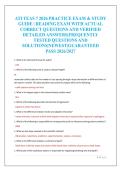
ATI TEAS 7 2026 PRACTICE EXAM & STUDY
GUIDE | READING EXAM WITH ACTUAL
CORRECT QUESTIONS AND VERIFIED
DETAILED ANSWERS|FREQUENTLY
TESTED QUESTIONS AND
SOLUTIONS|NEWEST|GUARANTEED
PASS 2026/2027
1. What is the chemical formula for water?
- H20
1. Which of the following units is used to indicate length?
M
researcher collects data on the number of cars passing through a busy intersection at different times of
the day for a month. This data would be most useful to analyze which of the following:
- traffic patterns during rush hour
1. What is the largest organ in the human body by surface area?
- Skin
1. Which of the following describes the function of ligaments?
- Ligaments attach two bones
1. What is the difference between innate and adaptive immunity?
- Innate immunity is present at birth while adaptive immunity is acquired after exposure to pathogens.
1. Which of the following is responsible for carrying amino acids to ribosomes during protein synthesis?
- tRNA
1. What are the steps involved in the scientific method?
- Observation, hypothesis, prediction, experimentation, analysis, conclusion.
1. What is the difference between a solid and a liquid?
- Solids have a definite shape and volume while liquids have a definite volume but no fixed shape.
1. Which part of the respiratory system is responsible for regulating breathing rate and depth?
1|Page
,- Diaphragm
1. What is the difference between a monosaccharide and a disaccharide?
- Monosaccharides are simple sugars that cannot be further broken down into simpler sugars while
disaccharides are composed of two simple sugars.
1. Which of the following is the process by which DNA is copied into RNA?
- Transcription
1. What is the role of calcium in muscle contraction?
- Calcium is released from the sarcoplasmic reticulum to initiate the sliding of actin and myosin
filaments.
1. What is the name of the dome-shaped muscle that plays a key role in breathing?
- Diaphragm
1. What is the role of the epididymis in sperm maturation?
- The epididymis stores and protects sperm cells until ejaculation.
1. Which of the following is a function of the respiratory system?
- Exchange of gases between the body and the environment
1. What is the difference between isotonic and isometric muscle contractions?
- Isotonic contractions produce movement while isometric contractions produce no movement.
Which of the following is a characteristic of innate immunity?
- It provides immediate, non-specific protection.
1. Which of the following is NOT one of the four primary tissue types found in the human body?
- Exocrine glandular
1. Which of the following is a type of genetic mutation that involves the insertion or deletion of one or
more nucleotides in a DNA sequence?
- Frameshift mutation
1. Which of the following describes the process of osmosis?
- Movement of water molecules from an area of high concentration to an area of low concentration
through a selectively permeable membrane.
1. Which of the following is a chemical property of a substance?
- Reactivity with acid
1. Which statement best defines the difference between a physical change and a chemical change?
2|Page
, - A physical change involves the rearrangement of atoms and molecules while a chemical change
involves the formation of new substances with different chemical properties.
1. During embryonic development, which of the following germ layers forms the nervous system?
- Ectoderm
1. What is the primary pigment responsible for photosynthesis in plants?
- Chlorophyll a
1. Which of the following is an example of an exothermic reaction?
- Burning wood
1. Which of the following statements is true regarding vaccines?
- Vaccines work by exposing the individual to a weakened or inactivated form of the pathogen
1. What is the function of ribosomes in a cell?
- To synthesize proteins in the cell
1. Which of the following is an example of a double-blind study?
- Both participants and researchers do not know which group participants are assigned to
1. What is the name of the hormone that regulates blood sugar levels in the human body?
- Insulin
1. What is the primary physiological function of erythrocytes in the human circulatory system?
- Transportation of oxygen to body tissues
1. What is the name of the joint that allows for rotation of the arm at the shoulder?
- Shoulder joint
1. What is the name of the valve that separates the left atrium and left ventricle in the heart?
- Mitral valve
1. What is the molecular geometry of a molecule of sulphur dioxide (SO2)?
- Bent
1. What is the name of the genetic disorder caused by the presence of an extra chromosome 21?
- Down syndrome
1. Which of the following types of RNA carries amino acids to the ribosome during protein synthesis?
- Transfer RNA
1. What are the five regions of the vertebral column, starting from the top and moving downwards?
3|Page
GUIDE | READING EXAM WITH ACTUAL
CORRECT QUESTIONS AND VERIFIED
DETAILED ANSWERS|FREQUENTLY
TESTED QUESTIONS AND
SOLUTIONS|NEWEST|GUARANTEED
PASS 2026/2027
1. What is the chemical formula for water?
- H20
1. Which of the following units is used to indicate length?
M
researcher collects data on the number of cars passing through a busy intersection at different times of
the day for a month. This data would be most useful to analyze which of the following:
- traffic patterns during rush hour
1. What is the largest organ in the human body by surface area?
- Skin
1. Which of the following describes the function of ligaments?
- Ligaments attach two bones
1. What is the difference between innate and adaptive immunity?
- Innate immunity is present at birth while adaptive immunity is acquired after exposure to pathogens.
1. Which of the following is responsible for carrying amino acids to ribosomes during protein synthesis?
- tRNA
1. What are the steps involved in the scientific method?
- Observation, hypothesis, prediction, experimentation, analysis, conclusion.
1. What is the difference between a solid and a liquid?
- Solids have a definite shape and volume while liquids have a definite volume but no fixed shape.
1. Which part of the respiratory system is responsible for regulating breathing rate and depth?
1|Page
,- Diaphragm
1. What is the difference between a monosaccharide and a disaccharide?
- Monosaccharides are simple sugars that cannot be further broken down into simpler sugars while
disaccharides are composed of two simple sugars.
1. Which of the following is the process by which DNA is copied into RNA?
- Transcription
1. What is the role of calcium in muscle contraction?
- Calcium is released from the sarcoplasmic reticulum to initiate the sliding of actin and myosin
filaments.
1. What is the name of the dome-shaped muscle that plays a key role in breathing?
- Diaphragm
1. What is the role of the epididymis in sperm maturation?
- The epididymis stores and protects sperm cells until ejaculation.
1. Which of the following is a function of the respiratory system?
- Exchange of gases between the body and the environment
1. What is the difference between isotonic and isometric muscle contractions?
- Isotonic contractions produce movement while isometric contractions produce no movement.
Which of the following is a characteristic of innate immunity?
- It provides immediate, non-specific protection.
1. Which of the following is NOT one of the four primary tissue types found in the human body?
- Exocrine glandular
1. Which of the following is a type of genetic mutation that involves the insertion or deletion of one or
more nucleotides in a DNA sequence?
- Frameshift mutation
1. Which of the following describes the process of osmosis?
- Movement of water molecules from an area of high concentration to an area of low concentration
through a selectively permeable membrane.
1. Which of the following is a chemical property of a substance?
- Reactivity with acid
1. Which statement best defines the difference between a physical change and a chemical change?
2|Page
, - A physical change involves the rearrangement of atoms and molecules while a chemical change
involves the formation of new substances with different chemical properties.
1. During embryonic development, which of the following germ layers forms the nervous system?
- Ectoderm
1. What is the primary pigment responsible for photosynthesis in plants?
- Chlorophyll a
1. Which of the following is an example of an exothermic reaction?
- Burning wood
1. Which of the following statements is true regarding vaccines?
- Vaccines work by exposing the individual to a weakened or inactivated form of the pathogen
1. What is the function of ribosomes in a cell?
- To synthesize proteins in the cell
1. Which of the following is an example of a double-blind study?
- Both participants and researchers do not know which group participants are assigned to
1. What is the name of the hormone that regulates blood sugar levels in the human body?
- Insulin
1. What is the primary physiological function of erythrocytes in the human circulatory system?
- Transportation of oxygen to body tissues
1. What is the name of the joint that allows for rotation of the arm at the shoulder?
- Shoulder joint
1. What is the name of the valve that separates the left atrium and left ventricle in the heart?
- Mitral valve
1. What is the molecular geometry of a molecule of sulphur dioxide (SO2)?
- Bent
1. What is the name of the genetic disorder caused by the presence of an extra chromosome 21?
- Down syndrome
1. Which of the following types of RNA carries amino acids to the ribosome during protein synthesis?
- Transfer RNA
1. What are the five regions of the vertebral column, starting from the top and moving downwards?
3|Page


