

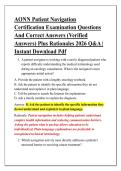
AONN Patient Navigation
Certification Examination Questions
And Correct Answers (Verified
Answers) Plus Rationales 2026 Q&A |
Instant Download Pdf
1. A patient navigator is working with a newly diagnosed patient who
reports difficulty understanding the medical terminology used
during an oncology consultation. What is the navigator's most
appropriate initial action?
A. Provide the patient with a lengthy oncology textbook.
B. Ask the patient to identify the specific information they do not
understand and explain it in plain language.
C. Tell the patient to search the Internet for explanations.
D. Ask a family member to explain the diagnosis.
Answer: B. Ask the patient to identify the specific information they
do not understand and explain it in plain language.
Rationale: Patient navigation includes helping patients understand
complex health information and reducing communication barriers.
Asking the patient what is unclear allows education to be
individualized. Plain-language explanations are preferable to
unexplained technical terminology.
2. Which navigation activity most directly addresses a patient's
structural barrier to receiving cancer treatment?
,A. Reviewing the patient's preferred learning style.
B. Providing emotional encouragement.
C. Discussing the patient's favorite foods.
D. Helping arrange transportation to scheduled treatment appointments.
Answer: D. Helping arrange transportation to scheduled treatment
appointments.
Rationale: Transportation is a structural access barrier that can
prevent patients from obtaining timely care. A navigator should assess
the barrier and connect the patient with appropriate transportation
resources when available.
3. During an initial navigation assessment, which information is most
important for identifying barriers to cancer care?
A. The patient's favorite television programs.
B. The patient's preferred hospital color scheme.
C. Social, financial, transportation, communication, cultural, and health-
literacy needs.
D. The patient's preferred brand of bottled water.
Answer: C. Social, financial, transportation, communication,
cultural, and health-literacy needs.
Rationale: A comprehensive navigation assessment identifies barriers
that may interfere with timely, equitable care. Social determinants,
financial concerns, transportation, communication needs, culture, and
health literacy can substantially affect access and outcomes.
4. A patient says, "I don't think I can afford this treatment." What
should the navigator do first?
A. Explore the patient's specific financial concerns and connect the
patient with appropriate financial-resource personnel.
,B. Tell the patient that cancer treatment is always expensive.
C. Recommend stopping treatment until the patient has more money.
D. Tell the patient to borrow money from relatives.
Answer: A. Explore the patient's specific financial concerns and
connect the patient with appropriate financial-resource personnel.
Rationale: Financial toxicity can create significant barriers to cancer
care. The navigator should clarify the concern and facilitate
appropriate resources such as financial counseling, insurance
assistance, medication assistance, transportation programs, or social
services rather than making assumptions or giving financial advice
outside the navigator's role.
5. Which statement best demonstrates effective teach-back?
A. "Do you understand everything I explained?"
B. "Can you tell me in your own words how you will take this
medication when you get home?"
C. "Please sign this form confirming that you understand."
D. "You should read this information again later."
Answer: B. "Can you tell me in your own words how you will take
this medication when you get home?"
Rationale: Teach-back verifies whether information was communicated
effectively. It asks the patient to explain the plan in their own words
rather than requiring a simple yes-or-no response.
6. A patient repeatedly misses oncology appointments because of
unreliable transportation. Which navigation intervention is most
appropriate?
A. Document the missed visits and take no further action.
B. Tell the patient that missed appointments may delay treatment.
, C. Assess transportation options and connect the patient with appropriate
transportation assistance.
D. Recommend that the patient relocate closer to the cancer center.
Answer: C. Assess transportation options and connect the patient
with appropriate transportation assistance.
Rationale: Repeated missed appointments may indicate an unresolved
access barrier. Navigation should address the underlying problem
through resource assessment and linkage rather than simply
documenting nonattendance.
7. Which principle is central to culturally responsive patient
navigation?
A. Treating every patient identically regardless of cultural context.
B. Assuming that patients from the same cultural group have identical
beliefs.
C. Avoiding discussion of cultural preferences.
D. Respecting the patient's beliefs and preferences while providing
equitable, evidence-informed care.
Answer: D. Respecting the patient's beliefs and preferences while
providing equitable, evidence-informed care.
Rationale: Cultural responsiveness involves understanding and
respecting individual beliefs, values, communication styles, and
preferences without stereotyping. The navigator supports patient-
centered care while maintaining appropriate clinical standards.
8. A patient with limited English proficiency needs to discuss a
complex treatment plan. Which resource is generally most
appropriate?
Certification Examination Questions
And Correct Answers (Verified
Answers) Plus Rationales 2026 Q&A |
Instant Download Pdf
1. A patient navigator is working with a newly diagnosed patient who
reports difficulty understanding the medical terminology used
during an oncology consultation. What is the navigator's most
appropriate initial action?
A. Provide the patient with a lengthy oncology textbook.
B. Ask the patient to identify the specific information they do not
understand and explain it in plain language.
C. Tell the patient to search the Internet for explanations.
D. Ask a family member to explain the diagnosis.
Answer: B. Ask the patient to identify the specific information they
do not understand and explain it in plain language.
Rationale: Patient navigation includes helping patients understand
complex health information and reducing communication barriers.
Asking the patient what is unclear allows education to be
individualized. Plain-language explanations are preferable to
unexplained technical terminology.
2. Which navigation activity most directly addresses a patient's
structural barrier to receiving cancer treatment?
,A. Reviewing the patient's preferred learning style.
B. Providing emotional encouragement.
C. Discussing the patient's favorite foods.
D. Helping arrange transportation to scheduled treatment appointments.
Answer: D. Helping arrange transportation to scheduled treatment
appointments.
Rationale: Transportation is a structural access barrier that can
prevent patients from obtaining timely care. A navigator should assess
the barrier and connect the patient with appropriate transportation
resources when available.
3. During an initial navigation assessment, which information is most
important for identifying barriers to cancer care?
A. The patient's favorite television programs.
B. The patient's preferred hospital color scheme.
C. Social, financial, transportation, communication, cultural, and health-
literacy needs.
D. The patient's preferred brand of bottled water.
Answer: C. Social, financial, transportation, communication,
cultural, and health-literacy needs.
Rationale: A comprehensive navigation assessment identifies barriers
that may interfere with timely, equitable care. Social determinants,
financial concerns, transportation, communication needs, culture, and
health literacy can substantially affect access and outcomes.
4. A patient says, "I don't think I can afford this treatment." What
should the navigator do first?
A. Explore the patient's specific financial concerns and connect the
patient with appropriate financial-resource personnel.
,B. Tell the patient that cancer treatment is always expensive.
C. Recommend stopping treatment until the patient has more money.
D. Tell the patient to borrow money from relatives.
Answer: A. Explore the patient's specific financial concerns and
connect the patient with appropriate financial-resource personnel.
Rationale: Financial toxicity can create significant barriers to cancer
care. The navigator should clarify the concern and facilitate
appropriate resources such as financial counseling, insurance
assistance, medication assistance, transportation programs, or social
services rather than making assumptions or giving financial advice
outside the navigator's role.
5. Which statement best demonstrates effective teach-back?
A. "Do you understand everything I explained?"
B. "Can you tell me in your own words how you will take this
medication when you get home?"
C. "Please sign this form confirming that you understand."
D. "You should read this information again later."
Answer: B. "Can you tell me in your own words how you will take
this medication when you get home?"
Rationale: Teach-back verifies whether information was communicated
effectively. It asks the patient to explain the plan in their own words
rather than requiring a simple yes-or-no response.
6. A patient repeatedly misses oncology appointments because of
unreliable transportation. Which navigation intervention is most
appropriate?
A. Document the missed visits and take no further action.
B. Tell the patient that missed appointments may delay treatment.
, C. Assess transportation options and connect the patient with appropriate
transportation assistance.
D. Recommend that the patient relocate closer to the cancer center.
Answer: C. Assess transportation options and connect the patient
with appropriate transportation assistance.
Rationale: Repeated missed appointments may indicate an unresolved
access barrier. Navigation should address the underlying problem
through resource assessment and linkage rather than simply
documenting nonattendance.
7. Which principle is central to culturally responsive patient
navigation?
A. Treating every patient identically regardless of cultural context.
B. Assuming that patients from the same cultural group have identical
beliefs.
C. Avoiding discussion of cultural preferences.
D. Respecting the patient's beliefs and preferences while providing
equitable, evidence-informed care.
Answer: D. Respecting the patient's beliefs and preferences while
providing equitable, evidence-informed care.
Rationale: Cultural responsiveness involves understanding and
respecting individual beliefs, values, communication styles, and
preferences without stereotyping. The navigator supports patient-
centered care while maintaining appropriate clinical standards.
8. A patient with limited English proficiency needs to discuss a
complex treatment plan. Which resource is generally most
appropriate?


