
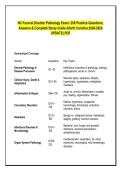
NC Funeral Director Pathology Exam: 250 Practice Questions,
Answers & Complete Study Guide (North Carolina 2026-2028
UPDATE) PDF
Summarized Coverage
Section Questions Key Topics
General Pathology & Definitions, branches of pathology, etiology,
Q1–30
Disease Processes pathogenesis, acute vs. chronic
Necrosis types, apoptosis, atrophy,
Cellular Injury, Death &
Q31–65 hypertrophy, hyperplasia, metaplasia,
Adaptation
dysplasia
Acute vs. chronic inflammation, exudate,
Inflammation & Repair Q66–100
pus, healing, regeneration, fibrosis
Edema, hyperemia, congestion,
Q101–
Circulatory Disorders hemorrhage, thrombosis, embolism,
130
infarction, shock
Q131– Benign vs. malignant tumors, metastasis,
Neoplasia
160 staging, grading, common cancers
Bacterial, viral, fungal, and parasitic
Infectious Diseases & Q161–
infections; universal precautions;
Microbiology 185
embalming risks
Cardiovascular, respiratory, GI, renal,
Q186–
Organ System Pathology endocrine, neurological, and hematologic
220
diseases
,Section Questions Key Topics
Rigor mortis, livor mortis, algor mortis,
Postmortem Changes & Q221–
decomposition, putrefaction, postmortem
Death 240
staining
Embalming & Funeral Q241– Embalming implications, disinfection,
Service Considerations 250 restorative art, occupational safety
Section 1: General Pathology & Disease Processes (Qs 1–30)
Q1. Pathology is BEST defined as the study of:
A) The structure of the human body
B) The function of body tissues
C) The structure and function of tissues as a result of disease
D) The chemical processes occurring within living organisms
Answer: C
Pathology is the study of the structure and function of the tissues of the body as a result of
disease. Anatomy studies structure, physiology studies function, and biochemistry studies
chemical processes.
Q2. Which branch of pathology deals with the body as a whole, without regard to any
particular organ or system?
A) Special pathology
B) Clinical pathology
C) General pathology
D) Surgical pathology
,Answer: C
General pathology deals with the body as a whole and covers basic disease processes
such as inflammation, necrosis, and repair.
Q3. The division of pathology that deals with individual body organs or systems is called:
A) General pathology
B) Special pathology
C) Clinical pathology
D) Forensic pathology
Answer: B
Special pathology focuses on diseases affecting specific organs or systems.
Q4. Which branch of pathology deals with laboratory tests on body fluids and tissues used
in making a diagnosis?
A) General pathology
B) Special pathology
C) Clinical pathology
D) Surgical pathology
Answer: C
Clinical pathology involves laboratory analysis of body fluids and tissues for diagnostic
purposes.
Q5. The division of pathology that deals with tissues removed from a patient during surgery
is called:
A) General pathology
B) Clinical pathology
, C) Surgical pathology
D) Forensic pathology
Answer: C
Surgical pathology involves examination of tissues removed during surgery.
Q6. The removal and study of tissue from a dead patient is called:
A) Biopsy
B) Autopsy
C) Necropsy
D) Cytology
Answer: B
An autopsy is the removal and study of tissue from a dead patient.
Q7. Conditions that make a body more susceptible to disease without actually causing it are
called:
A) Predisposing conditions
B) Causative agents
C) Pathognomonic signs
D) Prodromal symptoms
Answer: A
Predisposing conditions increase susceptibility to disease but do not directly cause it.
Q8. The study of the causes of disease is called:
A) Pathogenesis
B) Etiology
C) Epidemiology
D) Nosology
Answers & Complete Study Guide (North Carolina 2026-2028
UPDATE) PDF
Summarized Coverage
Section Questions Key Topics
General Pathology & Definitions, branches of pathology, etiology,
Q1–30
Disease Processes pathogenesis, acute vs. chronic
Necrosis types, apoptosis, atrophy,
Cellular Injury, Death &
Q31–65 hypertrophy, hyperplasia, metaplasia,
Adaptation
dysplasia
Acute vs. chronic inflammation, exudate,
Inflammation & Repair Q66–100
pus, healing, regeneration, fibrosis
Edema, hyperemia, congestion,
Q101–
Circulatory Disorders hemorrhage, thrombosis, embolism,
130
infarction, shock
Q131– Benign vs. malignant tumors, metastasis,
Neoplasia
160 staging, grading, common cancers
Bacterial, viral, fungal, and parasitic
Infectious Diseases & Q161–
infections; universal precautions;
Microbiology 185
embalming risks
Cardiovascular, respiratory, GI, renal,
Q186–
Organ System Pathology endocrine, neurological, and hematologic
220
diseases
,Section Questions Key Topics
Rigor mortis, livor mortis, algor mortis,
Postmortem Changes & Q221–
decomposition, putrefaction, postmortem
Death 240
staining
Embalming & Funeral Q241– Embalming implications, disinfection,
Service Considerations 250 restorative art, occupational safety
Section 1: General Pathology & Disease Processes (Qs 1–30)
Q1. Pathology is BEST defined as the study of:
A) The structure of the human body
B) The function of body tissues
C) The structure and function of tissues as a result of disease
D) The chemical processes occurring within living organisms
Answer: C
Pathology is the study of the structure and function of the tissues of the body as a result of
disease. Anatomy studies structure, physiology studies function, and biochemistry studies
chemical processes.
Q2. Which branch of pathology deals with the body as a whole, without regard to any
particular organ or system?
A) Special pathology
B) Clinical pathology
C) General pathology
D) Surgical pathology
,Answer: C
General pathology deals with the body as a whole and covers basic disease processes
such as inflammation, necrosis, and repair.
Q3. The division of pathology that deals with individual body organs or systems is called:
A) General pathology
B) Special pathology
C) Clinical pathology
D) Forensic pathology
Answer: B
Special pathology focuses on diseases affecting specific organs or systems.
Q4. Which branch of pathology deals with laboratory tests on body fluids and tissues used
in making a diagnosis?
A) General pathology
B) Special pathology
C) Clinical pathology
D) Surgical pathology
Answer: C
Clinical pathology involves laboratory analysis of body fluids and tissues for diagnostic
purposes.
Q5. The division of pathology that deals with tissues removed from a patient during surgery
is called:
A) General pathology
B) Clinical pathology
, C) Surgical pathology
D) Forensic pathology
Answer: C
Surgical pathology involves examination of tissues removed during surgery.
Q6. The removal and study of tissue from a dead patient is called:
A) Biopsy
B) Autopsy
C) Necropsy
D) Cytology
Answer: B
An autopsy is the removal and study of tissue from a dead patient.
Q7. Conditions that make a body more susceptible to disease without actually causing it are
called:
A) Predisposing conditions
B) Causative agents
C) Pathognomonic signs
D) Prodromal symptoms
Answer: A
Predisposing conditions increase susceptibility to disease but do not directly cause it.
Q8. The study of the causes of disease is called:
A) Pathogenesis
B) Etiology
C) Epidemiology
D) Nosology


