
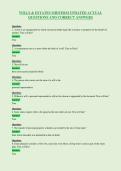
WILLS & ESTATES MIDTERM UPDATED ACTUAL
QUESTIONS AND CORRECT ANSWERS
Question:
1. A trust is an arrangement by which one person holds legal title to money or property for the benefit of
another. True or False?
Answer:
True
Question:
2. A testamentary trust is a trust within the body of a will. True or False?
Answer:
True
Question:
3. Next of kin are
Answer:
those most nearly related by blood
Question:
4. The person who carries out the term of a will is the
Answer:
personal representative
Question:
5. Without a will, a personal representative will not be chosen or appointed by the deceased. True or False?
Answer:
True
Question:
6. Some states require wills to be signed at the end; others do not. True or False?
Answer:
True
Question:
7. The transfer of personal property at death is governed by the law of what state?
Answer:
State where decedent was domiciled at date of death.
Question:
8. Estate planners consider a will to be a necessity even when a living trust is used as part of the estate
plan. True or False?
Answer:
True
, Question:
9. The person who is appointed to care for and manage the property of a minor is
Answer:
a guardian
Question:
10. When someone dies without a will, his real property passes according to the law of the state in which
the
Answer:
property is located
Question:
11. Trusts may be created so that they come into effect when one is alive or after one passes away. True or
False?
Answer:
True
Question:
12. A policy that provides both protection and a fund available during the insured's lifetime if the insured
survives to the end of the policy period is a(n)
Answer:
endowment policy
Question:
13. The tools available to the estate planner are limited to wills, trusts, gifts, insurance, and powers of
appointment. True or False?
Answer:
False
Question:
14. Term insurance is used for a particular time period, such as 1, 5, or 10 years. True or False?
Answer:
True
Question:
15. Living trusts may be
Answer:
Irrevocable, charitable, and revocable.
Question:
16. Under the split-gift provision of the Internal Revenue Code, two parents of three children can give to
the children tax free each year as much as
Answer:
$78,000
QUESTIONS AND CORRECT ANSWERS
Question:
1. A trust is an arrangement by which one person holds legal title to money or property for the benefit of
another. True or False?
Answer:
True
Question:
2. A testamentary trust is a trust within the body of a will. True or False?
Answer:
True
Question:
3. Next of kin are
Answer:
those most nearly related by blood
Question:
4. The person who carries out the term of a will is the
Answer:
personal representative
Question:
5. Without a will, a personal representative will not be chosen or appointed by the deceased. True or False?
Answer:
True
Question:
6. Some states require wills to be signed at the end; others do not. True or False?
Answer:
True
Question:
7. The transfer of personal property at death is governed by the law of what state?
Answer:
State where decedent was domiciled at date of death.
Question:
8. Estate planners consider a will to be a necessity even when a living trust is used as part of the estate
plan. True or False?
Answer:
True
, Question:
9. The person who is appointed to care for and manage the property of a minor is
Answer:
a guardian
Question:
10. When someone dies without a will, his real property passes according to the law of the state in which
the
Answer:
property is located
Question:
11. Trusts may be created so that they come into effect when one is alive or after one passes away. True or
False?
Answer:
True
Question:
12. A policy that provides both protection and a fund available during the insured's lifetime if the insured
survives to the end of the policy period is a(n)
Answer:
endowment policy
Question:
13. The tools available to the estate planner are limited to wills, trusts, gifts, insurance, and powers of
appointment. True or False?
Answer:
False
Question:
14. Term insurance is used for a particular time period, such as 1, 5, or 10 years. True or False?
Answer:
True
Question:
15. Living trusts may be
Answer:
Irrevocable, charitable, and revocable.
Question:
16. Under the split-gift provision of the Internal Revenue Code, two parents of three children can give to
the children tax free each year as much as
Answer:
$78,000


