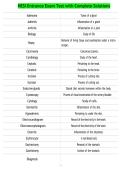
HESI Entrance Exam Test with Complete Solutions
Adenoma Tumor of a gland
Adenitis Inflammation of a gland
Arthritis Inflammation of a joint
Biology Study of life
Removal of living tissue and examination under a micro-
Biopsy
scope.
Carcinoma Cancerous tumor.
Cardiology Study of the heart.
Cephalic Pertaining to the head.
Cerebral Pertaining to the brain.
Incision Process of cutting into.
Excision Process of cutting out.
Endocrine glands Glands that secrete hormones within the body.
Cystoscopy Process of visual examination of the urinary bladder.
Cytology Study of cells.
Dermatitis Inflammation of the skin.
Hypodermic Pertaining to under the skin.
Electrocardiogram Record of the electricity in the heart.
Electroencephalogram Record of the electricity of the brain.
Enteritis Inflammation of the intestines.
Erythrocyte A red blood cell.
Gastrectomy Removal of the stomach.
Gastrotomy Incision of the stomach.
Diagnosis
,HESI Entrance Exam Test with Complete Solutions
State of complete knowledge; information gathered about
a patient's illness.
Prognosis Prediction about the outcome of an illness.
Gynecology Study of females and female diseases.
Hematology Study of blood.
Hematoma Collection (mass) of blood.
Hepatitis Inflammation of the liver.
Iatrogenic Pertaining to being produced by treatment.
Leukocyte White blood cell
Nephritis Inflammation of the kidney.
Nephrology Study of the kidney.
Neurology Study of the nerves.
Oncology Study of tumors.
Oncologist Specialist in the study of tumors.
Ophthalmoscope Instrument for visual examination of the eye.
Osteitis Inflammation of the bone.
Osteoarthritis Inflammation of bone and joints.
Pathology Study of disease.
One who studies diseases performs autopsies and exam-
Pathologist
ines biopsy samples.
Pediatric Pertaining to treatment of children.
Psychology Study of the mind.
Psychiatrist Specialist in the treatment of the mind.
Radiology Study of x-rays.
Renal Pertaining to the kidney.
, Rhinitis Inflammation of the nose.
Tumor flesh tissue (cancerous tumor of connective tissues,
Sarcoma
such as bone, muscle, cartilage, fat).
Resection Process of cutting out; removal
Thrombocyte A clotting cell.
Urology Study of the urinary tract.
Cardiac Pertaining to the heart.
Neural Pertaining to the nerves.
Arthralgia Pain of a joint.
Nuphrectomy Removal (resection) of a kidney.
Blood condition of white cells; malignant (cancerous) con-
Leukemia
dition.
Carcinogenic Pertaining to producing cancer.
Pathogenic Pertaining to producing disease.
Gastric Pertaining to the stomach.
Neurological Pertaining to the study of nerves.
Cystitis Inflammation of the urinary bladder.
Endocrinology Study of the endocrine glands.
Hepatoma Tumor (malignant) of the liver.
Nuphrosis Abnormal condition of the kidney.
Abnormal condition (Slight increase) of normal white
Leukocytosis
blood cells.
Enteropathy Disease of the intestines.
Adenopathy Disease of glands.
Endoscope Instrument to visually examine within (the body).
Adenoma Tumor of a gland
Adenitis Inflammation of a gland
Arthritis Inflammation of a joint
Biology Study of life
Removal of living tissue and examination under a micro-
Biopsy
scope.
Carcinoma Cancerous tumor.
Cardiology Study of the heart.
Cephalic Pertaining to the head.
Cerebral Pertaining to the brain.
Incision Process of cutting into.
Excision Process of cutting out.
Endocrine glands Glands that secrete hormones within the body.
Cystoscopy Process of visual examination of the urinary bladder.
Cytology Study of cells.
Dermatitis Inflammation of the skin.
Hypodermic Pertaining to under the skin.
Electrocardiogram Record of the electricity in the heart.
Electroencephalogram Record of the electricity of the brain.
Enteritis Inflammation of the intestines.
Erythrocyte A red blood cell.
Gastrectomy Removal of the stomach.
Gastrotomy Incision of the stomach.
Diagnosis
,HESI Entrance Exam Test with Complete Solutions
State of complete knowledge; information gathered about
a patient's illness.
Prognosis Prediction about the outcome of an illness.
Gynecology Study of females and female diseases.
Hematology Study of blood.
Hematoma Collection (mass) of blood.
Hepatitis Inflammation of the liver.
Iatrogenic Pertaining to being produced by treatment.
Leukocyte White blood cell
Nephritis Inflammation of the kidney.
Nephrology Study of the kidney.
Neurology Study of the nerves.
Oncology Study of tumors.
Oncologist Specialist in the study of tumors.
Ophthalmoscope Instrument for visual examination of the eye.
Osteitis Inflammation of the bone.
Osteoarthritis Inflammation of bone and joints.
Pathology Study of disease.
One who studies diseases performs autopsies and exam-
Pathologist
ines biopsy samples.
Pediatric Pertaining to treatment of children.
Psychology Study of the mind.
Psychiatrist Specialist in the treatment of the mind.
Radiology Study of x-rays.
Renal Pertaining to the kidney.
, Rhinitis Inflammation of the nose.
Tumor flesh tissue (cancerous tumor of connective tissues,
Sarcoma
such as bone, muscle, cartilage, fat).
Resection Process of cutting out; removal
Thrombocyte A clotting cell.
Urology Study of the urinary tract.
Cardiac Pertaining to the heart.
Neural Pertaining to the nerves.
Arthralgia Pain of a joint.
Nuphrectomy Removal (resection) of a kidney.
Blood condition of white cells; malignant (cancerous) con-
Leukemia
dition.
Carcinogenic Pertaining to producing cancer.
Pathogenic Pertaining to producing disease.
Gastric Pertaining to the stomach.
Neurological Pertaining to the study of nerves.
Cystitis Inflammation of the urinary bladder.
Endocrinology Study of the endocrine glands.
Hepatoma Tumor (malignant) of the liver.
Nuphrosis Abnormal condition of the kidney.
Abnormal condition (Slight increase) of normal white
Leukocytosis
blood cells.
Enteropathy Disease of the intestines.
Adenopathy Disease of glands.
Endoscope Instrument to visually examine within (the body).