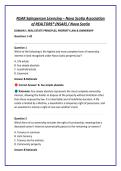
NSAR Salesperson Licensing – Nova Scotia Association
of REALTORS® (NSAR) / Nova Scotia
DOMAIN 1: REAL ESTATE PRINCIPLES, PROPERTY LAW & OWNERSHIP
Questions 1–20
Question 1
Which of the following is the highest and most complete form of ownership
interest in land recognized under Nova Scotia property law?
A. Life estate
B. Fee simple absolute
C. Leasehold estate
D. Easement
Answer & Rationale
Correct Answer: B. Fee simple absolute
Rationale: Fee simple absolute represents the most complete ownership
interest, allowing the holder to dispose of the property without limitation other
than those imposed by law. It is inheritable and of indefinite duration. A life
estate is limited by a lifetime, a leasehold is a temporary right of possession, and
an easement is merely a right of use over another's land.
Question 2
Which form of co-ownership includes the right of survivorship, meaning that a
deceased owner's interest automatically passes to the remaining co-owners?
A. Tenancy in common
B. Joint tenancy
C. Tenancy by the entirety
D. Community property
Answer & Rationale
, Correct Answer: B. Joint tenancy
Rationale: Joint tenancy includes the four unities (time, title, interest,
possession) and the right of survivorship. Upon death, the deceased's interest
passes to the surviving joint tenant(s) outside of the deceased's estate. Tenancy in
common has no right of survivorship.
Question 3
What is the key legal distinction between a freehold estate and a leasehold
estate?
A. A freehold estate is always longer than a leasehold estate
B. A freehold estate is of indefinite duration while a leasehold is for a fixed or
determinable period
C. Leasehold estates convey fee simple title
D. There is no legal distinction in Nova Scotia
Answer & Rationale
Correct Answer: B. A freehold estate is of indefinite duration while a
leasehold is for a fixed or determinable period
Rationale: Freehold estates (fee simple or life estate) have potentially infinite
or life-measured duration. Leasehold estates are for a fixed or determinable
period (e.g., term of years, periodic tenancy).
Question 4
An easement appurtenant benefits which party?
A. The dominant tenement
B. The servient tenement only
C. The general public
D. The municipality exclusively
Answer & Rationale
Correct Answer: A. The dominant tenement
, Rationale: An easement appurtenant runs with the land and benefits the
dominant tenement (the property that receives the benefit of the easement). The
servient tenement is the property that bears the burden of the easement.
Question 5
Which of the following correctly describes a "caveat" in the context of Nova Scotia
real estate?
A. A warning to buyers about property defects
B. A notice registered against a property title indicating a claim or interest
C. A type of mortgage agreement
D. A formal appraisal document
Answer & Rationale
Correct Answer: B. A notice registered against a property title indicating a
claim or interest
Rationale: A caveat is a legal notice registered on a property's title that alerts
potential purchasers or lenders that a third party claims an interest in the
property. It effectively "caves" or stops certain transactions until the claim is
resolved.
Question 6
Which of the following is NOT one of the four unities required for a joint tenancy?
A. Unity of time
B. Unity of title
C. Unity of possession
D. Unity of value
Answer & Rationale
Correct Answer: D. Unity of value
Rationale: The four unities required for joint tenancy are: unity of time (all
interests acquired at the same time), unity of title (all acquired by the same
, document), unity of interest (all have equal interests), and unity of possession (all
have equal rights to possess the whole). Unity of value is not a requirement.
Question 7
A property owner grants a neighbor the right to cross their land to access a public
road. This is an example of:
A. A license
B. An easement
C. A profit à prendre
D. A restrictive covenant
Answer & Rationale
Correct Answer: B. An easement
Rationale: An easement is a non-possessory right to use another person's
land for a specific purpose. A right-of-way to cross another's property to access a
road is a classic example of an easement appurtenant.
Question 8
In Nova Scotia, what is the primary system used for land registration?
A. The Registry System only
B. The Land Titles System only
C. Both the Registry System and the Land Titles System
D. The Torrens System exclusively
Answer & Rationale
Correct Answer: C. Both the Registry System and the Land Titles System
Rationale: Nova Scotia operates a dual system of land registration. The older
Registry System is based on the registration of deeds, while the Land Titles
System (based on the Torrens system) provides a more conclusive state-
guaranteed title. Properties may be under either system.
of REALTORS® (NSAR) / Nova Scotia
DOMAIN 1: REAL ESTATE PRINCIPLES, PROPERTY LAW & OWNERSHIP
Questions 1–20
Question 1
Which of the following is the highest and most complete form of ownership
interest in land recognized under Nova Scotia property law?
A. Life estate
B. Fee simple absolute
C. Leasehold estate
D. Easement
Answer & Rationale
Correct Answer: B. Fee simple absolute
Rationale: Fee simple absolute represents the most complete ownership
interest, allowing the holder to dispose of the property without limitation other
than those imposed by law. It is inheritable and of indefinite duration. A life
estate is limited by a lifetime, a leasehold is a temporary right of possession, and
an easement is merely a right of use over another's land.
Question 2
Which form of co-ownership includes the right of survivorship, meaning that a
deceased owner's interest automatically passes to the remaining co-owners?
A. Tenancy in common
B. Joint tenancy
C. Tenancy by the entirety
D. Community property
Answer & Rationale
, Correct Answer: B. Joint tenancy
Rationale: Joint tenancy includes the four unities (time, title, interest,
possession) and the right of survivorship. Upon death, the deceased's interest
passes to the surviving joint tenant(s) outside of the deceased's estate. Tenancy in
common has no right of survivorship.
Question 3
What is the key legal distinction between a freehold estate and a leasehold
estate?
A. A freehold estate is always longer than a leasehold estate
B. A freehold estate is of indefinite duration while a leasehold is for a fixed or
determinable period
C. Leasehold estates convey fee simple title
D. There is no legal distinction in Nova Scotia
Answer & Rationale
Correct Answer: B. A freehold estate is of indefinite duration while a
leasehold is for a fixed or determinable period
Rationale: Freehold estates (fee simple or life estate) have potentially infinite
or life-measured duration. Leasehold estates are for a fixed or determinable
period (e.g., term of years, periodic tenancy).
Question 4
An easement appurtenant benefits which party?
A. The dominant tenement
B. The servient tenement only
C. The general public
D. The municipality exclusively
Answer & Rationale
Correct Answer: A. The dominant tenement
, Rationale: An easement appurtenant runs with the land and benefits the
dominant tenement (the property that receives the benefit of the easement). The
servient tenement is the property that bears the burden of the easement.
Question 5
Which of the following correctly describes a "caveat" in the context of Nova Scotia
real estate?
A. A warning to buyers about property defects
B. A notice registered against a property title indicating a claim or interest
C. A type of mortgage agreement
D. A formal appraisal document
Answer & Rationale
Correct Answer: B. A notice registered against a property title indicating a
claim or interest
Rationale: A caveat is a legal notice registered on a property's title that alerts
potential purchasers or lenders that a third party claims an interest in the
property. It effectively "caves" or stops certain transactions until the claim is
resolved.
Question 6
Which of the following is NOT one of the four unities required for a joint tenancy?
A. Unity of time
B. Unity of title
C. Unity of possession
D. Unity of value
Answer & Rationale
Correct Answer: D. Unity of value
Rationale: The four unities required for joint tenancy are: unity of time (all
interests acquired at the same time), unity of title (all acquired by the same
, document), unity of interest (all have equal interests), and unity of possession (all
have equal rights to possess the whole). Unity of value is not a requirement.
Question 7
A property owner grants a neighbor the right to cross their land to access a public
road. This is an example of:
A. A license
B. An easement
C. A profit à prendre
D. A restrictive covenant
Answer & Rationale
Correct Answer: B. An easement
Rationale: An easement is a non-possessory right to use another person's
land for a specific purpose. A right-of-way to cross another's property to access a
road is a classic example of an easement appurtenant.
Question 8
In Nova Scotia, what is the primary system used for land registration?
A. The Registry System only
B. The Land Titles System only
C. Both the Registry System and the Land Titles System
D. The Torrens System exclusively
Answer & Rationale
Correct Answer: C. Both the Registry System and the Land Titles System
Rationale: Nova Scotia operates a dual system of land registration. The older
Registry System is based on the registration of deeds, while the Land Titles
System (based on the Torrens system) provides a more conclusive state-
guaranteed title. Properties may be under either system.