
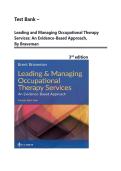
Test Bank –
Leading and Managing Occupational Therapy
Services: An Evidence-Based Approach,
By Braveman
3rd edition
,Table of contents
SECTION I: Introduction to Leadership and Evidence-Based Management
CHAPTER 1: Leadership: The Art, Science, and Evidence
CHAPTER 2: Engaging in Evidence-Based Management
SECTION II: Leading and Managing in Context
CHAPTER 3: Understanding Healthcare Systems and Practice Contexts
CHAPTER 4: Understanding and Working Within Organizations
CHAPTER 5: Communicating Effectively in Complex Environments
CHAPTER 6: Roles and Functions of Managers: Planning, Organizing and Staffing, Directing, and
Controlling
CHAPTER 7: Roles and Functions of Supervisors
CHAPTER 8: Occupational Therapist/Occupational Therapy Assistant Partnership: Supervision and
CHAPTER 9: Professional Teams, Interprofessional Education, and Collaborative Practice
SECTION III: Managerial Skills, Responsibilities, and Competencies
CHAPTER 10: Strategic Planning
CHAPTER 11: Managing Change and Solving Problems
CHAPTER 12: Financial Planning, Management, and Budgeting
CHAPTER 13: Surviving and Thriving in High-Demand Settings
CHAPTER 14: Assessing and Promoting Clinical and Managerial Competency
CHAPTER 15: Continuous Quality Improvement
CHAPTER 16: Marketing Occupational Therapy Services
CHAPTER 17: Developing Evidence-Based Occupational Therapy Programming
SECTION IV: Leading Evidence-Based Practice and Professional Considerations
CHAPTER 18: Introducing Others to Evidence-Based Practice
CHAPTER 19: Turning Theory Into Practice: Managerial Strategies
CHAPTER 20: Responsible Participation in a Profession: Fostering Professionalism and Leading
,TEST BANK
Leading and Managing Occupational Therapy Services:
An Evidence-Based Approach, 3rd Edition
Braveman
SECTION I: Introduction to Leadership and Evidence-Based Management
CHAPTER 1: Leadership: The Art, Science, and Evidence
Multiple Choice
1. Which of the following best describes the "art" of leadership in occupational therapy management?
A. Strictly following organizational policies and procedures
B. Applying intuitive, interpersonal, and creative skills to guide others
C. Relying exclusively on quantitative data to make decisions
D. Implementing standardized protocols without deviation
Answer: B
Rationale: The art of leadership involves the use of intuition, creativity, emotional intelligence, and
interpersonal skills to inspire and guide others, distinguishing it from the more systematic "science" of
leadership.
2. Transformational leadership is best characterized by which of the following?
A. Maintaining the status quo through transactional exchanges
B. Inspiring followers to exceed expectations through a shared vision
C. Delegating all decision-making to subordinates
D. Focusing solely on financial outcomes
Answer: B
Rationale: Transformational leaders motivate and inspire followers to achieve extraordinary outcomes
by articulating a compelling vision and fostering intrinsic motivation.
3. Which leadership style emphasizes a hands-off approach, allowing team members significant
autonomy?
A. Autocratic
B. Democratic
, C. Laissez-faire
D. Transactional
Answer: C
Rationale: Laissez-faire leadership is characterized by minimal direct supervision and a high degree of
autonomy granted to team members.
4. Evidence-based leadership in occupational therapy integrates which of the following?
A. Personal opinion, tradition, and anecdote
B. Best available research evidence, clinical expertise, and stakeholder values
C. Only randomized controlled trials
D. Managerial intuition alone
Answer: B
Rationale: Evidence-based leadership mirrors evidence-based practice by integrating the best available
research, professional expertise, and the values and preferences of stakeholders.
5. Servant leadership is primarily focused on:
A. Maximizing organizational profits
B. Serving the needs of followers and the community first
C. Establishing rigid hierarchies
D. Competing aggressively with other departments
Answer: B
Rationale: Servant leadership prioritizes the growth, well-being, and empowerment of followers and the
communities they serve.
True/False
6. Leadership and management are synonymous terms that can be used interchangeably.
Answer: False
Rationale: While overlapping, leadership focuses on vision, influence, and change, whereas management
emphasizes planning, organizing, and controlling resources.
7. Situational leadership theory suggests that effective leaders adapt their style based on the maturity
and competence of their followers.
Answer: True
Rationale: Situational leadership, developed by Hersey and Blanchard, proposes that leaders should
adjust their approach based on the developmental level of those they lead.
Short Answer
Leading and Managing Occupational Therapy
Services: An Evidence-Based Approach,
By Braveman
3rd edition
,Table of contents
SECTION I: Introduction to Leadership and Evidence-Based Management
CHAPTER 1: Leadership: The Art, Science, and Evidence
CHAPTER 2: Engaging in Evidence-Based Management
SECTION II: Leading and Managing in Context
CHAPTER 3: Understanding Healthcare Systems and Practice Contexts
CHAPTER 4: Understanding and Working Within Organizations
CHAPTER 5: Communicating Effectively in Complex Environments
CHAPTER 6: Roles and Functions of Managers: Planning, Organizing and Staffing, Directing, and
Controlling
CHAPTER 7: Roles and Functions of Supervisors
CHAPTER 8: Occupational Therapist/Occupational Therapy Assistant Partnership: Supervision and
CHAPTER 9: Professional Teams, Interprofessional Education, and Collaborative Practice
SECTION III: Managerial Skills, Responsibilities, and Competencies
CHAPTER 10: Strategic Planning
CHAPTER 11: Managing Change and Solving Problems
CHAPTER 12: Financial Planning, Management, and Budgeting
CHAPTER 13: Surviving and Thriving in High-Demand Settings
CHAPTER 14: Assessing and Promoting Clinical and Managerial Competency
CHAPTER 15: Continuous Quality Improvement
CHAPTER 16: Marketing Occupational Therapy Services
CHAPTER 17: Developing Evidence-Based Occupational Therapy Programming
SECTION IV: Leading Evidence-Based Practice and Professional Considerations
CHAPTER 18: Introducing Others to Evidence-Based Practice
CHAPTER 19: Turning Theory Into Practice: Managerial Strategies
CHAPTER 20: Responsible Participation in a Profession: Fostering Professionalism and Leading
,TEST BANK
Leading and Managing Occupational Therapy Services:
An Evidence-Based Approach, 3rd Edition
Braveman
SECTION I: Introduction to Leadership and Evidence-Based Management
CHAPTER 1: Leadership: The Art, Science, and Evidence
Multiple Choice
1. Which of the following best describes the "art" of leadership in occupational therapy management?
A. Strictly following organizational policies and procedures
B. Applying intuitive, interpersonal, and creative skills to guide others
C. Relying exclusively on quantitative data to make decisions
D. Implementing standardized protocols without deviation
Answer: B
Rationale: The art of leadership involves the use of intuition, creativity, emotional intelligence, and
interpersonal skills to inspire and guide others, distinguishing it from the more systematic "science" of
leadership.
2. Transformational leadership is best characterized by which of the following?
A. Maintaining the status quo through transactional exchanges
B. Inspiring followers to exceed expectations through a shared vision
C. Delegating all decision-making to subordinates
D. Focusing solely on financial outcomes
Answer: B
Rationale: Transformational leaders motivate and inspire followers to achieve extraordinary outcomes
by articulating a compelling vision and fostering intrinsic motivation.
3. Which leadership style emphasizes a hands-off approach, allowing team members significant
autonomy?
A. Autocratic
B. Democratic
, C. Laissez-faire
D. Transactional
Answer: C
Rationale: Laissez-faire leadership is characterized by minimal direct supervision and a high degree of
autonomy granted to team members.
4. Evidence-based leadership in occupational therapy integrates which of the following?
A. Personal opinion, tradition, and anecdote
B. Best available research evidence, clinical expertise, and stakeholder values
C. Only randomized controlled trials
D. Managerial intuition alone
Answer: B
Rationale: Evidence-based leadership mirrors evidence-based practice by integrating the best available
research, professional expertise, and the values and preferences of stakeholders.
5. Servant leadership is primarily focused on:
A. Maximizing organizational profits
B. Serving the needs of followers and the community first
C. Establishing rigid hierarchies
D. Competing aggressively with other departments
Answer: B
Rationale: Servant leadership prioritizes the growth, well-being, and empowerment of followers and the
communities they serve.
True/False
6. Leadership and management are synonymous terms that can be used interchangeably.
Answer: False
Rationale: While overlapping, leadership focuses on vision, influence, and change, whereas management
emphasizes planning, organizing, and controlling resources.
7. Situational leadership theory suggests that effective leaders adapt their style based on the maturity
and competence of their followers.
Answer: True
Rationale: Situational leadership, developed by Hersey and Blanchard, proposes that leaders should
adjust their approach based on the developmental level of those they lead.
Short Answer


