
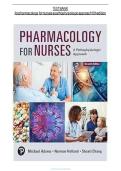
TEST BANKfg
for pharmacology for nurses a pathophysiologic approach 6th edition
gf fg gf gf fg fg fg gf
,Tableofcontents g
f g
f
UNIT 1: CORE CONCEPTS IN PHARMACOLOGY
fg f g fg f g fg
1. Introduction to Pharmacology g
f g
f
2. Drug Approval and Regulation
fg fg g
f
3. PrinciplesofDrugAdministration
g
f g
f g
f
4. Pharmacokinetics
5. Pharmacodynamics
UNIT 2: PHARMACOLOGY AND THE NURSE-PATIENT RELATIONSHIP
f g f g f g f g f g f g
6. The NursingProcess in Pharmacology
fg g
f g
f g
f
7. Medicatio n Errors and Ris k Reduction
fg g
f fg fg
8. Drug Administration Throughout the Lifespan
fg fg fg fg
9. Individual Variations in Drug Response
fg fg fg fg
10. The Role of Complementary and Alternative Therapies in Pharmacology
g
f g
f g
f g
f g
f g
f g
f g
f
11. Emergency Preparedness and Poisonings g
f g
f g
f
UNIT fg 3: THE NERVOUS SYSTEM
f g f g f g
12. Cholinergic Drugs Affecting the Autonomic Nervous System
fg fg fg fg fg fg
13. Adrenergic Drugs Affecting the Autonomic Nervous System
fg fg fg fg g
f fg
14. Drugs for Anxiety and Insomnia
g
f fg fg fg
15. Drugsfor Seizures g
f
16. Drugs for Emotio nal, Mood, and Behavioral Disorders
g
f g
f g
f g
f g
f g
f
17. Drugs for Psychoses fg fg
18. Drugsfor theControlofPain g
f
19. Drugs forLocal and General Anesthesia
g
f g
f g
f g
f g
f
20. Drugs for Degenerative Diseases of the Nervous System
g
f fg g
f fg g
f g
f fg
21. Drugs for Neuromuscular Disorders
fg fg fg
22. Substance Abuse fg
UNIT 4: THE CARDIOVASCULAR AND URINARY SYSTEMS
fg fg f g f g f g fg
23. DrugsforLipid Disorders fg
24. Diuretic Therapy and Drugs for Renal Failure
g
f g
f g
f g
f g
f g
f
25. Drugs for Flu id Bala nce, Electrolyte, and Acid—Base Disorders
g
f g
f g
f g
f fg g
f fg
26. Drugs for Hypertension g
f fg
27. Drugsfor Heart Failure g
f fg
28. Drugsfor AnginaPectorisandMyocardialInfarction
g
f
,29. Drugs for Shock
fg g
f
30. Drugs for Dysrhythmias fg fg
31. Drugs for Coagulatio n Dis orders
g
f g
f g
f
32. Drugs for Hematopoietic Disorders
g
f g
f g
f
UNIT fg 5: THE IMMUNE SYSTEM
fg f g f g
33. Drugs for Inflammation and Fever
g
f g
f fg fg
34. Drugsfor Immune System Modulation
g
f g
f g
f g
f
35. Drugs for Bacterial Infections
g
f g
f g
f
36. Drugs for Fungal, Protozoan, and Helminthic Infections
g
f g
f fg g
f fg g
f
37. Drugs for Viral Infections
g
f fg g
f
38. Drugs for Neoplasia
fg fg
UNIT 6: THE RESPIRATORY SYSTEM
f g f g f g f g
39. Drugs forAllergic Rhinitis and the Common Cold
g
f g
f g
f g
f g
f g
f g
f
40. DrugsforAsthmaand OtherPulmonaryDisorders fg
UNITf g 7: THE GASTROINTESTINAL SYSTEM
f g f g f g
41. Drugsfor Peptic Ulc er Disease
g
f fg g
f g
f
42. Drugs for Bowel Dis orders and Other Gastrointestinal Conditions
g
f g
f g
f g
f g
f g
f g
f
43. Drugsfor Nutritional Disorders
g
f g
f fg
UNIT fg 8: THE ENDOCRINE SYSTEM
fg fg f g
44. Drugs for Pit uit ary, Thyroid , and Adrenal Disorders
g
f g
f g
f fg g
f g
f
45. Drugs for Diabetes Mellitus
g
f fg fg
46. Drugs for Disorders and Conditions of the Female Reproductive System
g
f g
f g
f fg fg g
f g
f g
f g
f
47. Drugs for Disorders and Conditions ofthe Male Reproductive System
g
f g
f g
f g
f g
f g
f g
f g
f g
f
UNIT fg 9: THE INTEGUMENTARY SYSTEM, EYES, AND EARS
f g f g f g f g f g f g
48. Drugs forB onea nd JointDisorders
gf g
f g
f g
f g
f
49. Drugsfor SkinD isorders
g
f g
f g
f
50. Drugs f or Eye and Ear Disorders
fg g
f g
f g
f g
f
Pharmacology For NursesA Pathophysiological fg fg fg fg
Approach 6th Edition Adams fg gf fg fg
, Pharmacology for Nurses, 6e (Adams) Chapter fg fg gf fg f g
1 Introduction to Pharmacology
fg gf gf
1) A nurse is reviewing key events in the history of pharmacology with a student nurse. Which
fg fg fg fg fg fg fg fg fg fg fg fg fg fg fg
student comment indicates an understanding?
fg fg fg fg fg
1. "Early researchers used themselves as test subjects." fg fg gf fg gf fg
2. "A primary goal of pharmacology is to prevent disease."
fg fg fg fg fg fg fg fg
3. "Penicillin is one of the initial drugs isolated from a natural source." fg fg fg fg fg fg fg fg fg fg fg
4. "Pharmacologists began synthesizing drugs in the laboratory in the nineteenth century." fg gf fg fg fg fg gf fg fg fg
Answer: 1
fg fg
Explanation:
1. Some early researchers, like Friedrich Serturner, used themselves as test subjects.
fg g
f fg fg gf fg fg fg fg fg
2. An early goal of pharmacology was to relieve human suffering.
fg fg fg fg fg fg fg fg fg
3. Initial drugs isolated from complex mixtures included morphine, colchicine, curare, and
fg fg fg fg fg fg fg fg fg fg
cocaine, but not penicillin. fg g
f g
f g
f
4. By the twentieth century, pharmacologists could synthesize drugs in the laboratory.
fg fg fg fg fg fg fg fg fg fg
Page Ref: 3
fg fg fg
Cognitive Level: Applying fg fg
Client Need/Sub: Physiological Integrity: Pharmacological and Parenteral Therapies
fg fg fg fg fg fg fg
Standards: QSEN Competencies: I.A.1 Integrate understanding of multiple dimensions of patient-
fg fg fg fg fg fg fg fg fg f g
centered care:patient/family/community preferences, values; coordination and integrationof
fg fg fg gf gf fg gf f g gf
care;information,commuNnUicRaSt Ii No nG , TaBn. Cd OeMd u cation; physicalcomfortand emotional
g
f gf gf
gf
fg fg g
f g
f fg
support;involvement of family and friends; and transition and continuity. | AACN Essential
g
f gf fg fg fg fg fg fg fg fg fg fg f g
Competencies:
fg
I.7 Integrate the knowledge and methods of a variety of disciplines to inform decision making. |
fg gf fg fg fg fg fg fg fg fg fg fg fg fg fg
NLN Competencies: Knowledge and Science: Integration of
fg fg fg fg fg fg fg
knowledge from nursing and other disciplines. | Nursing/Integrated Concepts: Nursing Process:
fg fg fg fg fg fg fg fg fg fg
Evaluation
fg
Learning Outcome: 1-1 Identify key events in the history of pharmacology.
fg f g fg fg fg fg fg fg fg fg
MNL Learning Outcome: 1.1 Examine the relationship between medicine and pharmacology.
fg fg fg fg fg gf fg fg fg fg
IF YOU WANT THIS DOCUMENT EMAIL ME AT,
fg fg fg fg fg fg fg
TO GET THE FULL DOCUMENT IN PDF FORMAT.
fg fg fg fg fg fg fg
for pharmacology for nurses a pathophysiologic approach 6th edition
gf fg gf gf fg fg fg gf
,Tableofcontents g
f g
f
UNIT 1: CORE CONCEPTS IN PHARMACOLOGY
fg f g fg f g fg
1. Introduction to Pharmacology g
f g
f
2. Drug Approval and Regulation
fg fg g
f
3. PrinciplesofDrugAdministration
g
f g
f g
f
4. Pharmacokinetics
5. Pharmacodynamics
UNIT 2: PHARMACOLOGY AND THE NURSE-PATIENT RELATIONSHIP
f g f g f g f g f g f g
6. The NursingProcess in Pharmacology
fg g
f g
f g
f
7. Medicatio n Errors and Ris k Reduction
fg g
f fg fg
8. Drug Administration Throughout the Lifespan
fg fg fg fg
9. Individual Variations in Drug Response
fg fg fg fg
10. The Role of Complementary and Alternative Therapies in Pharmacology
g
f g
f g
f g
f g
f g
f g
f g
f
11. Emergency Preparedness and Poisonings g
f g
f g
f
UNIT fg 3: THE NERVOUS SYSTEM
f g f g f g
12. Cholinergic Drugs Affecting the Autonomic Nervous System
fg fg fg fg fg fg
13. Adrenergic Drugs Affecting the Autonomic Nervous System
fg fg fg fg g
f fg
14. Drugs for Anxiety and Insomnia
g
f fg fg fg
15. Drugsfor Seizures g
f
16. Drugs for Emotio nal, Mood, and Behavioral Disorders
g
f g
f g
f g
f g
f g
f
17. Drugs for Psychoses fg fg
18. Drugsfor theControlofPain g
f
19. Drugs forLocal and General Anesthesia
g
f g
f g
f g
f g
f
20. Drugs for Degenerative Diseases of the Nervous System
g
f fg g
f fg g
f g
f fg
21. Drugs for Neuromuscular Disorders
fg fg fg
22. Substance Abuse fg
UNIT 4: THE CARDIOVASCULAR AND URINARY SYSTEMS
fg fg f g f g f g fg
23. DrugsforLipid Disorders fg
24. Diuretic Therapy and Drugs for Renal Failure
g
f g
f g
f g
f g
f g
f
25. Drugs for Flu id Bala nce, Electrolyte, and Acid—Base Disorders
g
f g
f g
f g
f fg g
f fg
26. Drugs for Hypertension g
f fg
27. Drugsfor Heart Failure g
f fg
28. Drugsfor AnginaPectorisandMyocardialInfarction
g
f
,29. Drugs for Shock
fg g
f
30. Drugs for Dysrhythmias fg fg
31. Drugs for Coagulatio n Dis orders
g
f g
f g
f
32. Drugs for Hematopoietic Disorders
g
f g
f g
f
UNIT fg 5: THE IMMUNE SYSTEM
fg f g f g
33. Drugs for Inflammation and Fever
g
f g
f fg fg
34. Drugsfor Immune System Modulation
g
f g
f g
f g
f
35. Drugs for Bacterial Infections
g
f g
f g
f
36. Drugs for Fungal, Protozoan, and Helminthic Infections
g
f g
f fg g
f fg g
f
37. Drugs for Viral Infections
g
f fg g
f
38. Drugs for Neoplasia
fg fg
UNIT 6: THE RESPIRATORY SYSTEM
f g f g f g f g
39. Drugs forAllergic Rhinitis and the Common Cold
g
f g
f g
f g
f g
f g
f g
f
40. DrugsforAsthmaand OtherPulmonaryDisorders fg
UNITf g 7: THE GASTROINTESTINAL SYSTEM
f g f g f g
41. Drugsfor Peptic Ulc er Disease
g
f fg g
f g
f
42. Drugs for Bowel Dis orders and Other Gastrointestinal Conditions
g
f g
f g
f g
f g
f g
f g
f
43. Drugsfor Nutritional Disorders
g
f g
f fg
UNIT fg 8: THE ENDOCRINE SYSTEM
fg fg f g
44. Drugs for Pit uit ary, Thyroid , and Adrenal Disorders
g
f g
f g
f fg g
f g
f
45. Drugs for Diabetes Mellitus
g
f fg fg
46. Drugs for Disorders and Conditions of the Female Reproductive System
g
f g
f g
f fg fg g
f g
f g
f g
f
47. Drugs for Disorders and Conditions ofthe Male Reproductive System
g
f g
f g
f g
f g
f g
f g
f g
f g
f
UNIT fg 9: THE INTEGUMENTARY SYSTEM, EYES, AND EARS
f g f g f g f g f g f g
48. Drugs forB onea nd JointDisorders
gf g
f g
f g
f g
f
49. Drugsfor SkinD isorders
g
f g
f g
f
50. Drugs f or Eye and Ear Disorders
fg g
f g
f g
f g
f
Pharmacology For NursesA Pathophysiological fg fg fg fg
Approach 6th Edition Adams fg gf fg fg
, Pharmacology for Nurses, 6e (Adams) Chapter fg fg gf fg f g
1 Introduction to Pharmacology
fg gf gf
1) A nurse is reviewing key events in the history of pharmacology with a student nurse. Which
fg fg fg fg fg fg fg fg fg fg fg fg fg fg fg
student comment indicates an understanding?
fg fg fg fg fg
1. "Early researchers used themselves as test subjects." fg fg gf fg gf fg
2. "A primary goal of pharmacology is to prevent disease."
fg fg fg fg fg fg fg fg
3. "Penicillin is one of the initial drugs isolated from a natural source." fg fg fg fg fg fg fg fg fg fg fg
4. "Pharmacologists began synthesizing drugs in the laboratory in the nineteenth century." fg gf fg fg fg fg gf fg fg fg
Answer: 1
fg fg
Explanation:
1. Some early researchers, like Friedrich Serturner, used themselves as test subjects.
fg g
f fg fg gf fg fg fg fg fg
2. An early goal of pharmacology was to relieve human suffering.
fg fg fg fg fg fg fg fg fg
3. Initial drugs isolated from complex mixtures included morphine, colchicine, curare, and
fg fg fg fg fg fg fg fg fg fg
cocaine, but not penicillin. fg g
f g
f g
f
4. By the twentieth century, pharmacologists could synthesize drugs in the laboratory.
fg fg fg fg fg fg fg fg fg fg
Page Ref: 3
fg fg fg
Cognitive Level: Applying fg fg
Client Need/Sub: Physiological Integrity: Pharmacological and Parenteral Therapies
fg fg fg fg fg fg fg
Standards: QSEN Competencies: I.A.1 Integrate understanding of multiple dimensions of patient-
fg fg fg fg fg fg fg fg fg f g
centered care:patient/family/community preferences, values; coordination and integrationof
fg fg fg gf gf fg gf f g gf
care;information,commuNnUicRaSt Ii No nG , TaBn. Cd OeMd u cation; physicalcomfortand emotional
g
f gf gf
gf
fg fg g
f g
f fg
support;involvement of family and friends; and transition and continuity. | AACN Essential
g
f gf fg fg fg fg fg fg fg fg fg fg f g
Competencies:
fg
I.7 Integrate the knowledge and methods of a variety of disciplines to inform decision making. |
fg gf fg fg fg fg fg fg fg fg fg fg fg fg fg
NLN Competencies: Knowledge and Science: Integration of
fg fg fg fg fg fg fg
knowledge from nursing and other disciplines. | Nursing/Integrated Concepts: Nursing Process:
fg fg fg fg fg fg fg fg fg fg
Evaluation
fg
Learning Outcome: 1-1 Identify key events in the history of pharmacology.
fg f g fg fg fg fg fg fg fg fg
MNL Learning Outcome: 1.1 Examine the relationship between medicine and pharmacology.
fg fg fg fg fg gf fg fg fg fg
IF YOU WANT THIS DOCUMENT EMAIL ME AT,
fg fg fg fg fg fg fg
TO GET THE FULL DOCUMENT IN PDF FORMAT.
fg fg fg fg fg fg fg


