
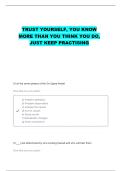
1) List the seven phases of the Six Sigma Model
Give this one a try later!
a) Problem definition
b) Problem observation
c) Analyze the causes
d) Act on causes
e) Study results
f) Standardize changes
g) Draw conclusions
1) (_____) are determined by who is being trained and who will train them.
Give this one a try later!
, Training strategies
1) What are the four kinds of information that an analyst is seeking through
prototyping?
Give this one a try later!
a) User reactions
b) Suggestions
c) Innovations
d) Revisions
1) Explain what is accomplished with a classification code.
Give this one a try later!
A classification code can be used to identify groups or "classes" of data.
This can be done with a single letter or number. This is useful until we need
to distinguish between categories within classes, at which point, we expand
the list of codes.
1) (___________) help a Systems Analyst understand the entities and relationships that
compromise an organizational system.
Give this one a try later!
Entity relationship diagrams
Give this one a try later!
a) Problem definition
b) Problem observation
c) Analyze the causes
d) Act on causes
e) Study results
f) Standardize changes
g) Draw conclusions
1) (_____) are determined by who is being trained and who will train them.
Give this one a try later!
, Training strategies
1) What are the four kinds of information that an analyst is seeking through
prototyping?
Give this one a try later!
a) User reactions
b) Suggestions
c) Innovations
d) Revisions
1) Explain what is accomplished with a classification code.
Give this one a try later!
A classification code can be used to identify groups or "classes" of data.
This can be done with a single letter or number. This is useful until we need
to distinguish between categories within classes, at which point, we expand
the list of codes.
1) (___________) help a Systems Analyst understand the entities and relationships that
compromise an organizational system.
Give this one a try later!
Entity relationship diagrams


