
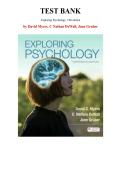
TEST BANK
Exploring Psychology, 13th edition
by David Myers, C Nathan DeWall, June Gruber
TU
TO
R
G
U
R
U
, TABLE OF CONTENT
Chapter 1: Thinking Critically With Psychological Science
Chapter 2: The Biology of Mind
Chapter 3: Consciousness and the Two-Track Mind
Chapter 4: Developing Through the Life Span
Chapter 5: Sex, Gender, and Sexuality
Chapter 6: Sensation and Perception
TU
Chapter 7: Learning
Chapter 8: Memory
Chapter 9: Thinking, Language, and Intelligence
TO
Chapter 10: Motivation and Emotion
Chapter 11: Stress, Health, and Human Flourishing
R
Chapter 12: Social Psychology
Chapter 13: Personality
G
Chapter 14: Psychological Disorders
U
Chapter 15: Therapy
R
U
,Name: Class: Date:
Module 1 - Multiple Choice
1. Which of these is an evidence-based method that draws on observation and experimentation?
a. critical thinking
b. structuralism
c. empirical approach
d. humanistic psychology
ANSWER: c
2. Which of these statements is NOT true of the empirical approach to research?
TU
a. It requires a scientific attitude.
b. It is evidence-based.
c. It draws on observation and experimentation.
d. It requires a cynical attitude.
ANSWER: d
TO
3. Based on the observations of preschoolers in a lab, Professor Nuwan is designing an experiment to assess
how children learn by imitation. Professor Nuwan's work BEST illustrates:
a. positive psychology.
b. a structuralist perspective.
R
c. an empirical approach.
d. evolutionary psychology.
ANSWER: c
G
4. The use of which of these makes psychology a science?
a. empirical approach
U
b. critical thinking
c. structuralism
d. functionalism
R
ANSWER: a
5. Ceylan is pregnant. Ceylan's friend claims to be able to predict the baby's sex and birth date. To test this
U
claim, Ceylan can use:
a. introspection.
b. critical thinking.
c. the empirical approach.
d. the biopsychosocial approach.
ANSWER: c
6. Putting a scientific attitude into practice requires humility as well as:
a. subjectivity and an unquestioning attitude.
b. a biopsychosocial approach.
c. curiosity and skepticism.
, Name: Class: Date:
Module 1 - Multiple Choice
d. functionalism.
ANSWER: c
7. Professor Said, who conducts psychological research, realizes that researchers may err as a result of personal
bias. Professor Said is demonstrating:
a. enhanced critical thinking.
b. a lack of curiosity.
c. increased skepticism.
TU
d. an attitude of humility.
ANSWER: d
8. One of psychology's early mottos was "the rat is always right." Which aspect of the scientific attitude did this
represent?
TO
a. humility
b. respect for animals
c. curiosity
d. skepticism
ANSWER: a
R
9. In one nine-country study that asked 40,000 teens which of 16 math concepts were familiar, male participants
from advantaged backgrounds often:
a. claimed to know nonexistent concepts.
G
b. recalled fewer terms than female participants from advantaged backgrounds.
c. recalled more terms than female participants from advantaged backgrounds.
U
d. could not remember anything.
ANSWER: a
R
10. Three key elements of the scientific attitude are:
a. skepticism, enthusiasm, and ingenuity.
b. ingenuity, humility, and certainty.
U
c. certainty, creativity, and curiosity.
d. curiosity, skepticism, and humility.
ANSWER: d
11. A desire to use data to evaluate predictions is related to:
a. humility.
b. curiosity.
c. skepticism.
d. ingenuity.
ANSWER: b
12. Moira tells her friend Ursa about her new romantic partner, with whom she feels she has a lot in common.
Exploring Psychology, 13th edition
by David Myers, C Nathan DeWall, June Gruber
TU
TO
R
G
U
R
U
, TABLE OF CONTENT
Chapter 1: Thinking Critically With Psychological Science
Chapter 2: The Biology of Mind
Chapter 3: Consciousness and the Two-Track Mind
Chapter 4: Developing Through the Life Span
Chapter 5: Sex, Gender, and Sexuality
Chapter 6: Sensation and Perception
TU
Chapter 7: Learning
Chapter 8: Memory
Chapter 9: Thinking, Language, and Intelligence
TO
Chapter 10: Motivation and Emotion
Chapter 11: Stress, Health, and Human Flourishing
R
Chapter 12: Social Psychology
Chapter 13: Personality
G
Chapter 14: Psychological Disorders
U
Chapter 15: Therapy
R
U
,Name: Class: Date:
Module 1 - Multiple Choice
1. Which of these is an evidence-based method that draws on observation and experimentation?
a. critical thinking
b. structuralism
c. empirical approach
d. humanistic psychology
ANSWER: c
2. Which of these statements is NOT true of the empirical approach to research?
TU
a. It requires a scientific attitude.
b. It is evidence-based.
c. It draws on observation and experimentation.
d. It requires a cynical attitude.
ANSWER: d
TO
3. Based on the observations of preschoolers in a lab, Professor Nuwan is designing an experiment to assess
how children learn by imitation. Professor Nuwan's work BEST illustrates:
a. positive psychology.
b. a structuralist perspective.
R
c. an empirical approach.
d. evolutionary psychology.
ANSWER: c
G
4. The use of which of these makes psychology a science?
a. empirical approach
U
b. critical thinking
c. structuralism
d. functionalism
R
ANSWER: a
5. Ceylan is pregnant. Ceylan's friend claims to be able to predict the baby's sex and birth date. To test this
U
claim, Ceylan can use:
a. introspection.
b. critical thinking.
c. the empirical approach.
d. the biopsychosocial approach.
ANSWER: c
6. Putting a scientific attitude into practice requires humility as well as:
a. subjectivity and an unquestioning attitude.
b. a biopsychosocial approach.
c. curiosity and skepticism.
, Name: Class: Date:
Module 1 - Multiple Choice
d. functionalism.
ANSWER: c
7. Professor Said, who conducts psychological research, realizes that researchers may err as a result of personal
bias. Professor Said is demonstrating:
a. enhanced critical thinking.
b. a lack of curiosity.
c. increased skepticism.
TU
d. an attitude of humility.
ANSWER: d
8. One of psychology's early mottos was "the rat is always right." Which aspect of the scientific attitude did this
represent?
TO
a. humility
b. respect for animals
c. curiosity
d. skepticism
ANSWER: a
R
9. In one nine-country study that asked 40,000 teens which of 16 math concepts were familiar, male participants
from advantaged backgrounds often:
a. claimed to know nonexistent concepts.
G
b. recalled fewer terms than female participants from advantaged backgrounds.
c. recalled more terms than female participants from advantaged backgrounds.
U
d. could not remember anything.
ANSWER: a
R
10. Three key elements of the scientific attitude are:
a. skepticism, enthusiasm, and ingenuity.
b. ingenuity, humility, and certainty.
U
c. certainty, creativity, and curiosity.
d. curiosity, skepticism, and humility.
ANSWER: d
11. A desire to use data to evaluate predictions is related to:
a. humility.
b. curiosity.
c. skepticism.
d. ingenuity.
ANSWER: b
12. Moira tells her friend Ursa about her new romantic partner, with whom she feels she has a lot in common.


