

NSG 3280 Exam 2 Review — Answer Key
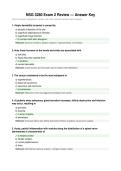
Correct answers highlighted in green, with brief rationale beneath each question.
1. Atopic dermatitis (eczema) is caused by
a) parasitic infestation of the skin.
b) superficial staphylococcal infection.
c) superficial fungal infection.
✓ d) contact with skin allergens.
Rationale: Eczema is linked to allergen exposure / hypersensitivity, not infection.
2. Itchy linear burrows on the hands and wrists are associated with
a) tick bites.
b) Rocky Mountain spotted fever.
✓ c) scabies.
d) contact dermatitis.
Rationale: Linear burrows are the classic sign of scabies (mite infestation).
3. The cancer considered to be the most malignant is
a) hyperkeratosis.
b) basal cell carcinoma.
c) squamous cell carcinoma.
✓ d) melanoma.
Rationale: Melanoma is the most aggressive/malignant skin cancer.
4. At puberty when sebaceous gland secretion increases, follicle obstruction and infection
may occur, resulting in
a) psoriasis.
b) eczema.
✓ c) acne vulgaris.
d) pemphigus.
Rationale: Increased sebum plus follicle obstruction/infection at puberty causes acne vulgaris.
5. Acute, painful inflammation with vesicles along the distribution of a spinal nerve
(dermatome) is characteristic of
✓ a) herpes zoster.
b) herpes simplex.
c) human papillomavirus.
d) tinea.
Rationale: Dermatomal vesicular eruption = shingles (herpes zoster).
, 6. Corticosteroids are commonly administered for the management of skin disorders because
they
a) are analgesics.
b) prevent infection.
c) enhance collagen production.
✓ d) reduce inflammation.
Rationale: Corticosteroids are anti-inflammatory agents.
7. A 4-year-old is brought to the clinic for evaluation of dry, scaly, itchy patches on the face,
antecubital areas, and behind the ears and knees. The skin is dry overall, and there is
evidence of scratching. This is likely a case of
a) impetigo.
✓ b) atopic dermatitis.
c) psoriasis.
d) scabies.
Rationale: Classic pediatric eczema distribution: face, antecubital fossae, behind ears/knees.
8. Which finding indicates a need for further evaluation of a nevus mole?
a) The presence of light pigmentation
✓ b) Variations in color within the nevus
c) Very dark coloration of the mole
d) Diameter less than 2 mm
Rationale: Color variegation is an ABCDE melanoma warning sign.
9. Manifestations of herpes zoster include
a) multiple fluid-filled vesicles on the lips, tongue, and hands.
b) generalized, painful maculopapular rash.
c) red, itchy palms and soles of feet.
✓ d) a dermatomal distribution of lesions and pain.
Rationale: Defining feature of shingles is dermatomal distribution.
10. Impetigo is a skin infection caused by
a) fungus.
b) yeast.
✓ c) bacteria.
d) parasite.
Rationale: Impetigo is caused by Staphylococcus or Streptococcus bacteria.
Correct answers highlighted in green, with brief rationale beneath each question.
1. Atopic dermatitis (eczema) is caused by
a) parasitic infestation of the skin.
b) superficial staphylococcal infection.
c) superficial fungal infection.
✓ d) contact with skin allergens.
Rationale: Eczema is linked to allergen exposure / hypersensitivity, not infection.
2. Itchy linear burrows on the hands and wrists are associated with
a) tick bites.
b) Rocky Mountain spotted fever.
✓ c) scabies.
d) contact dermatitis.
Rationale: Linear burrows are the classic sign of scabies (mite infestation).
3. The cancer considered to be the most malignant is
a) hyperkeratosis.
b) basal cell carcinoma.
c) squamous cell carcinoma.
✓ d) melanoma.
Rationale: Melanoma is the most aggressive/malignant skin cancer.
4. At puberty when sebaceous gland secretion increases, follicle obstruction and infection
may occur, resulting in
a) psoriasis.
b) eczema.
✓ c) acne vulgaris.
d) pemphigus.
Rationale: Increased sebum plus follicle obstruction/infection at puberty causes acne vulgaris.
5. Acute, painful inflammation with vesicles along the distribution of a spinal nerve
(dermatome) is characteristic of
✓ a) herpes zoster.
b) herpes simplex.
c) human papillomavirus.
d) tinea.
Rationale: Dermatomal vesicular eruption = shingles (herpes zoster).
, 6. Corticosteroids are commonly administered for the management of skin disorders because
they
a) are analgesics.
b) prevent infection.
c) enhance collagen production.
✓ d) reduce inflammation.
Rationale: Corticosteroids are anti-inflammatory agents.
7. A 4-year-old is brought to the clinic for evaluation of dry, scaly, itchy patches on the face,
antecubital areas, and behind the ears and knees. The skin is dry overall, and there is
evidence of scratching. This is likely a case of
a) impetigo.
✓ b) atopic dermatitis.
c) psoriasis.
d) scabies.
Rationale: Classic pediatric eczema distribution: face, antecubital fossae, behind ears/knees.
8. Which finding indicates a need for further evaluation of a nevus mole?
a) The presence of light pigmentation
✓ b) Variations in color within the nevus
c) Very dark coloration of the mole
d) Diameter less than 2 mm
Rationale: Color variegation is an ABCDE melanoma warning sign.
9. Manifestations of herpes zoster include
a) multiple fluid-filled vesicles on the lips, tongue, and hands.
b) generalized, painful maculopapular rash.
c) red, itchy palms and soles of feet.
✓ d) a dermatomal distribution of lesions and pain.
Rationale: Defining feature of shingles is dermatomal distribution.
10. Impetigo is a skin infection caused by
a) fungus.
b) yeast.
✓ c) bacteria.
d) parasite.
Rationale: Impetigo is caused by Staphylococcus or Streptococcus bacteria.


