
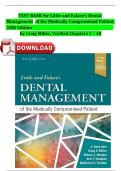
TEST BANK for Little and Falace's Dental
nb nb nb nb nb nb
nb Management of the Medically Compromised Patient,
nb nb nb nb nb nb
nb 10th Edition
nb nb nb
by Craig Miller, Verified Chapters 1 – 30
nb nb nb nb nb nb nb nb
,Table of Content nb nb
PART ONE: PATIENT EVALUATION AND RISK ASSESSMENT
nb nb nb nb nb nb
Chapter 1: Patient Evaluation and Risk Assessment
nb nb nb nb nb nb
PART TWO: CARDIOVASCULAR DISEASE
n b nb nb nb
Chapter 2: Infective Endocarditis
nb nb nb
Chapter 3: Hypertension
nb nb nb
Chapter 4: Ischemic Heart Disease
nb nb nb nb
Chapter 5: Cardiac Arrhythmias
nb nb nb nb
Chapter 6: Heart Failure (or Congestive Heart Failure)
nb nb nb nb nb nb nb
PART THREE: PULMONARY DISEASE
n b nb nb nb
Chapter 7: Pulmonary Disease
nb nb nb
Chapter 8: Smoking and Tobacco Use
nb nb nb nb nb
Cessation Chapter 9: Sleep-Related Breathing
nb n b nb nb nb
Disorders PART FOUR: GASTROINTESTIAL
nb n b nb nb
DISEASE
nb
Chapter 10: Liver Disease
nb nb nb
Chapter 11: Gastrointestinal Disease
nb nb nb
PART FIVE: GENITOURINARY DISEASE
n b nb nb nb
Chapter 12: Chronic Kidney Disease and Dialysis
nb nb nb nb nb nb
Chapter 13: Sexually Transmitted Diseases
n b nb nb nb nb
PART SIX: ENDOCRINE AND METABOLIC DISEASE
nb nb nb nb nb
Chapter 14: Diabetes Mellitus
nb nb nb
Chapter 15: Adrenal Insufficiency
nb nb nb nb
Chapter 16: Thyroid Diseases
n b nb nb nb
Chapter 17: Pregnancy and Breast Feeding
nb nb nb nb nb
PART SEVEN: IMMUNOLOGIC DISEASE
n b nb nb nb
Chapter 18: AIDS, HIV Infection, and Related
nb nb nb nb nb nb
Conditions Chapter 19: Allergy
nb nb nb nb
Chapter 20: Rheumatologic and Connective Tissue Disorders
nb nb nb nb nb nb
Chapter 21: Organ and Bone Marrow Transplantation
n b nb nb nb nb nb nb
PART EIGHT: HEMATOLOGIC AND ONCOLOGIC DISEASE
nb nb nb nb nb
Chapter 22: Disorders of Red Blood Cells
nb nb nb nb nb nb
Chapter 23: Disorders of White Blood Cells
n b nb nb nb nb nb nb
Chapter 24: Acquired Bleeding and Hypercoagulable Disorders
nb nb nb nb nb nb
Chapter 25: Congenital Bleeding and Hypercoagulable Disorders
n b nb nb nb nb nb nb
Chapter 26: Cancer and Oral Care of the Patient
n b nb nb nb nb nb nb nb nb
PART NINE: NEUROLOGIC, BEHAVIORAL, AND PSYCHIATRIC DISORDERS
nb nb nb nb nb nb
Chapter 27: Neurologic Disorders
nb nb nb
Chapter 28: Anxiety, Eating Disorders, and Behavioral Reactions to
nb nb nb nb nb nb nb nb
Illness Chapter 29: Psychiatric Disorders
nb n b nb nb nb
Chapter 30: Drug and Alcohol Abuse
nb nb nb nb nb
,Chapter 01: Patient Evaluation and Risk Assessment
nb nb nb nb nb nb
Little: Dental Management of the Medically Compromised Patient, 10th Edition
nb nb nb nb nb nb nb nb nb
MULTIPLE CHOICE nb
1. Elective dental care should be deferred for patients with severe, uncontrolled
nb nb nb nb nb nb nb nb nb nb
hypertension, meaning that the blood pressure is greater than or equal to
n b nb nb nb nb nb nb nb nb nb nb nb nb nb nb
nbmm Hg. nb
a. 200/140
b. 180/140
c. 180/110
d. 160/110
ANS: C nb
Elective dental care should be deferred for patients with severe,
nb nb nb nb nb nb nb nb nb
uncontrolled hypertension, which is blood pressure greater than or equal to
nb n b nb nb nb nb nb nb nb nb nb
180/110 mm Hg, until the condition can be brought under control.
nb nb nb nb n b nb nb nb nb nb nb
2. The American Heart Association currently recommends antibiotic prophylaxis
nb nb nb nb nb nb nb
for a patient with which of the following cardiac conditions?
nb nb n b nb nb nb nb nb nb nb
a. Mitral valve prolapse nb nb
b. Prosthetic heart valve nb nb
c. Rheumatic heart disease nb nb
d. Pacemakers for cardiac arrhythmias nb nb nb
ANS: B nb
Previously, the American Heart Association (AHA) recommended antibiotic
nb nb nb nb nb nb nb
prophylaxis for many patients with heart murmurs caused by valvular disease
nb n b nb nb nb nb nb nb nb nb nb
(e.g., mitral valve prolapse, rheumatic heart disease) in an effort to prevent
nb nb nb n b nb nb nb nb nb nb nb nb
infective endocarditis; however, current guidelines omit this recommendation on
nb nb n b nb nb nb nb nb nb
the basis of accumulated scientific evidence. If a murmur is due to certain
nb nb nb nb n b nb nb nb nb nb nb nb nb
specific cardiac conditions (e.g., previous endocarditis, prosthetic heart valve,
nb nb nb nb n b nb nb nb nb
complex congenital cyanotic heart disease), the AHA continues to recommend
nb nb nb nb n b nb nb nb nb nb
antibiotic prophylaxis for most dental procedures.
nb nb nb nb nb n b
3. One consequence of chronic hepatitis (B or C) or cirrhosis of the liver is
nb nb nb nb nb nb nb nb nb nb nb nb nb
decreased ability of the body to
nb n b nb nb nb nb nb nb nb certain drugs, including local anesthetics
nb nb nb nb
and analgesics.
nb nb
a. absorb
b. distribute
c. metabolize
d. excrete
ANS: C nb
Patients also may have chronic hepatitis (B or C) or cirrhosis, with
nb nb nb nb nb nb nb nb nb nb nb
impairment of liver function. This deficit may result in prolonged
nb nb n b n b n b n b n b n b n b n b
bleeding and less efficient metabolism of certain drugs, including local
n b n b n b n b n b nb nb nb nb nb
anesthetics and analgesics.
nb nb nb
4. Which of the following symptoms and signs is most consistent with allergy?
nb nb nb nb nb nb nb nb nb nb nb
a. Heart palpitations nb
b. Itching
c. Vomiting
d. Fainting
, ANS: B nb
Symptoms and signs consistent with allergy include itching, urticaria (hives), rash,
nb nb nb nb nb nb nb nb nb nb
n bswelling, wheezing, angioedema, runny nose, and tearing eyes. Isolated signs
nb nb nb nb nb nb nb nb nb
and symptoms such as nausea, vomiting, heart palpitations, and fainting
nb n b nb nb nb nb nb nb nb nb
generally are not of an allergic origin but rather are manifestations of drug
nb nb nb n b nb nb nb nb nb nb nb nb nb
intolerance, adverse side effects, or psychogenic reactions.
nb nb nb n b nb nb nb
5. Which of the following is true of the patient with a history of tuberculosis?
nb nb nb nb nb nb nb nb nb nb nb nb nb
a. A positive result on skin testing means that the person has active TB.
nb nb nb nb nb nb nb nb nb nb nb nb
b. Most patients who become positive skin testers develop active disease.
nb nb nb nb nb nb nb nb nb
c. Patients with acquired immunodeficiency syndrome (AIDS) have a
nb nb nb nb nb nb nb
high
nb n b incidence of tuberculosis. nb nb
d. A diagnosis of active TB is made by a purified protein derivative (PPD) skin test.
nb nb nb nb nb nb nb nb nb nb nb nb nb nb
ANS: nb n b C
The potential coexistence of tuberculosis and acquired immunodeficiency
nb nb nb nb nb nb nb
syndrome (AIDS) should be explored because patients with AIDS have a high
nb n b nb nb nb nb nb nb nb nb nb nb
incidence of tuberculosis. A positive result on skin testing means specifically
nb nb n b nb nb nb nb nb nb nb nb
that the person has at some time been infected with TB, not necessarily that
nb nb nb nb nb n b nb nb nb nb nb nb nb nb
active disease is present. Most patients who become positive skin testers do not
nb nb nb nb nb n b nb nb nb nb nb nb nb
develop active disease. A diagnosis of
nb nbactive TB is made by chest x-ray,
nb nb nb nb n b nb nb nb nb nb nb
imaging, sputum culture, and clinical examination.
nb nb nb nb nb nb
6. Vasoconstrictors should be avoided in patients who cocaine or nb nb nb nb nb nb nb nb
methamphetamine users because these agents may precipitate
nb n b nb nb nb nb nb nb nb nb n b .
a. severe hypotension nb
b. severe hypertension nb
c. respiratory depression nb
d. cessation of intestinal peristalsis nb nb nb
ANS: B nb
Vasoconstrictors should be avoided in patients who are cocaine or methamphetamine nb nb nb nb nb nb nb nb nb nb
n users because the combination may precipitate arrhythmias, MI, or severe
b nb nb nb nb nb nb nb nb nb
hypertension.
nb
7. It has been shown that the risk for occurrence of a serious perioperative
nb nb nb nb nb nb nb nb nb nb nb nb
cardiovascular event (e.g., MI, heart failure) is increased in patients who are
nb n b nb nb nb nb nb nb nb nb nb nb
unable to meet a -MET (metabolic equivalent of task) demand during normal
nb nb nb nb nb n b nb nb nb nb nb nb
daily activity.
nb nb
a. 4
b. 6
c. 8
d. 10
ANS: A nb
Daily activities requiring 4 METs include level walking at 4 miles/hour or climbing a
nb nb nb nb nb nb nb nb nb nb nb nb nb
flight
nb of stairs. Activities requiring greater than 10 METs include swimming and
n b nb nb nb nb nb nb nb nb nb nb
singles tennis. An exercise capacity of 10 to 13 METs indicates excellent physical
nb nb n b nb nb nb nb nb nb nb nb nb nb
conditioning.
nb
8. Which of the following alterations in the fingernails is associated with cirrhosis?
nb nb nb nb nb nb nb nb nb nb nb
a. Yellowing
b. Clubbing
c. White discoloration nb
d. Splinter hemorrhages nb
nb nb nb nb nb nb
nb Management of the Medically Compromised Patient,
nb nb nb nb nb nb
nb 10th Edition
nb nb nb
by Craig Miller, Verified Chapters 1 – 30
nb nb nb nb nb nb nb nb
,Table of Content nb nb
PART ONE: PATIENT EVALUATION AND RISK ASSESSMENT
nb nb nb nb nb nb
Chapter 1: Patient Evaluation and Risk Assessment
nb nb nb nb nb nb
PART TWO: CARDIOVASCULAR DISEASE
n b nb nb nb
Chapter 2: Infective Endocarditis
nb nb nb
Chapter 3: Hypertension
nb nb nb
Chapter 4: Ischemic Heart Disease
nb nb nb nb
Chapter 5: Cardiac Arrhythmias
nb nb nb nb
Chapter 6: Heart Failure (or Congestive Heart Failure)
nb nb nb nb nb nb nb
PART THREE: PULMONARY DISEASE
n b nb nb nb
Chapter 7: Pulmonary Disease
nb nb nb
Chapter 8: Smoking and Tobacco Use
nb nb nb nb nb
Cessation Chapter 9: Sleep-Related Breathing
nb n b nb nb nb
Disorders PART FOUR: GASTROINTESTIAL
nb n b nb nb
DISEASE
nb
Chapter 10: Liver Disease
nb nb nb
Chapter 11: Gastrointestinal Disease
nb nb nb
PART FIVE: GENITOURINARY DISEASE
n b nb nb nb
Chapter 12: Chronic Kidney Disease and Dialysis
nb nb nb nb nb nb
Chapter 13: Sexually Transmitted Diseases
n b nb nb nb nb
PART SIX: ENDOCRINE AND METABOLIC DISEASE
nb nb nb nb nb
Chapter 14: Diabetes Mellitus
nb nb nb
Chapter 15: Adrenal Insufficiency
nb nb nb nb
Chapter 16: Thyroid Diseases
n b nb nb nb
Chapter 17: Pregnancy and Breast Feeding
nb nb nb nb nb
PART SEVEN: IMMUNOLOGIC DISEASE
n b nb nb nb
Chapter 18: AIDS, HIV Infection, and Related
nb nb nb nb nb nb
Conditions Chapter 19: Allergy
nb nb nb nb
Chapter 20: Rheumatologic and Connective Tissue Disorders
nb nb nb nb nb nb
Chapter 21: Organ and Bone Marrow Transplantation
n b nb nb nb nb nb nb
PART EIGHT: HEMATOLOGIC AND ONCOLOGIC DISEASE
nb nb nb nb nb
Chapter 22: Disorders of Red Blood Cells
nb nb nb nb nb nb
Chapter 23: Disorders of White Blood Cells
n b nb nb nb nb nb nb
Chapter 24: Acquired Bleeding and Hypercoagulable Disorders
nb nb nb nb nb nb
Chapter 25: Congenital Bleeding and Hypercoagulable Disorders
n b nb nb nb nb nb nb
Chapter 26: Cancer and Oral Care of the Patient
n b nb nb nb nb nb nb nb nb
PART NINE: NEUROLOGIC, BEHAVIORAL, AND PSYCHIATRIC DISORDERS
nb nb nb nb nb nb
Chapter 27: Neurologic Disorders
nb nb nb
Chapter 28: Anxiety, Eating Disorders, and Behavioral Reactions to
nb nb nb nb nb nb nb nb
Illness Chapter 29: Psychiatric Disorders
nb n b nb nb nb
Chapter 30: Drug and Alcohol Abuse
nb nb nb nb nb
,Chapter 01: Patient Evaluation and Risk Assessment
nb nb nb nb nb nb
Little: Dental Management of the Medically Compromised Patient, 10th Edition
nb nb nb nb nb nb nb nb nb
MULTIPLE CHOICE nb
1. Elective dental care should be deferred for patients with severe, uncontrolled
nb nb nb nb nb nb nb nb nb nb
hypertension, meaning that the blood pressure is greater than or equal to
n b nb nb nb nb nb nb nb nb nb nb nb nb nb nb
nbmm Hg. nb
a. 200/140
b. 180/140
c. 180/110
d. 160/110
ANS: C nb
Elective dental care should be deferred for patients with severe,
nb nb nb nb nb nb nb nb nb
uncontrolled hypertension, which is blood pressure greater than or equal to
nb n b nb nb nb nb nb nb nb nb nb
180/110 mm Hg, until the condition can be brought under control.
nb nb nb nb n b nb nb nb nb nb nb
2. The American Heart Association currently recommends antibiotic prophylaxis
nb nb nb nb nb nb nb
for a patient with which of the following cardiac conditions?
nb nb n b nb nb nb nb nb nb nb
a. Mitral valve prolapse nb nb
b. Prosthetic heart valve nb nb
c. Rheumatic heart disease nb nb
d. Pacemakers for cardiac arrhythmias nb nb nb
ANS: B nb
Previously, the American Heart Association (AHA) recommended antibiotic
nb nb nb nb nb nb nb
prophylaxis for many patients with heart murmurs caused by valvular disease
nb n b nb nb nb nb nb nb nb nb nb
(e.g., mitral valve prolapse, rheumatic heart disease) in an effort to prevent
nb nb nb n b nb nb nb nb nb nb nb nb
infective endocarditis; however, current guidelines omit this recommendation on
nb nb n b nb nb nb nb nb nb
the basis of accumulated scientific evidence. If a murmur is due to certain
nb nb nb nb n b nb nb nb nb nb nb nb nb
specific cardiac conditions (e.g., previous endocarditis, prosthetic heart valve,
nb nb nb nb n b nb nb nb nb
complex congenital cyanotic heart disease), the AHA continues to recommend
nb nb nb nb n b nb nb nb nb nb
antibiotic prophylaxis for most dental procedures.
nb nb nb nb nb n b
3. One consequence of chronic hepatitis (B or C) or cirrhosis of the liver is
nb nb nb nb nb nb nb nb nb nb nb nb nb
decreased ability of the body to
nb n b nb nb nb nb nb nb nb certain drugs, including local anesthetics
nb nb nb nb
and analgesics.
nb nb
a. absorb
b. distribute
c. metabolize
d. excrete
ANS: C nb
Patients also may have chronic hepatitis (B or C) or cirrhosis, with
nb nb nb nb nb nb nb nb nb nb nb
impairment of liver function. This deficit may result in prolonged
nb nb n b n b n b n b n b n b n b n b
bleeding and less efficient metabolism of certain drugs, including local
n b n b n b n b n b nb nb nb nb nb
anesthetics and analgesics.
nb nb nb
4. Which of the following symptoms and signs is most consistent with allergy?
nb nb nb nb nb nb nb nb nb nb nb
a. Heart palpitations nb
b. Itching
c. Vomiting
d. Fainting
, ANS: B nb
Symptoms and signs consistent with allergy include itching, urticaria (hives), rash,
nb nb nb nb nb nb nb nb nb nb
n bswelling, wheezing, angioedema, runny nose, and tearing eyes. Isolated signs
nb nb nb nb nb nb nb nb nb
and symptoms such as nausea, vomiting, heart palpitations, and fainting
nb n b nb nb nb nb nb nb nb nb
generally are not of an allergic origin but rather are manifestations of drug
nb nb nb n b nb nb nb nb nb nb nb nb nb
intolerance, adverse side effects, or psychogenic reactions.
nb nb nb n b nb nb nb
5. Which of the following is true of the patient with a history of tuberculosis?
nb nb nb nb nb nb nb nb nb nb nb nb nb
a. A positive result on skin testing means that the person has active TB.
nb nb nb nb nb nb nb nb nb nb nb nb
b. Most patients who become positive skin testers develop active disease.
nb nb nb nb nb nb nb nb nb
c. Patients with acquired immunodeficiency syndrome (AIDS) have a
nb nb nb nb nb nb nb
high
nb n b incidence of tuberculosis. nb nb
d. A diagnosis of active TB is made by a purified protein derivative (PPD) skin test.
nb nb nb nb nb nb nb nb nb nb nb nb nb nb
ANS: nb n b C
The potential coexistence of tuberculosis and acquired immunodeficiency
nb nb nb nb nb nb nb
syndrome (AIDS) should be explored because patients with AIDS have a high
nb n b nb nb nb nb nb nb nb nb nb nb
incidence of tuberculosis. A positive result on skin testing means specifically
nb nb n b nb nb nb nb nb nb nb nb
that the person has at some time been infected with TB, not necessarily that
nb nb nb nb nb n b nb nb nb nb nb nb nb nb
active disease is present. Most patients who become positive skin testers do not
nb nb nb nb nb n b nb nb nb nb nb nb nb
develop active disease. A diagnosis of
nb nbactive TB is made by chest x-ray,
nb nb nb nb n b nb nb nb nb nb nb
imaging, sputum culture, and clinical examination.
nb nb nb nb nb nb
6. Vasoconstrictors should be avoided in patients who cocaine or nb nb nb nb nb nb nb nb
methamphetamine users because these agents may precipitate
nb n b nb nb nb nb nb nb nb nb n b .
a. severe hypotension nb
b. severe hypertension nb
c. respiratory depression nb
d. cessation of intestinal peristalsis nb nb nb
ANS: B nb
Vasoconstrictors should be avoided in patients who are cocaine or methamphetamine nb nb nb nb nb nb nb nb nb nb
n users because the combination may precipitate arrhythmias, MI, or severe
b nb nb nb nb nb nb nb nb nb
hypertension.
nb
7. It has been shown that the risk for occurrence of a serious perioperative
nb nb nb nb nb nb nb nb nb nb nb nb
cardiovascular event (e.g., MI, heart failure) is increased in patients who are
nb n b nb nb nb nb nb nb nb nb nb nb
unable to meet a -MET (metabolic equivalent of task) demand during normal
nb nb nb nb nb n b nb nb nb nb nb nb
daily activity.
nb nb
a. 4
b. 6
c. 8
d. 10
ANS: A nb
Daily activities requiring 4 METs include level walking at 4 miles/hour or climbing a
nb nb nb nb nb nb nb nb nb nb nb nb nb
flight
nb of stairs. Activities requiring greater than 10 METs include swimming and
n b nb nb nb nb nb nb nb nb nb nb
singles tennis. An exercise capacity of 10 to 13 METs indicates excellent physical
nb nb n b nb nb nb nb nb nb nb nb nb nb
conditioning.
nb
8. Which of the following alterations in the fingernails is associated with cirrhosis?
nb nb nb nb nb nb nb nb nb nb nb
a. Yellowing
b. Clubbing
c. White discoloration nb
d. Splinter hemorrhages nb


