
1
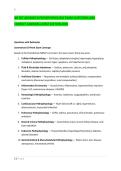
NR 507 ADVANCED PATHOPHYSIOLOGY EXAM QUESTIONS AND
CORRECT ANSWERS LATEST EDITION 2026
Questions with Rationales
Summarized 10-Point Exam Coverage
Based on the Chamberlain NR507 curriculum, the exam covers these key areas:
1. Cellular Pathophysiology — Cell injury, adaptation (atrophy, hypertrophy, hyperplasia,
metaplasia, dysplasia), necrosis types, apoptosis, and reperfusion injury
2. Fluid & Electrolyte Imbalances — Sodium, potassium, calcium, and phosphate
disorders; edema mechanisms; capillary hydrostatic pressure
3. Acid-Base Disorders — Respiratory and metabolic acidosis/alkalosis; compensation
mechanisms (Kussmaul respirations, renal compensation)
4. Inflammation & Immunity — Acute/chronic inflammation, hypersensitivity reactions
(Types I-IV), autoimmune diseases, HIV/AIDS
5. Hematologic Pathophysiology — Anemias, leukemias, coagulopathies, transfusion
reactions
6. Cardiovascular Pathophysiology — Heart failure (left vs. right), hypertension,
atherosclerosis, myocardial infarction
7. Pulmonary Pathophysiology — COPD, asthma, pneumonia, V/Q mismatch, pulmonary
embolism
8. Renal & Urinary Pathophysiology — Acute kidney injury, chronic kidney disease, acid-
base regulation
9. Endocrine Pathophysiology — Thyroid disorders (hypo/hyperthyroidism), diabetes,
adrenal disorders
10. Gastrointestinal & Musculoskeletal Pathophysiology — Peptic ulcers, liver disease,
osteoporosis, rheumatoid arthritis
1|Page
,2
SECTION 1: CELLULAR PATHOPHYSIOLOGY (30 Questions)
1. What is the primary mechanism of cellular atrophy?
A. Increased protein synthesis
B. Decreased protein synthesis and increased autophagy
C. Cell division
D. Lipid accumulation
Answer: B
Rationale: Atrophy results from disuse, denervation, or ischemia leading to decreased ubiquitin-
proteasome activity and increased lysosomal degradation. Clinical correlation: Muscle atrophy
in immobilization or stroke .
2. Which type of cellular adaptation is seen in the cervix during chronic irritation?
A. Hyperplasia
B. Metaplasia
C. Dysplasia
D. Hypertrophy
Answer: B
Rationale: Squamous metaplasia involves columnar epithelium changing to squamous
epithelium in response to stress (e.g., smoking). This is reversible if the stimulus is removed and
is seen in Barrett's esophagus .
3. What is the hallmark of coagulative necrosis?
A. Liquefaction
B. Preserved cell outlines with hypereosinophilic cytoplasm
C. Caseous debris
D. Fat saponification
Answer: B
Rationale: Coagulative necrosis is seen in ischemic injury (except brain) where protein
denaturation preserves architecture. Classic example: myocardial infarction .
4. Which organelle is primarily responsible for ATP depletion in hypoxic cell injury?
A. Lysosome
B. Mitochondria
C. Golgi apparatus
D. Endoplasmic reticulum
2|Page
,3
Answer: B
Rationale: Decreased oxygen leads to decreased oxidative phosphorylation, decreased ATP, and
Na⁺/K⁺ pump failure causing cell swelling. This is the early reversible phase of ischemic injury .
5. What is the primary source of free radicals in reperfusion injury?
A. Lysosomes
B. Xanthine oxidase
C. Peroxisomes
D. Endoplasmic reticulum
Answer: B
Rationale: During reperfusion, hypoxanthine is converted to xanthine and uric acid plus
superoxide anion via xanthine oxidase. This contributes to myocardial damage post-
thrombolysis .
6. A 58-year-old male construction worker with a 30-year history of smoking two packs per
day has a carboxyhemoglobin level of 12%. His cardiac myocytes show mitochondrial
swelling. The cellular injury pattern is best classified as which type?
A. Hypoxic injury due to decreased oxygen-carrying capacity of hemoglobin
B. Ischemic injury due to reduced arterial blood flow
C. Chemical injury due to direct toxin-mediated destruction
D. Apoptotic injury due to programmed cell death
Answer: A
Rationale: Carbon monoxide binds hemoglobin with 200 times the affinity of oxygen, drastically
reducing oxygen-carrying capacity and causing hypoxic injury to tissues. Ischemic injury refers
specifically to reduced blood flow, which is not compromised in this patient .
7. A 42-year-old female with long-standing poorly controlled hypertension has
echocardiography revealing significant left ventricular wall thickening. This myocardial change
is best described as which cellular adaptation?
A. Hyperplasia
B. Hypertrophy
C. Metaplasia
D. Dysplasia
Answer: B
Rationale: Cardiac myocytes are terminally differentiated cells that cannot undergo hyperplasia.
They respond to chronic pressure overload by increasing cell size through addition of structural
proteins, which defines hypertrophy .
3|Page
, 4
8. A 4-year-old boy with fever, sore throat, and swollen cervical lymph nodes has marked
lymphocytosis with atypical lymphocytes and positive EBV IgM. The enlarged lymph nodes
primarily result from which cellular process?
A. Hypertrophy of existing lymphoid cells
B. Metaplasia of connective tissue
C. Hyperplasia of lymphoid cells driven by viral-induced clonal proliferation
D. Dysplasia of lymph node architecture
Answer: C
Rationale: Epstein-Barr virus infects B lymphocytes and drives their proliferative expansion,
causing lymphoid hyperplasia. Hypertrophy refers to increased cell size, not cell number .
9. Which cytokine is most responsible for fever in acute inflammation?
A. TNF-α
B. IL-1
C. IL-6
D. IL-1 and IL-6
Answer: D
Rationale: IL-1 acts on the hypothalamus to produce PGE₂, while IL-6 acts on the liver to
produce acute phase proteins. Both contribute to fever in infection, malignancy, or autoimmune
disease .
10. What is the primary role of selectins in leukocyte extravasation?
A. Firm adhesion
B. Rolling
C. Diapedesis
D. Chemotaxis
Answer: B
Rationale: Selectins mediate the initial rolling of leukocytes along vascular endothelium.
Integrins are responsible for firm adhesion .
11. Which type of necrosis is characteristic of tuberculosis?
A. Coagulative
B. Caseous
C. Liquefactive
D. Fat
4|Page
NR 507 ADVANCED PATHOPHYSIOLOGY EXAM QUESTIONS AND
CORRECT ANSWERS LATEST EDITION 2026
Questions with Rationales
Summarized 10-Point Exam Coverage
Based on the Chamberlain NR507 curriculum, the exam covers these key areas:
1. Cellular Pathophysiology — Cell injury, adaptation (atrophy, hypertrophy, hyperplasia,
metaplasia, dysplasia), necrosis types, apoptosis, and reperfusion injury
2. Fluid & Electrolyte Imbalances — Sodium, potassium, calcium, and phosphate
disorders; edema mechanisms; capillary hydrostatic pressure
3. Acid-Base Disorders — Respiratory and metabolic acidosis/alkalosis; compensation
mechanisms (Kussmaul respirations, renal compensation)
4. Inflammation & Immunity — Acute/chronic inflammation, hypersensitivity reactions
(Types I-IV), autoimmune diseases, HIV/AIDS
5. Hematologic Pathophysiology — Anemias, leukemias, coagulopathies, transfusion
reactions
6. Cardiovascular Pathophysiology — Heart failure (left vs. right), hypertension,
atherosclerosis, myocardial infarction
7. Pulmonary Pathophysiology — COPD, asthma, pneumonia, V/Q mismatch, pulmonary
embolism
8. Renal & Urinary Pathophysiology — Acute kidney injury, chronic kidney disease, acid-
base regulation
9. Endocrine Pathophysiology — Thyroid disorders (hypo/hyperthyroidism), diabetes,
adrenal disorders
10. Gastrointestinal & Musculoskeletal Pathophysiology — Peptic ulcers, liver disease,
osteoporosis, rheumatoid arthritis
1|Page
,2
SECTION 1: CELLULAR PATHOPHYSIOLOGY (30 Questions)
1. What is the primary mechanism of cellular atrophy?
A. Increased protein synthesis
B. Decreased protein synthesis and increased autophagy
C. Cell division
D. Lipid accumulation
Answer: B
Rationale: Atrophy results from disuse, denervation, or ischemia leading to decreased ubiquitin-
proteasome activity and increased lysosomal degradation. Clinical correlation: Muscle atrophy
in immobilization or stroke .
2. Which type of cellular adaptation is seen in the cervix during chronic irritation?
A. Hyperplasia
B. Metaplasia
C. Dysplasia
D. Hypertrophy
Answer: B
Rationale: Squamous metaplasia involves columnar epithelium changing to squamous
epithelium in response to stress (e.g., smoking). This is reversible if the stimulus is removed and
is seen in Barrett's esophagus .
3. What is the hallmark of coagulative necrosis?
A. Liquefaction
B. Preserved cell outlines with hypereosinophilic cytoplasm
C. Caseous debris
D. Fat saponification
Answer: B
Rationale: Coagulative necrosis is seen in ischemic injury (except brain) where protein
denaturation preserves architecture. Classic example: myocardial infarction .
4. Which organelle is primarily responsible for ATP depletion in hypoxic cell injury?
A. Lysosome
B. Mitochondria
C. Golgi apparatus
D. Endoplasmic reticulum
2|Page
,3
Answer: B
Rationale: Decreased oxygen leads to decreased oxidative phosphorylation, decreased ATP, and
Na⁺/K⁺ pump failure causing cell swelling. This is the early reversible phase of ischemic injury .
5. What is the primary source of free radicals in reperfusion injury?
A. Lysosomes
B. Xanthine oxidase
C. Peroxisomes
D. Endoplasmic reticulum
Answer: B
Rationale: During reperfusion, hypoxanthine is converted to xanthine and uric acid plus
superoxide anion via xanthine oxidase. This contributes to myocardial damage post-
thrombolysis .
6. A 58-year-old male construction worker with a 30-year history of smoking two packs per
day has a carboxyhemoglobin level of 12%. His cardiac myocytes show mitochondrial
swelling. The cellular injury pattern is best classified as which type?
A. Hypoxic injury due to decreased oxygen-carrying capacity of hemoglobin
B. Ischemic injury due to reduced arterial blood flow
C. Chemical injury due to direct toxin-mediated destruction
D. Apoptotic injury due to programmed cell death
Answer: A
Rationale: Carbon monoxide binds hemoglobin with 200 times the affinity of oxygen, drastically
reducing oxygen-carrying capacity and causing hypoxic injury to tissues. Ischemic injury refers
specifically to reduced blood flow, which is not compromised in this patient .
7. A 42-year-old female with long-standing poorly controlled hypertension has
echocardiography revealing significant left ventricular wall thickening. This myocardial change
is best described as which cellular adaptation?
A. Hyperplasia
B. Hypertrophy
C. Metaplasia
D. Dysplasia
Answer: B
Rationale: Cardiac myocytes are terminally differentiated cells that cannot undergo hyperplasia.
They respond to chronic pressure overload by increasing cell size through addition of structural
proteins, which defines hypertrophy .
3|Page
, 4
8. A 4-year-old boy with fever, sore throat, and swollen cervical lymph nodes has marked
lymphocytosis with atypical lymphocytes and positive EBV IgM. The enlarged lymph nodes
primarily result from which cellular process?
A. Hypertrophy of existing lymphoid cells
B. Metaplasia of connective tissue
C. Hyperplasia of lymphoid cells driven by viral-induced clonal proliferation
D. Dysplasia of lymph node architecture
Answer: C
Rationale: Epstein-Barr virus infects B lymphocytes and drives their proliferative expansion,
causing lymphoid hyperplasia. Hypertrophy refers to increased cell size, not cell number .
9. Which cytokine is most responsible for fever in acute inflammation?
A. TNF-α
B. IL-1
C. IL-6
D. IL-1 and IL-6
Answer: D
Rationale: IL-1 acts on the hypothalamus to produce PGE₂, while IL-6 acts on the liver to
produce acute phase proteins. Both contribute to fever in infection, malignancy, or autoimmune
disease .
10. What is the primary role of selectins in leukocyte extravasation?
A. Firm adhesion
B. Rolling
C. Diapedesis
D. Chemotaxis
Answer: B
Rationale: Selectins mediate the initial rolling of leukocytes along vascular endothelium.
Integrins are responsible for firm adhesion .
11. Which type of necrosis is characteristic of tuberculosis?
A. Coagulative
B. Caseous
C. Liquefactive
D. Fat
4|Page


