

Written by students who passed Immediately available after payment Read online or as PDF Wrong document? Swap it for free 4.6 TrustPilot
logo-home
Document preview thumbnail
Preview 3 out of 22 pages
Exam (elaborations)

WCU NURS 480 Exam Final ATI Assessment – Complete Answered, Performance Profile Latest 2025–2026.

Document preview thumbnail
Preview 3 out of 22 pages

WCU NURS 480 Exam Final ATI Assessment – Complete Answered, Performance Profile Latest 2025–2026. ### 1. The nurse is caring for a client following an adrenalectomy. What is the highest priority in the immediate postoperative period? A. Balancing fluids and electrolytes B. Monitoring for signs of infection C. Preventing emotional disturbances D. Protecting the patient’s skin ### 2. What is the best initial action by the nurse to verify the correct placement of an oral endotracheal tube (ET) after insertion? A. Use an end-tidal CO₂ monitor. B. Obtain a portable chest X-ray. C. Auscultate for bilateral breath sounds. D. Observe for symmetrical chest movement. ### 3. After surgery for an abdominal aortic aneurysm, a client’s central venous pressure (CVP) monitor indicates low pressures. Which action should the nurse take? A. Increase the IV fluid infusion per protocol. B. Administer IV diuretic medications. C. Increase the infusion rate of IV vasodilators. D. Elevate the head of the patient’s bed to 45 degrees. ### 4. Which finding indicates to the nurse that a client’s transjugular intrahepatic portosystemic shunt (TIPS) placed 3 months ago has been effective? A. Fewer episodes of bleeding varices. B. Increased serum albumin level. C. Decreased indirect bilirubin level. D. Improved alertness and orientation. ### 5. Which assessment is most important for the nurse to make in order to evaluate whether treatment of a patient with anaphylactic shock has been effective? A. Arterial blood gas B. Heart rate C. Level of consciousness D. Blood pressure ### 6. A nurse is caring for a client who has type 1 diabetes mellitus. The nurse misread the client’s morning blood glucose level as 210 mg/dL instead of 120 mg/dL. Based on this error, she administered the insulin dose appropriate for a reading over 200 mg/dL before the client’s breakfast. Which of the following is the nurse’s priority action upon realizing the error? A. Monitor the client for hypoglycemia. B. Give the client 15 to 20 g of carbohydrate. C. Complete an incident report. D. Notify the nurse manager. ### 7. The nurse is preparing to administer the oral anticoagulant warfarin (Coumadin) to a client in CCU who has a PT of 22, PTT of 39 and an INR of 2.8. What action should the nurse implement? A. Administer the medication as ordered. B. Assess the client for abnormal bleeding. C. Prepare to administer vitamin K. D. Notify the HCP to obtain an order to increase the dose. ### 8. A client begins to complain of chills and discomfort after about 50 mL of blood has transfused from a unit of packed red blood cells. The best nursing action at this time is to: A. Stop the transfusion and maintain a patent line with normal saline solution and new tubing. B. Slow down the infusing blood and dilute it with the normal saline solution. C. Compare the vital signs now with what they were before the blood transfusion began. D. Discontinue the transfusion, remove the IV catheter, and restart the transfusion in another site. ### 9. The nurse is caring for a postoperative client who has a chest tube connected to suction and a water-seal drainage system. Which of the following indicates to the nurse that the chest tube is functioning properly? A. Fluctuation of the fluid level within the water-seal chamber B. Absence of fluid in the drainage tubing C. Continuous bubbling within the water-seal chamber D. Equal amounts of fluid drainage in each collection chamber ### 10. A nurse is discussing the care of a client who has type 1 diabetes mellitus with the unlicensed assistive personnel (UAP). Which of the following situations should the nurse instruct the UAP to report immediately? A. The client refuses breakfast and requests to sleep. B. The client reports dizziness when standing. C. The client asks the AP to trim his broken toenail. D. The client reports urine that is dark yellow in color. ### 11. The nurse is caring for a client with a cerebral hemorrhage. Which of the following medication prescriptions should the nurse clarify with the healthcare provider? A. Enoxaparin (Lovenox) B. Simvastatin (Zocor) C. Mannitol (Osmitrol) D. Nitroprusside (Nipride) ### 12. A nurse is caring for a client who has syndrome of inappropriate antidiuretic hormone (SIADH) and a sodium level of 125 mEq/L. Which of the following prescriptions should the nurse anticipate? A. Restrict fluid intake to 1,000 mL per day. B. Maintain an IV of 0.45% sodium chloride. C. Provide a diet containing 2 g of sodium per day. D. Administer desmopressin acetate 0.2 mg orally. ### 13. A client who has hepatitis B surface antigen (HBsAg) in the serum is being discharged with pain medication after knee surgery. Which medication order should the nurse question because it is most likely to cause hepatic complications? A. Hydrocodone with acetaminophen (Vicodin) B. Tramadol (Ultram) C. Hydromorphone (Dilaudid) D. Oxycodone with aspirin (Percodan) ### 14. Which finding is the best indicator that the fluid resuscitation for a client with hypovolemic shock has been effective? A. Urine output is 60 mL over the last hour. B. Hemoglobin is within normal limits. C. Central venous pressure is normal. D. Mean arterial pressure is 72 mm Hg. ### 15. An older patient with cardiogenic shock is cool and clammy and hemodynamic monitoring indicates a high systemic vascular resistance (SVR). Which intervention should the nurse anticipate doing next? A. Increase the rate for the sodium nitroprusside infusion. B. Increase the rate for the dopamine infusion. C. Decrease the rate for the nitroglycerin infusion. D. Decrease the rate for the D5/0.9 NS infusion. ### 16. A client with septic shock has a BP of 70/46 mm Hg, pulse of 136 beats/min, respirations of 32 breaths/min, temperature of 104°F, and blood glucose of 246 mg/dL. Which intervention ordered by the health care provider should the nurse implement first? A. Administer normal saline IV at 500 mL bolus. B. Acetaminophen 650 mg rectally. C. Start norepinephrine to keep blood pressure above 90 mm Hg. D. Start insulin drip to maintain blood glucose at 110 to 150 mg/dL. ### 17. A nurse is caring for a client who has had a myocardial infarction. Upon his first visit to cardiac rehabilitation, he tells the nurse that he doesn't understand why he needs to be there because there is nothing more to do, as the damage is done. Which of the following is the correct nursing response? A. “Cardiac rehabilitation cannot undo the damage to your heart but it can help you get back to your previous level of activity safely.” B. “It’s not unusual to feel that way at first, but once you learn the routine, you’ll enjoy it.” C. “Exercise is good for you and good for your heart.” D. “Your doctor is the expert here, and I’m sure he would only recommend what is best for you.” ### 18. A nurse is caring for a client who reports a new onset of severe chest pain. Which of the following actions should the nurse take to determine if the client is experiencing a myocardial infarction? A. Perform a 12-lead ECG B. Check the client’s blood pressure. C. Auscultate heart tones. D. Determine if pain radiates to the left arm. ### 19. After evacuation of an epidural hematoma, a client’s intracranial pressure is monitored with an intraventricular catheter. Which information obtained by the nurse requires urgent communication with the health care provider? A. Temperature of 101.6°F B. Pulse of 102 beats/min C. Intracranial pressure of 15 mm Hg D. Mean arterial pressure of 90 mm Hg ### 20. A nurse is caring for a client who has Cushing's disease and is reviewing nutritional therapy. Which of the following dietary modifications should be included in this discussion? A. Increase protein intake B. Limit potassium-rich foods in the diet. C. Increase caloric intake D. Increase salt intake ### 21. A nurse is assessing a client who has thyrotoxicosis after taking too high of a dose of levothyroxine. Which of the following manifestations should the nurse expect? A. Tachycardia B. Lethargy C. Bradypnea D. Weight gain ### 22. During the emergent phase of burn care, which assessment will be most useful in determining whether the client is receiving adequate fluid infusion? A. Measure hourly urine output. B. Check skin turgor. C. Monitor daily weight. D. Assess mucous membranes. ### 23. A nurse is caring for a client who is experiencing Cushing’s triad following a subdural hematoma. Which of the following medications should the nurse plan to administer? A. Mannitol 25% B. Albumin 25% C. Dextran 70 D. Hydroxyethyl glucose ### 24. A client who has been involved in a motor vehicle crash arrives in the emergency department with cool, clammy skin, tachycardia, and hypotension. Which intervention ordered by the health care provider should the nurse implement first? A. Provide oxygen at 100% per non-rebreather mask. B. Insert two large-bore IV catheters. C. Initiate continuous ECG monitoring. D. Draw blood to type and crossmatch for transfusions. ### 25. Which electrocardiographic change is most important for the nurse to report to the health care provider when caring for a client with chest pain? A. ST-segment elevation B. Sinus tachycardia C. Inverted P wave D. First-degree atrioventricular block ### 26. Which data collected by the nurse caring for a patient who has cardiogenic shock indicate that the client may be developing multiple organ dysfunction syndrome (MODS)? A. The patient’s serum creatinine level is elevated. B. The patient complains of intermittent chest pressure. C. The patient’s extremities are cool and pulses are weak. D. The patient has bilateral crackles throughout lung fields. ### 27. On palpation of the liver, the client reports sharp abdominal pain. The nurse stops the exam, documents a positive Murphy's sign and would suspect which condition? A. Cholecystitis B. Abdominal ascites C. Spleen enlargement D. Appendicitis ### 28. The nurse assesses a client with dyspnea, decreased breath sounds, tracheal deviation, and pulse oximetry reading of 86%. What is the nurse’s interpretation of these findings? A. Tension pneumothorax B. Flail chest C. Pulmonary contusion D. Acute respiratory distress syndrome ### 29. A nurse is assessing a client who has type 1 diabetes mellitus and finds the client lying in bed, sweating, and reporting feeling anxious. Which of the following complications should the nurse suspect? A. Hypoglycemia B. Nephropathy C. Hyperglycemia D. Ketoacidosis ### 30. A nurse in the PACU is caring for a client with an ET tube in place and observes the absence of left-sided chest wall expansion with respirations. This finding indicates which of the following postoperative complications has occurred? A. Movement of the ET tube into the right main bronchus B. Blockage of the ET tube by the client’s tongue C. Do not know D. This is normal and do nothing ### 31. A nurse is caring for a client who reports heart palpitations. An ECG confirms the client is experiencing ventricular tachycardia. Which of the following actions is the nurse’s priority? A. Synchronized cardioversion B. Defibrillation C. Cardiopulmonary resuscitation (CPR) D. Radiofrequency catheter ablation ### 32. A nurse is reviewing the laboratory values of a client receiving total parenteral nutrition. The values are glucose 72 mg/dL, chloride 98 mEq/L, sodium 138 mEq/L, and potassium 3.0 mEq/L. Which of the following should the nurse implement? A. Administer IV potassium replacement. B. Discontinue the TPN infusion. C. Infuse 10% dextrose immediately. D. Monitor weekly weights. ### 33. Nurses in change-of-shift report are discussing the care of a client with a stroke who has progressively increasing weakness and decreasing level of consciousness. Which patient problem do they determine has the highest priority? A. Risk for aspiration B. Impaired skin integrity C. Impaired physical mobility D. Disturbed sensory perception ### 34. A client has the following arterial blood gas values: pH 7.52, PaO₂ 40 mm Hg, PaCO₂ 28 mm Hg, HCO₃ 24 mEq/L. Based upon the client’s PaO₂, which of the following conclusions would be accurate? A. The client is severely hypoxic. B. The oxygen level is low but poses no risk for the client. C. The client’s PaO₂ level is within normal range. D. The client requires oxygen therapy with very low oxygen concentrations. ### 35. Which diagnostic test will provide the nurse with the most specific information to evaluate the effectiveness of interventions for a client with ventilatory failure? A. Arterial blood gas analysis B. Chest X-ray C. O₂ saturation D. Central venous pressure monitoring ### 36. A nurse in an emergency department is assessing a client who is having a suspected acute myocardial infarction (MI). Which of the following manifestations should the nurse expect to find for a client experiencing an acute MI? **(Select all that apply.)** ### 37. A nurse is caring for a client with a ventricular pacemaker who is on ECG monitoring. The nurse should conclude that the pacemaker is functioning properly when which of the following appears on the monitor strip? A. Pacemaker spikes before each QRS complex B. Pacemaker spikes after each QRS complex C. Pacemaker spikes before each P wave D. Pacemaker spikes with each T wave ### 38. Which arterial blood gas interpretation would the nurse expect for a client with diabetic ketoacidosis (DKA)? A. pH 7.13, PaCO₂ 30, HCO₃ 13 B. pH 7.49, PaCO₂ 29, HCO₃ 22 C. pH 7.31, PaCO₂ 49, HCO₃ 25 D. pH 7.51, PaCO₂ 32, HCO₃ 29 ### 39. A male client who has possible cerebral edema has a serum sodium level of 116 mEq/L and a decreasing level of consciousness. He is now reporting a headache. Which prescribed intervention should the nurse implement first? A. Administer IV 3% hypertonic saline. B. Draw blood for arterial blood gases. C. Send patient for computed tomography. D. Administer acetaminophen 650 mg. ### 40. The nurse has administered prescribed IV mannitol to an unconscious client. Which parameter should the nurse monitor to determine the medication’s effectiveness? A. Improved intracranial pressure B. Blood pressure C. Do not know D. Hemoglobin and hematocrit ### 41. A nurse is caring for a client who has hyperglycemic hyperosmolar state (HHS). Which of the following manifestations should the nurse expect? A. Reversible paralysis B. Metabolic acidosis C. Fruity odor of breath D. Abdominal pain ### 42. A nurse is assessing a client who is receiving a nitroprusside infusion to treat cardiogenic shock. Which finding indicates that the medication is effective? A. Warm, pink, and dry skin B. No new heart murmurs C. Decreased troponin level D. Do not know ### 43. Which intervention will the nurse include in the plan of care for a client who has cardiogenic shock? A. Monitor breath sounds frequently. B. Check temperature every 2 hours. C. Maintain patient in supine position. D. Do not know ### 44. To evaluate the effectiveness of treatment for a client who has hepatic encephalopathy, which action should the nurse take? A. Ask the patient to extend both arms to the front. B. Request that the patient stand on one foot. C. Instruct the patient to perform the Valsalva maneuver. D. Have the patient walk a few steps with the eyes closed. ### 45. The nurse administered 4 oz of orange juice to an alert client whose blood glucose was 35 mg/dL. Fifteen minutes later, the blood glucose is 65 mg/dL. Which action should the nurse take next? A. Give the patient 4 oz more orange juice. B. Administer PRN glucagon 1 mg IM. C. Have the patient eat some peanut butter with crackers. D. Encourage oral fluid intake. ### 46. A client was admitted with Addison’s disease. The assessment now reveals nausea, vomiting, and confusion. The nurse anticipates which urgent intervention? A. Administration of intravenous hydrocortisone. B. Do not know C. Administration of intravenous diuretic. D. Immediate endotracheal intubation. ### 47. To prevent autonomic dysreflexia, which nursing action should the home health nurse include in the plan of care for a client who has paraplegia at the T4 level? A. Assist to plan a prescribed bladder and bowel program. B. Support selection of a high-protein diet. C. Discuss options for sexuality and fertility. D. Do not know ### 48. A diabetic client is admitted to the emergency room with diabetic ketoacidosis. Arterial blood gases reveal pH 7.22, PaCO₂ 28 mm Hg, bicarbonate 12 mEq/L. Which of the following is an appropriate analysis of the ABGs? A. Metabolic acidosis, partial compensation B. Respiratory acidosis, partial compensation C. Metabolic alkalosis, full compensation D. Respiratory alkalosis, full compensation ### 49. A patient had an incisional cholecystectomy 6 hours ago. The nurse will place the highest priority on assisting the patient to: A. Turn, cough, and deep breathe every 2 hours. B. Perform leg exercises hourly while awake. C. Ambulate the evening of the operative day. D. Choose preferred low-fat foods from the menu. ### 50. A nurse in an urgent care center is assessing a client who reports a sudden onset of irregular palpitations, fatigue, and dizziness. The nurse finds a rapid and irregular heart rate with a significant pulse deficit. Which of the following dysrhythmias should the nurse expect to find on the ECG? A. Atrial fibrillation B. First-degree AV block C. Sinus bradycardia D. Sinus tachycardia ### 51. A nurse is reviewing a client with DKA laboratory report of arterial blood gas findings: pH 7.28, HCO₃ 18 mEq/L, and PaCO₂ 37 mm Hg. Which of the following conditions should the nurse anticipate? A. Metabolic acidosis, uncompensated B. Respiratory acidosis, uncomplicated C. Do not know D. Respiratory alkalosis, partial compensation ### 52. The nurse is caring for a patient receiving a continuous norepinephrine IV infusion. Which patient assessment finding indicates that the infusion rate may need to be adjusted? A. Elevated systemic vascular resistance B. Heart rate is 58 beats/min. C. Mean arterial pressure is 62 mm Hg. D. Pulmonary artery wedge pressure is low. ### 53. A patient’s thyroid gland is enlarged, and the nurse is preparing to auscultate the thyroid gland for the presence of a bruit. What technique should the nurse use to assess for a bruit? A. Auscultate the thyroid with the bell of the stethoscope. B. Palpate the thyroid while the patient is swallowing. C. Palpate the thyroid while the patient holds their breath. D. Auscultate the thyroid with the diaphragm of the stethoscope. ### 54. A nurse is assessing a client who has a pneumothorax with a chest tube in place. For which of the following findings should the nurse notify the provider? A. Movement of the trachea toward the unaffected side B. Bubbling of the water in the water-seal chamber with exhalation C. Crepitus in the area above and surrounding the insertion site D. Eyelets are not visible ### 55. A nurse is caring for a client who has sepsis and a prescription for vancomycin 1 g in 250 mL D5W over 2 hr by IV intermittent bolus. The nurse should set the IV pump to deliver how many mL/hr? A. 125 mL/hr B. 100 mL/hr C. 150 mL/hr D. 175 mL/hr ### 56. A nurse is caring for a client who has a pulmonary embolism and has a new prescription for enoxaparin 1.5 mg/kg/dose subcutaneous every 12 hr. The client weighs 245 lb. How many mg should the nurse administer per dose? ### 57. Which finding by the nurse caring for a patient with a right radial arterial line indicates a need for the nurse to take immediate action? A. The right hand feels cooler than the left hand. B. The mean arterial pressure is 77 mm Hg. C. The system is delivering 3 mL of flush solution per hour. D. The flush bag and tubing were changed 2 days previously. ### 58. A nurse is caring for a client who is experiencing anaphylactic shock in response to the administration of penicillin. Which of the following medications should the nurse administer first? A. Epinephrine B. Dobutamine C. Methylprednisolone D. Furosemide ### 59. Which finding is the best indicator that the fluid resuscitation for a patient with hypovolemic shock has been effective? A. Urine output is 60 mL over the last hour. B. Hemoglobin is within normal limits. C. Central venous pressure is normal. D. Mean arterial pressure is 72 mm Hg. ### 60. Which data collected by the nurse caring for a patient who has cardiogenic shock indicate that the patient may be developing multiple organ dysfunction syndrome? A. The patient’s serum creatinine level is elevated. B. The patient complains of intermittent chest pressure. C. The patient’s extremities are cool and pulses are weak. D. The patient has bilateral crackles throughout lung fields. ### 61. The nurse is preparing to administer IV dopamine at 5 mcg/kg/min for a patient with cardiogenic shock. The patient weighs 242 lb. The following is available: dopamine 400 mg in 500 mL D5W. The nurse should set the IV pump to deliver how many mL/hr? Round to the nearest tenth. ### 62. A nurse is caring for a client who is in the compensatory stage of shock. Which of the following findings should the nurse expect? A. Blood pressure 115/68 mmHg B. Mottled skin C. Heart rate 160/min D. Hypokalemia ### 63. A patient arrives in the emergency department with facial and chest burns caused by a house fire. Which action should the nurse take first? A. Auscultate the patient’s lung sounds. B. Determine the extent and depth of the burns. C. Give the prescribed hydromorphone. D. Infuse the prescribed lactated Ringer’s solution. ### 64. A nurse is caring for a client who has full-thickness burns over 75% of his body. The nurse should use which of the following hemodynamic methods to monitor the cardiovascular system? A. Monitor the pulmonary artery pressure. B. Auscultate cuff blood pressure. C. Palpate pulse pressure. D. Don’t know ### 65. The nurse caring for a patient admitted with burns over 30% of the body surface assesses that urine output has dramatically increased. Which action by the nurse would best support maintaining kidney function? A. Continue to measure the urine output. B. Monitor white blood cells. C. Assess that blisters and edema have subsided. D. Encourage the patient to eat an adequate number of calories. ### 66. A 19-year-old client with massive trauma and possible spinal cord injury is admitted to the emergency department. Which assessment finding by the nurse will help confirm a diagnosis of neurogenic shock? A. Apical heart rate 45 beats/min. B. Inspiratory crackles. C. Cool, clammy extremities. D. Temperature 101.2°F. ### 67. The nurse is caring for a patient who has septic shock. Which assessment finding is most important for the nurse to report to the health care provider? A. Skin cool and clammy B. Blood pressure 92/56 mm Hg C. Oxygen saturation 92% D. Heart rate 118 beats/min ### 68. A nurse is caring for a patient who has burns of the ears, head, neck, and right arm and hand. The nurse should place the patient in which position? A. Elevate the right arm and hand on pillows and extend the fingers. B. Place the right arm and hand flexed in a position of comfort. C. Assist the patient to a supine position with a small pillow under the head. D. Position the patient in a side-lying position with rolled towel under the neck. ### 69. A patient has just been admitted with a 40% total body surface area burn injury. To maintain adequate nutrition, the nurse should plan to take which action? A. Insert a feeding tube and initiate enteral feedings. B. Administer vitamins and minerals intravenously. C. Infuse total parenteral nutrition via a central catheter. D. Encourage an oral intake of at least 5,000 kcal per day. ### 70. The nurse is reviewing the medication administration record on a patient with partial-thickness burns. Which medication is best for the nurse to administer before scheduled wound debridement to ensure patient comfort during the procedure? A. Morphine B. Ketorolac C. Silvadene ointment D. Lorazepam ### 71. A nurse is assessing a client who is receiving levothyroxine for treatment of hypothyroidism. Which of the following findings is a therapeutic response to this levothyroxine? A. Increase in energy B. Decrease in appetite C. Increase in weight D. Decrease in body temperature ### 72. The nurse is teaching a cirrhosis client regarding ascites management at home. Which statement indicates the patient understands the teaching? A. “I need to limit my sodium intake to 2 g/day.” B. “Fluid restriction alone provides the best control of fluid balance.” C. “I can expect to come to the hospital every other day for a paracentesis, even if my abdomen is not distended.” D. “Ammonia infusions help maintain the pressure in my veins, so the fluid isn’t in my tissues.” ### 73. A nurse is caring for a client who has diabetes insipidus. Which of the following findings is a manifestation of this diagnosis? A. Tachycardia B. Hypertension C. Bounding peripheral pulses D. Hypothermia ### 74. Which nursing action is a priority for a patient who has suffered a burn injury while working on an electrical power line? A. Stabilize the cervical spine. B. Inspect the contact burns. C. Check the blood pressure. D. Assess alertness and orientation. ### 75. The vital signs of a client with neurogenic shock are BP 89/60 mmHg, heart rate 45 beats/min, and respiratory rate 16 breaths/min. Atropine sulfate is administered via IV push. Which of the following indicates a therapeutic response to the medication? A. Pulse rate has increased to 70 beats/min. B. Systolic blood pressure has increased to 122 mmHg. C. Pupils are dilated. D. Oral secretions have decreased. ### 76. A nurse in an emergency room is caring for a client who sustained partial-thickness burns to both lower legs, chest, face, and both forearms. Which of the following is the priority action the nurse should take? A. Inspect the mouth for signs of inhalation injuries. B. Insert an indwelling urinary catheter. C. Administer intravenous pain medication. D. Draw blood for a complete blood cell count. ### 77. A nurse in the emergency department is caring for a client who has a 30% burn injury to her lower extremities. Which of the following interventions should the nurse perform first? A. Administer IV fluids. B. Clean and dress the wound. C. Administer pain medication. D. Administer a tetanus booster. ### 78. A patient is admitted with burns to the head, face, and hands. Initially, wheezes are heard throughout the chest, but an hour later the lung sounds are decreased and no wheezes are audible. Which action would the nurse take? A. Notify the health care provider and prepare for endotracheal intubation. B. Encourage the patient to cough and auscultate the lungs again. C. Document the assessment and continue to monitor the patient’s respiratory rate. D. Reposition the patient in high-Fowler’s position and reassess breath sounds. ### 79. An 80-kg patient with burns over 30% of total body surface area (TBSA) is admitted to the burn unit. Using the Parkland formula of 4 mL/kg/%TBSA, what is the IV infusion rate in mL/hour for lactated Ringer’s solution during the first 8 hours? ### 80. A nurse is caring for a client who has had a spinal cord injury at the level of the T2–T3 vertebrae. When planning care, the nurse should anticipate which of the following types of disability? A. Paraplegia B. Paresthesia C. Hemiplegia D. Quadriplegia ### 81. An unresponsive client is brought to the emergency department after sustaining a head injury during a motor vehicle crash. The client has a Glasgow Coma Scale score of 10 and suspected increased intracranial pressure. Which doctor’s order should the nurse clarify? A. Prepare the patient for lumbar puncture. B. Obtain X-rays of the skull and spine. C. Send for computed tomography scan. D. Perform neurologic checks every 15 minutes. ### 82. A nurse is admitting a client who sustained severe burn injuries. The nurse refers to the Rule of Nines to determine the total body surface area of the burn injury. What percentage of body surface area should the nurse estimate the client has burned? A. 54% B. 36% C. 18% D. 9% ### 83. Which outcome would indicate that a client with advanced cirrhosis is experiencing a serious complication? A. Frequent nosebleeds and bruising B. Elevated blood glucose C. Urinary retention D. No bowel movement in 3 days ### 84. A nurse is monitoring a client who was admitted with a severe burn injury and is receiving IV fluid resuscitation therapy. The nurse should identify a decrease in which of the following findings as an indication of adequate fluid replacement? A. Heart rate B. Blood pressure C. Urine output D. Weight ### 85. A nurse is caring for a client who has a traumatic brain injury. Which of the following findings should the nurse identify as an indication of increased intracranial pressure? A. Restlessness B. Tachycardia C. Amnesia D. Hypotension ### 86. A nurse is admitting a client who has sustained severe burn injuries in a grease fire. The nurse shades in a diagram indicating the burned surface areas. Using the Rule of Nines, the nurse should estimate that the client has burned what percentage of body surface area? Round the answer to the nearest tenth. ### 87. A nurse enters a client’s room and finds him unresponsive. After notifying the rapid response team, which of the following actions should the nurse take first? A. Check for a carotid pulse. B. Attach defibrillator pads to the client. C. Begin chest compressions. D. Deliver two breaths. ### 88. The nurse of the emergency department is caring for a client diagnosed with an ischemic stroke when the spouse begins to provide a history of the event. Which statement would indicate to the nurse that tissue plasminogen activator (tPA) therapy is safe to administer? A. “She developed these symptoms 30 minutes ago, we came in right away.” B. “She was fine before we went to bed, but when we woke up her face was drooping.” C. “She just came home from having a cesarean section yesterday.” D. “She only has a left-sided weakness, the right side seemed completely fine.” ### 89. A nurse is caring for a client who has a suspected diagnosis of bacterial meningitis. Which of the following actions is the nurse’s priority? A. Place the client in contact isolation. B. Prepare the client for a lumbar puncture. C. Administer an intravenous antibiotic. D. Obtain blood cultures. For the remaining items, the report **does not display the individual options**, so I have kept the question stems only. ### 90. Which of the following nursing interventions should the nurse include in the client’s plan of care? **(Select all that apply.)** ### 91. Determine the client’s Glasgow Coma Scale (GCS) rating. Highlight the text that corresponds with the assessment findings presented in the scenario tab. ### 92. Complete the following sentence using the list of options. ### 93. A patient with suspected neurogenic shock after a diving accident has arrived in the emergency department. A cervical collar is in place. Which actions should the nurse take? **(Select all that apply.)** ### 94. Complete the following sentence using the list of options. ### 95. Which nursing interventions are appropriate for this client? **(Select all that apply.)** ### 96. Which finding(s) suggest a pacemaker complication? **(Select all that apply.)** ### 97. For each potential complication listed below, specify the potential nursing intervention(s) that would be appropriate for this client during the postoperative period. ### 98. For each client finding, specify if the finding is consistent with **Parkinson’s disease, stroke, or multiple sclerosis**. Each finding can support more than one disease process. ### 99. A nurse is caring for a client who has an intracranial pressure (ICP) reading of 40 mm Hg. Which of the following findings should the nurse identify as a late sign of ICP? **(Select all that apply.)** ### 100. A nurse is monitoring a client who has a leaking cerebral aneurysm. Which of the following manifestations should indicate to the nurse the client is experiencing an increase in intracranial pressure (ICP)? **(Select all that apply.)** The extra material on the last page labeled **“ANSWER GUIDE”** has not been included, because it contains reference answers rather than additional question choices, and the page itself notes that those answers are not a recovered source key.

Content preview

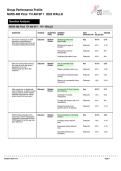
Group Performance Profile
NURS 480 Final TH AM SP 1 2025 WALLD

Question Analysis

NURS 480 Final TH AM SP 1 2025 WALLD

QUESTION SOURCE QUESTION ANSWER KEY/ % DISCRM
TYPE OPTION DISTRACTOR SELECTED

The nurse is caring for a client Educator Multiple Balancing fluids and Key 94.7% 0.16
following an adrenalectomy. Choice electrolytes
What is the highest priority in the
immediate postoperative period? Monitoring for signs of Distractor 5.3% -0.16
infection

Preventing emotional Distractor 0.0% N/A
disturbances

Protecting the patient’s skin Distractor 0.0% N/A


What is the best initial action by Educator Multiple Use an end-tidal CO2 Key 91.2% 0.30
the nurse to verify the correct Choice monitor.
placement of an oral
endotracheal tube (ET) after Obtain a portable chest x-ray Distractor 3.5% -0.32
insertion?

Auscultate for bilateral breath Distractor 3.5% 0.03
sounds.

Observe for symmetrical chest Distractor 1.8% -0.24
movement.


After surgery for an abdominal Educator Multiple Increase the IV fluid infusion Key 94.7% 0.14
aortic aneurysm, a client’s central Choice per protocol.
venous pressure (CVP) monitor
indicates low pressures. Which Administer IV diuretic Distractor 1.8% 0.04
action should the nurse take? medications.

Increase the infusion rate of IV Distractor 0.0% N/A
vasodilators.

Elevate the head of the Distractor 3.5% -0.19
patient’s bed to 45 degrees.


Which finding indicates to the Educator Multiple Fewer episodes of bleeding Key 91.2% 0.22
nurse that a client's transjugular Choice varices.
intrahepatic portosystemic shunt
(TIPS) placed 3 months ago has Increased serum albumin Distractor 1.8% -0.18
been effective? level.

Decreased indirect bilirubin Distractor 3.5% -0.16
level.

Improved alertness and Distractor 3.5% -0.05
orientation.


Created on:05/01 2025 Page 11

, Group Performance Profile
NURS 480 Final TH AM SP 1 2025 WALLD


QUESTION SOURCE QUESTION ANSWER KEY/ % DISCRM
TYPE OPTION DISTRACTOR SELECTED

Which assessment is most Educator Multiple arterial blood gas Key 45.6% 0.17
important for the nurse to make in Choice
order to evaluate whether heart rate Distractor 28.1% -0.11
treatment of a patient with
anaphylactic shock has been level of consciousness Distractor 15.8% -0.13
effective?
blood pressure Distractor 10.5% 0.05


A nurse is caring for a client who ATI Multiple Monitor the client for Key 98.2% -0.10
has type 1 diabetes mellitus. The Choice hypoglycemia.
nurse misread the client’s
morning blood glucose level as Give the client 15 to 20 g of Distractor 1.8% 0.10
210 mg/dL instead of 120 mg/dL. carbohydrate.
Based on this error, she
administered the insulin dose Complete an incident report. Distractor 0.0% N/A
appropriate for a reading over
200 mg/dL before the client’s
breakfast. Which of the following Notify the nurse manager. Distractor 0.0% N/A
is the nurse’s priority action upon
realizing the error?

The nurse is preparing to Educator Multiple Administer the medication Key 87.7% 0.45
administer the oral anticoagulant Choice as ordered.
warfarin (Coumadin) to a client in
CCU who has a PT: 22, PTT: 39 Assess the client for abnormal Distractor 7.0% -0.43
and an INR of 2.8. What action bleeding.
should the nurse implement?
Prepare to administer vitamin Distractor 5.3% -0.17
K (Aqua/Mephyton).

Notify the HCP to obtain an Distractor 0.0% N/A
order to increase the dose.


A client begins to complain of Educator Multiple Stop the transfusion and Key 100.0% N/A
chills and discomfort after about Choice maintain a patent line with
50 mL of blood has transfused normal saline solution and
from a unit of packed red blood new tubing.
cells. The best nursing action at
this time is to: Slow down the infusing blood Distractor 0.0% N/A
and dilute it with the normal
saline solution.

Compare the vital signs now Distractor 0.0% N/A
with what they were before the
blood transfusion began.

Discontinue the transfusion, Distractor 0.0% N/A
remove the IV catheter, and
restart the transfusion in
another site.


Created on:05/01 2025 Page 12

, Group Performance Profile
NURS 480 Final TH AM SP 1 2025 WALLD


QUESTION SOURCE QUESTION ANSWER KEY/ % DISCRM
TYPE OPTION DISTRACTOR SELECTED

The nurse is caring for a Educator Multiple Fluctuation of the fluid level Key 91.2% 0.23
postoperative client who has a Choice within the water seal
chest tube connected to suction chamber
and a water seal drainage
system. Which of the following Absence of fluid in the Distractor 0.0% N/A
indicates to the nurse that the drainage tubing
chest tube is functioning
properly? Continuous bubbling within the Distractor 8.8% -0.23
water seal chamber

Equal amounts of fluid Distractor 0.0% N/A
drainage in each collection
chamber


A nurse is discussing the care of Educator Multiple The client refuses breakfast Key 94.7% 0.13
a client who has type 1 diabetes Choice and requests to sleep.
mellitus with the unlicensed
assistive personnel (UAP). Which The client reports dizziness Distractor 5.3% -0.13
of the following situations should when standing.
the nurse instruct the UAP to
report immediately? The client asks the AP to trim Distractor 0.0% N/A
his broken toenail.

The client reports urine that is Distractor 0.0% N/A
dark yellow in color.


The nurse is caring for a client Educator Multiple Enoxaparin (Lovenox) Key 82.5% 0.17
with a cerebral hemorrhage. Choice
Which of the following medication Simvastatin (Zocor) Distractor 1.8% -0.25
prescriptions should the nurse
clarify with the healthcare Mannitol (Osmitrol) Distractor 12.3% -0.04
provider?
Nitroprusside (Nipride) Distractor 3.5% -0.10


A nurse is caring for a client who Educator Multiple Restrict fluid intake to 1,000 Key 91.2% 0.00
has syndrome of inappropriate Choice mL per day.
antidiuretic hormone (SIADH)
and a sodium level of 125 mEq/L. Maintain an IV of 0.45% Distractor 3.5% 0.10
Which of the following sodium chloride.
prescriptions should the nurse
anticipate? Provide a diet containing 2 g of Distractor 5.3% -0.08
sodium per day.

Administer desmopressin Distractor 0.0% N/A
acetate 0.2 mg orally.


Created on:05/01 2025 Page 13

Document information

Uploaded on
September 14, 2026
Number of pages
22
Written in
2025/2026
Type
Exam (elaborations)
Contains
Questions & answers
$16.99

Wrong document? Swap it for free Within 14 days of purchase and before downloading, you can choose a different document. You can simply spend the amount again.
Written by students who passed
Immediately available after payment
Read online or as PDF

Seller avatar
Reputation scores are based on the amount of documents a seller has sold for a fee and the reviews they have received for those documents. There are three levels: Bronze, Silver and Gold. The better the reputation, the more your can rely on the quality of the sellers work.
MindCraft
3.8
(52)
Sold
434
Followers
10
Items
2933
Last sold
16 hours ago


Why students choose Stuvia

Created by fellow students, verified by reviews

Quality you can trust: written by students who passed their tests and reviewed by others who've used these notes.

Didn't get what you expected? Choose another document

No worries! You can instantly pick a different document that better fits what you're looking for.

Pay as you like, start learning right away

No subscription, no commitments. Pay the way you're used to via credit card and download your PDF document instantly.

Student with book image

“Bought, downloaded, and aced it. It really can be that simple.”

Alisha Student

Working on your references?

Create accurate citations in APA, MLA and Harvard with our free citation generator.

Working on your references?

Frequently asked questions

