

Written by students who passed Immediately available after payment Read online or as PDF Wrong document? Swap it for free 4.6 TrustPilot
logo-home
Document preview thumbnail
Preview 3 out of 18 pages
Exam (elaborations)

NURS 480 (NURS480) Exam 2 ATI Assessment | Answered Complete Performance Profile Review | Updated 2025–2026.

Document preview thumbnail
Preview 3 out of 18 pages

NURS 480 (NURS480) Exam 2 ATI Assessment | Answered Complete Performance Profile Review | Updated 2025–2026. ### 1. The client’s husband asks the nurse what caused his wife to have an intracerebral hemorrhage. The nurse explains: A. “Her high blood pressure is her biggest risk factor for intracerebral hemorrhage.” B. “It was most likely due to overexertion at work.” C. “Her having had a high cholesterol level for many years has caused this.” D. “It was probably because of a family history of cardiovascular disease.” ### 2. A nurse is planning care for a client who has a halo fixation device. Which of the following actions should the nurse include in the plan of care? A. Monitor the client for an elevated temperature. B. Provide range of motion to the client’s neck. C. Remove the vest daily to inspect the client’s skin integrity. D. Check that the halo jacket is snug against the client’s skin. ### 3. A nurse is caring for a client who has quadriplegia from a spinal cord injury and reports having a severe headache. The nurse obtains a blood pressure reading of 210/108 mm Hg and suspects the client is experiencing autonomic dysreflexia. Which of the following actions should the nurse take first? A. Place the client in a high-Fowler’s position. B. Administer a nitrate antihypertensive. C. Assess the client for bladder distention. D. Obtain the client’s heart rate. ### 4. A female patient presents to the emergency department reporting the most severe headache of her life. Which type of stroke should the nurse anticipate? A. Intracerebral hemorrhage B. Transient ischemic attack (TIA) C. Embolic stroke D. Thrombotic stroke ### 5. To prevent autonomic dysreflexia, which nursing action should the home health nurse include in the plan of care for a patient who has paraplegia at the T4 level? A. Assist to plan a prescribed bladder and bowel program. B. Support selection of a high-protein diet. C. Discuss options for sexuality and fertility. D. Use quad coughing to strengthen cough efforts. ### 6. After evacuation of an epidural hematoma, a patient’s intracranial pressure (ICP) is being monitored with an intraventricular catheter. Which information obtained by the nurse requires urgent communication with the health care provider? A. Temperature of 101.6°F B. Pulse of 102 beats/min C. Intracranial pressure of 15 mm Hg D. Mean arterial pressure of 90 mm Hg ### 7. The public health nurse is planning a program to decrease the incidence of meningitis in teenagers and young adults. Which action is most likely to be effective? A. Encourage immunization for adolescents and college freshmen. B. Emphasize the importance of hand washing before meals. C. Tell adolescents and young adults to avoid crowds in the winter. D. Support serving healthy nutritional options in the college cafeteria. ### 8. The nurse would question a doctor’s order of which drug for the client with cerebral hemorrhage? A. Enoxaparin (Lovenox) B. Simvastatin (Zocor) C. Mannitol (Osmitrol) D. Nitroprusside (Nipride) ### 9. A nurse is caring for a client who has had a spinal cord injury at the level of the T2–T3 vertebrae. When planning care, the nurse should anticipate which of the following types of disability? A. Paraplegia B. Paresthesia C. Hemiplegia D. Quadriplegia ### 10. A nurse is caring for a client who has a T4 spinal cord injury. Which of the following client findings should the nurse identify as an indication the client is at risk for experiencing autonomic dysreflexia? A. The client’s bladder becomes distended. B. The client states having a severe headache. C. The client’s blood pressure becomes elevated. D. The client states having nasal congestion. ### 11. Nurses in change-of-shift report are discussing the care of a patient with a stroke who has progressively increasing weakness and decreasing level of consciousness. Which patient problem do they determine has the highest priority? A. Risk for aspiration B. Impaired skin integrity C. Impaired physical mobility D. Disturbed sensory perception ### 12. A patient with left-sided weakness that started 60 minutes earlier is admitted to the emergency department and diagnostic tests are ordered. Which test should be done first? A. Computed tomography (CT) scan B. Complete blood count (CBC) C. Chest radiograph D. 12-lead electrocardiogram (ECG) ### 13. A nurse is caring for a client who has a suspected diagnosis of bacterial meningitis. Which of the following actions is the nurse’s priority? A. Place the client in droplet isolation. B. Prepare the client for a lumbar puncture. C. Administer an intravenous antibiotic. D. Obtain blood cultures. ### 14. A nurse is caring for a client who is experiencing Cushing’s Triad following a subdural hematoma. Which of the following medications should the nurse plan to administer? A. Mannitol 25% B. Albumin 25% C. Dextran 70 D. Hydroxyethyl glucose ### 15. A nurse is caring for a client who has increased intracranial pressure (ICP). Which of the following interventions should the nurse implement to promote reduction of ICP? A. Elevate the head of the bed 30 degrees. B. Teach controlled coughing and deep breathing. C. Provide a brightly lit environment. D. Encourage a minimum intake of 2,000 mL of clear fluids per day. ### 16. Computed tomography (CT) of a 68-year-old male patient’s head reveals that he has experienced a hemorrhagic stroke. What is the priority nursing intervention in the emergency department? A. Maintenance of patient’s airway B. Positioning to promote cerebral perfusion C. Control of fluid and electrolyte imbalances D. Administration of tissue plasminogen activator (tPA) ### 17. Differentiating serous drainage from cerebrospinal fluid (CSF) leaking from a head injury is done by which of the following? A. Checking the fluid for glucose levels B. Determining the pH of the drainage C. Obtaining a noncontrast CT scan D. Asking the patient to perform a Valsalva maneuver and noting any increase in drainage ### 18. The nurse in the neurointensive care unit is caring for a client with a new C6 spinal cord injury who is breathing independently. Which priority nursing intervention should be implemented? A. Monitor the pulse oximetry reading. B. Provide pureed foods six times a day. C. Assess for autonomic dysreflexia. D. Administer muscle relaxants. ### 19. A nurse is caring for a client who is diagnosed with a cerebrovascular accident (CVA, stroke). Which of the following actions should be implemented to prevent deep-vein thrombosis (DVT)? A. Place sequential compression devices bilaterally. B. Massage lower extremities daily. C. Check for positive Homans’ sign. D. Administer enoxaparin subcutaneously daily per provider orders. ### 20. An unresponsive client is brought to the emergency department after sustaining a head injury during a motor vehicle crash. The client has a Glasgow Coma Scale (GCS) score of 10 and suspected increased intracranial pressure (ICP). Which doctor’s order should the nurse clarify? A. Prepare the patient for lumbar puncture. B. Obtain X-rays of the skull and spine. C. Send for computed tomography (CT) scan. D. Perform neurologic checks every 15 minutes. ### 21. A nurse is caring for a client who recently had a stroke. The client requires assistance with mobility and strengthening the affected side. Which of the following referrals should the nurse anticipate the provider to make? A. Physical therapist B. Occupational therapist C. Respiratory therapist D. Social worker ### 22. The nurse is administering nitroglycerin intravenously (IV) to a client experiencing chest pain of an 8 on a 1-to-10 scale. What assessment changes would cause the nurse to decrease the infusion rate? A. Blood pressure drops from 110/65 (80) mmHg to 89/44 (59) mmHg B. Pain drops from an 8 to a 4 C. Heart rate increases from 110 to 115 beats per minute D. Client verbalizes his head is pounding ### 23. A patient comes into the ER with complaints of midsternal chest pain radiating to the neck and left arm which is unrelieved by sublingual nitroglycerin. An ECG is obtained. What observation on the ECG or cardiac monitor would indicate to the nurse the need to immediately notify the physician? A. An ST-segment elevation from the isoelectric baseline B. Atrial tachycardia at a rate of 125 with occasional premature beats C. Premature ventricular beats, unifocal in formation at rate of 4/min D. A PR interval of 0.20 seconds ### 24. A nurse is providing teaching to a client who has angina pectoris and a new prescription for nitroglycerin sublingual tablets. Which of the following statements by the client indicates an understanding of the teaching? A. “I’ll dial 911 if 1 nitroglycerin tablet does not relieve my pain, and then take up to 2 more tablets 5 minutes apart while waiting.” B. “I’ll dial 911 if I still have pain after taking 3 nitroglycerin tablets 5 minutes apart.” C. “I’ll dial 911 if I still have pain after taking 4 nitroglycerin tablets over a 20-minute period.” D. “I’ll dial 911 when I have pain and then take the nitroglycerin tablets.” ### 25. The vital signs of a client with symptomatic bradycardia are BP 102/76 mmHg, pulse 45 beats/min, and RR 16 breaths/min. Atropine sulfate is administered IV push. What nursing assessment indicates a therapeutic response to the medication? A. Pulse rate has increased to 70 beats/min. B. Systolic blood pressure has increased to 122 mmHg. C. Pupils are dilated. D. Oral secretions have decreased. ### 26. A nurse is caring for a client who reports a new onset of severe chest pain. Which of the following actions should the nurse take to determine if the client is experiencing a myocardial infarction? A. Perform a 12-lead ECG B. Check the client’s blood pressure. C. Auscultate heart tones. D. Determine if pain radiates to the left arm. ### 27. A nurse is caring for a client with a ventricular pacemaker who is on ECG monitoring. The nurse understands that the pacemaker is functioning properly when which of the following appears on the monitor strip? A. Pacemaker spikes before each QRS complex B. Pacemaker spikes after each QRS complex C. Pacemaker spikes before each P wave D. Pacemaker spikes with each T wave ### 28. A nurse is caring for a client who has had a myocardial infarction. Upon his first visit to cardiac rehabilitation, he tells the nurse that he does not understand why he needs to be there because there is nothing more to do, as the damage is done. Which of the following is the correct nursing response? A. “Cardiac rehabilitation cannot undo the damage to your heart but it can help you get back to your previous level of activity safely.” B. “It’s not unusual to feel that way at first, but once you learn the routine, you’ll enjoy it.” C. “Exercise is good for you and good for your heart.” D. “Your doctor is the expert here, and I’m sure he would only recommend what is best for you.” ### 29. A patient who is being admitted to the emergency department with intermittent chest pain gives the following list of daily medications to the nurse. Which medication has the most immediate implications for the patient’s care? A. Sildenafil (Viagra) B. Captopril C. Furosemide (Lasix) D. Warfarin (Coumadin) ### 30. A patient is scheduled for a computed tomography (CT) scan of the chest with contrast media. Which assessment findings should the nurse report to the health care provider before the patient goes for the CT? **(Select all that apply.)** ### 31. A nurse is assessing a client who had left femoral cardiac angiography. Identify where the nurse will palpate to assess the most distal pulse on the affected side. ### 32. A nurse is admitting a young adult client who has suspected bacterial meningitis. The nurse should closely monitor the client for increased intracranial pressure (ICP) as indicated by which of the following findings? A. Widened pulse pressure B. Nuchal rigidity C. Pupils reactive to light D. Elevated temperature ### 33. A nurse is preparing to administer metoprolol 5 mg IV bolus to a client for heart rate control. Available is metoprolol injection 1 mg/mL. How many mL should the nurse administer per dose? A. 5 mL B. 3 mL C. 4 mL D. 6 mL ### 34. The nurse is caring for a client who has just arrived at the telemetry unit after having cardiac catheterization. Which task could the nurse delegate to a licensed practical/vocational nurse (LPN/VN)? A. Give the scheduled oral aspirin and simvastatin medication. B. Teach the patient about the postprocedure plan of care. C. Perform the initial assessment of the catheter insertion site. D. Titrate the heparin infusion according to the agency protocol. ### 35. A 70-year-old female client with left-sided hemiparesis arrives by ambulance to the emergency department. Which action would the nurse take first? A. Check the respiratory rate and effort. B. Take the patient’s blood pressure. C. Assess the Glasgow Coma Scale score. D. Send the patient for a computed tomography (CT) scan. ### 36. A client in the emergency department with sudden-onset right-sided weakness is diagnosed with an intracerebral hemorrhage. Which information about the patient is most important to communicate to the healthcare provider? A. The patient has atrial fibrillation and takes warfarin (Coumadin). B. The patient’s speech is difficult to understand. C. The patient’s blood pressure is 144/90 mm Hg. D. The patient takes a diuretic because of a history of hypertension. ### 37. Admission vital signs for a client who has a brain injury are BP 128/68 mmHg, HR 110 beats/min, RR 26 breaths/min. Which set of vital signs, if taken 1 hour later, will be of most concern to the nurse? A. BP 180/68 mm Hg, HR 56 bpm, Cheyne-Stokes respirations B. BP 130/78 mm Hg, HR 95 bpm, Cheyne-Stokes respirations C. BP 148/78 mm Hg, HR 112 bpm, irregular respirations 28 breaths/min D. BP 110/70 mm Hg, HR 59 bpm, irregular respirations 13 breaths/min ### 38. A client suffering from chest discomfort and shortness of breath is brought to the emergency department due to acute angina pectoris. The healthcare provider orders IV nitroglycerin 75 mg in 500 mL of 5% Dextrose Water at 100 mcg/min. The nurse will set the pump at which rate in mL/hr? Write your answer using a whole number. ### 39. A nurse is about to administer warfarin (Coumadin) to a client who has atrial fibrillation. When the client asks what this medication will do, which of the following is an appropriate nursing response? A. It prevents strokes in clients who have atrial fibrillation. B. It helps convert atrial fibrillation to sinus rhythm. C. It dissolves clots in the bloodstream. D. It slows the response of the ventricles to the fast atrial impulses. ### 40. A nurse on a telemetry unit is caring for a client who has unstable angina and is reporting chest pain with a severity of 6 on a 0-to-10 scale. The nurse administers 1 sublingual nitroglycerin tablet. After 5 min, the client states that his chest pain is now a severity of 4. Which of the following actions should the nurse take? A. Administer another nitroglycerin tablet. B. Obtain an ECG. C. Initiate a peripheral IV. D. Call the Rapid Response Team. ### 41. A nurse is preparing to administer a continuous heparin infusion at 1,600 units/hr. Available is heparin 25,000 units in D5W 500 mL. The nurse should set the IV pump to deliver how many mL/hr? Round to the nearest whole number. ### 42. At home, a client has a bottle of warfarin (Coumadin) 5 mg tablets. After his most recent INR, the doctor calls and tells him to take 7.5 mg/day. How many scored tablets should the patient take? Round to one decimal place. ### 43. A nurse is performing the cardinal fields of gaze examination on a patient diagnosed with a cerebrovascular accident. Which cranial nerve is the nurse assessing? A. Cranial nerve III B. Cranial nerve XI C. Cranial nerve X D. Cranial nerve VIII ### 44. The nurse is reviewing the laboratory results for newly admitted patients on the cardiovascular unit. Which patient laboratory result is most important to communicate as soon as possible to the health care provider? A. Patient with increase in troponin T and troponin I level B. Patient whose triglyceride level is high C. Patient who has very low homocysteine level D. Patient with elevated high-sensitivity C-reactive protein level ### 45. An unconscious patient arrives in the emergency department. The cardiac monitor shows a rhythm identified as Torsades de Pointes. Which medication will the nurse prepare to administer? A. Magnesium sulfate B. Epinephrine C. Atropine D. Sodium bicarbonate ### 46. A nurse is sitting at the nurses’ station and sees a rhythm on the monitor. The patient is awake and alert but states that she feels like her heart is racing. Which intervention will the nurse anticipate for this patient? A. Prepare for cardioversion B. Begin CPR C. Administer atropine D. Prepare for defibrillation ### 47. The client is receiving warfarin (Coumadin) for DVT. Which lab would be scheduled by the nurse? A. PT/INR B. PTT C. CBC D. CMP ### 48. A client complains of a severe headache after receiving nitroglycerin 0.4 mg SL for angina. What should the nurse administer? A. A PRN dose of acetaminophen PO B. A second dose of nitroglycerin C. A scheduled dose of low-dose aspirin D. A PRN dose of morphine sulfate IV ### 49. A patient presents to the ER complaining that she is short of breath and feels like her heart is racing. The patient is placed on the cardiac monitor and a rhythm is noted. Which intervention will the nurse anticipate for this patient? A. Prepare to administer adenosine B. Prepare for defibrillation C. Call the Rapid Response Team D. Call a Code STEMI ### 50. A patient arrives at the ER via ambulance. The cardiac monitor shows a rhythm. The patient is apneic. What is the priority intervention for this patient? A. Begin CPR B. Defibrillate the patient. C. Administer O₂ 15 L via nonrebreather mask. D. Administer atropine. ### 51. For which dysrhythmia is defibrillation primarily indicated as the treatment? A. Ventricular fibrillation B. Third-degree AV block C. Uncontrolled fibrillation D. Ventricular tachycardia with a pulse ### 52. Which of the following ICP monitoring devices allows for drainage of cerebrospinal fluid? A. Ventriculostomy B. Subarachnoid screw C. Fiberoptic transducer-tipped catheter D. Subdural catheter ### 53. A patient’s blood pressure is 130/84. The doctor plans on suggesting some non-pharmacologic methods to lower blood pressure. Which methods should the nurse include in the patient teaching? **(Select all that apply.)** ### 54. The nurse is administering alteplase (tPA, Activase) to a client who has been diagnosed with an ischemic stroke. What is an important nursing intervention for this medication? A. Place the client on bleeding precautions. B. Monitor the ECG for dysrhythmias. C. Monitor urine output hourly. D. Monitor for activity intolerance. ### 55. A patient presents to the emergency department stating that she feels like her heart is skipping beats. She is placed on the monitor. The nurse would identify this rhythm as: A. Atrial fibrillation B. Supraventricular tachycardia (SVT) C. Atrial flutter D. Sinus rhythm ### 56. A patient is brought to the ER by the family stating she is confused and they are worried she is having a stroke. The patient has a history of diabetes and hypertension. What is the priority nursing intervention? A. Check the patient’s blood sugar. B. Check the patient’s blood pressure. C. Order a CT scan and labs. D. Obtain an EKG. ### 57. A patient arrives to the emergency department complaining of a headache, stiff neck, and fever. The nurse suspects the patient may have bacterial meningitis. What is the FIRST action to be taken by the nurse? A. Initiate droplet precautions B. Administer antibiotics C. Initiate IV access D. Decrease bright lights ### 58. The nurse has administered prescribed IV mannitol (Osmitrol) to an unconscious patient. Which parameter should the nurse monitor to determine the medication’s effectiveness? A. Intracranial pressure B. Blood pressure C. Oxygen saturation D. Hemoglobin and hematocrit ### 59. While assisting with a lumbar puncture, the nurse notes that the cerebrospinal fluid returning is cloudy. This is a symptom of: A. Infection B. Traumatic tap C. Subdural hematoma D. Cerebral edema ### 60. Identify this rhythm. ### 61. Which nursing intervention will be most effective when assisting the patient with coronary artery disease (CAD) to make appropriate dietary changes? A. Give the patient a list of low-sodium, low-cholesterol foods that should be included in the diet. B. Help the patient modify favorite high-fat recipes by using monounsaturated oils when possible. C. Emphasize the increased risk for heart problems unless the patient makes the dietary changes. D. Inform the patient that a diet containing no saturated fat and minimal salt will be necessary. For the remaining items, the report does **not display the individual answer choices**, so I have listed the question stems only. ### 62. Determine the client’s Glasgow Coma Scale (GCS) rating. Highlight the text that corresponds with the assessment findings presented in the scenario tab. ### 63. A nurse is caring for a client who has an intracranial pressure (ICP) reading of 40 mm Hg. Which of the following findings should the nurse identify as a late sign of ICP? **(Select all that apply.)** ### 64. Complete the following sentence by using the list of options. ### 65. Identify the appropriate interventions for each of the following rhythms below. ### 66. Mr. M. is a 56-year-old client diagnosed with a ST elevation myocardial infarction (STEMI). He is scheduled for coronary artery bypass graft (CABG) surgery and has several questions. The nurse prepares to teach Mr. M. on CABG procedures. Which are priority instructions? ### 67. Which of the following findings require follow-up by the nurse? ### 68. A nurse is caring for a client who just had a cardiac catheterization. Which of the following nursing interventions should the nurse include in the client’s plan of care? **(Select all that apply.)** ### 69. Clinical manifestations can indicate whether the patient is experiencing a left-sided or right-sided stroke. For each of the clinical manifestations listed, choose if they occur in left-sided CVAs, right-sided CVAs, or can occur in both. ### 70. A 48-year-old male presents to the emergency department with substernal chest pain, shortness of breath, and left arm numbness and tingling. The patient is pale and diaphoretic. He has a history of hypertension. Which interventions would the nurse anticipate for this patient? **(Select all that apply.)** ### 71. For which of the following interprofessional team members should the nurse anticipate a provider’s referral? **(Select all that apply.)** ### 72. The nurse is caring for a patient with a T4 spinal cord injury. On assessment, the patient is diaphoretic and complaining of a headache. The following vital signs are obtained. Which actions are indicated for this client? ### 73. The nurse is reviewing the client’s assessment data to prepare the plan of care. Complete the diagram by dragging from the choices below to specify what condition the client is most likely experiencing, 2 actions the nurse should take to address that condition, and 2 parameters the nurse should monitor to assess the client’s progress. ### 74. Complete the diagram by dragging from the choices below to specify what condition the client is most likely experiencing, 2 actions the nurse should take to address that condition, and 2 parameters the nurse should monitor to assess the client’s progress.

Content preview

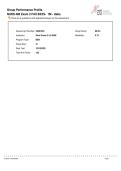
Group Performance Profile
NURS 480 Exam 2 FAII 2025- 1M - Uebe
There are 3 question(s) with adjusted answers on this assessment


Assessment Number: 34601824 Group Score: 86.8%

Institution: West Coast U LA BSN Reliability: 0.72

Program Type: BSN

Group Size: 41

Date Test: 12/2/2025

Total # of Points: 120


Created on:02/08/2025 Page 1

, Group Performance Profile
NURS 480 Exam 2 FAII 2025- 1M - Uebe

Question Analysis

NURS 480 Exam 2 FAII 2025- 1M - Uebe

QUESTION SOURCE QUESTION ANSWER KEY/ % DISCRM
TYPE OPTION DISTRACTOR SELECTED

The client’s husband asks the Educator Multiple “Her high blood pressure is Key 100.0% N/A
nurse what caused his wife to Choice her biggest risk factor for
have a intracerebral hemorrhage. intracerebral hemorrhage.”
The nurse explains:
“It was most likely due to Distractor 0.0% N/A
overexertion at work.”

“Her having had a high Distractor 0.0% N/A
cholesterol level for many
years has caused this.”

“It was probably because of a Distractor 0.0% N/A
family history of cardiovascular
disease.”


A nurse is planning care for a Educator Multiple Monitor the client for an Key 92.7% 0.09
client who has a halo fixation Choice elevated temperature.
device. Which of the following
actions should the nurse include Provide range of motion to the Distractor 0.0% N/A
in the plan of care? client's neck.

Remove the vest daily to Distractor 7.3% -0.09
inspect the client's skin
integrity.

Check that the halo jacket is Distractor 0.0% N/A
snug against the client's skin.


A nurse is caring for a client who Educator Multiple Place the client in a Key 65.9% 0.23
has quadriplegia from a spinal Choice high-Fowler’s position.
cord injury and reports having a
severe headache. The nurse Administer a nitrate Distractor 2.4% 0.00
obtains a blood pressure reading antihypertensive.
of 210/108 mm Hg and suspects
the client is experiencing Assess the client for bladder Distractor 31.7% -0.23
autonomic dysreflexia. Which of distention.
the following actions should the
nurse take first?
Obtain the client’s heart rate. Distractor 0.0% N/A


A female patient presents to the Educator Multiple Intracerebral hemorrhage Key 97.6% 0.29
emergency department reporting Choice
the most severe headache of her Transient ischemic attack Distractor 0.0% N/A
life. Which type of stroke should (TIA)
the nurse anticipate?
Embolic stroke Distractor 0.0% N/A

Thrombotic stroke Distractor 2.4% -0.29


Created on:02/08/2025 Page 9

, Group Performance Profile
NURS 480 Exam 2 FAII 2025- 1M - Uebe


QUESTION SOURCE QUESTION ANSWER KEY/ % DISCRM
TYPE OPTION DISTRACTOR SELECTED

To prevent autonomic Educator Multiple Assist to plan a prescribed Key 97.6% -0.04
dysreflexia, which nursing action Choice bladder and bowel program.
should the home health nurse
include in the plan of care for a Support selection of a Distractor 0.0% N/A
patient who has paraplegia at the high-protein diet.
T4 level?
Discuss options for sexuality Distractor 0.0% N/A
and fertility.

Use quad coughing to Distractor 2.4% 0.04
strengthen cough efforts.


After evacuation of an epidural Educator Multiple Temperature of 101.6° F Key 87.8% 0.23
hematoma, a patient’s Choice
intracranial pressure (ICP) is Pulse of 102 beats/min Distractor 2.4% 0.12
being monitored with an
intraventricular catheter. Which Intracranial pressure of 15 mm Distractor 7.3% -0.19
information obtained by the nurse Hg
requires urgent communication
with the health care provider?
Mean arterial pressure of 90 Distractor 2.4% -0.29
mm Hg


The public health nurse is Educator Multiple Encourage immunization for Key 85.4% 0.46
planning a program to decrease Choice adolescents and college
the incidence of meningitis in freshmen.
teenagers and young adults.
Which action is most likely to be Emphasize the importance of Distractor 7.3% -0.15
effective? hand washing before meals.


Tell adolescents and young Distractor 7.3% -0.47
adults to avoid crowds in the
winter.

Support serving healthy Distractor 0.0% N/A
nutritional options in the
college cafeteria.


The nurse would question a Educator Multiple Enoxaparin (Lovenox) Key 90.2% 0.19
doctor's order of which drug for Choice
the client with cerebral Simvastatin (Zocor) Distractor 2.4% -0.04
hemorrhage:
Mannitol (Osmitrol) Distractor 4.9% -0.02

Nitroprusside (Nipride) Distractor 2.4% -0.29


A nurse is caring for a client who Educator Multiple Paraplegia Key 80.5% 0.28
has had a spinal cord injury at the Choice
level of the T2 - T3 vertebrae. Paresthesia Distractor 0.0% N/A
When planning care, the nurse
should anticipate which of the Hemiplegia Distractor 4.9% -0.23
following types of disability?


Created on:02/08/2025 Page 10

Document information

Uploaded on
September 14, 2026
Number of pages
18
Written in
2025/2026
Type
Exam (elaborations)
Contains
Questions & answers
$18.49

Wrong document? Swap it for free Within 14 days of purchase and before downloading, you can choose a different document. You can simply spend the amount again.
Written by students who passed
Immediately available after payment
Read online or as PDF

Seller avatar
Reputation scores are based on the amount of documents a seller has sold for a fee and the reviews they have received for those documents. There are three levels: Bronze, Silver and Gold. The better the reputation, the more your can rely on the quality of the sellers work.
MindCraft
3.8
(52)
Sold
434
Followers
10
Items
2933
Last sold
17 hours ago


Why students choose Stuvia

Created by fellow students, verified by reviews

Quality you can trust: written by students who passed their tests and reviewed by others who've used these notes.

Didn't get what you expected? Choose another document

No worries! You can instantly pick a different document that better fits what you're looking for.

Pay as you like, start learning right away

No subscription, no commitments. Pay the way you're used to via credit card and download your PDF document instantly.

Student with book image

“Bought, downloaded, and aced it. It really can be that simple.”

Alisha Student

Working on your references?

Create accurate citations in APA, MLA and Harvard with our free citation generator.

Working on your references?

Frequently asked questions

