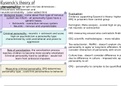
Eysenck's theory of
-personality
Personality's can be split into two dimensions :
introversion/ extraversion and
neuroticism/stability . Later added third
dimension – psychoticism
Biological bases : come about from type of nervous
Evaluation
Evidence supporting Eysenck's theory: higher
system we inherit ; all personality types have a
EPQ in prisoners than control group
genetic bases.
• Extraverts : overactive nervous system
• Neurotic : nervous and unpredictable Farrington: Meta analysis , scored high on psy
not neurotic or extrovertist
Criminal personality : neurotic + extrovert and score EEG measuring arousal also contradicts findin
high on psychoticism a personality type
characterized by cold unemotional and prone to EEG scientific methodologies – more reliable
aggression
Too reductionist : Moffitt – doesn’t explain cha
personality in ages/ or long-term offenders. Ne
Role of socialization: the socialization process consider interaction of personality with enviro
teaches children to become more socially orientated.
Criminal personality hard to condition - would not Culture bias : doesn’t consider difference in pe
learn from antisocial impulses due to difference in culture – imposed etic app
personality to all
EPQ – personality to complex to be quantified
Measuring criminal personality: EPQ determines
personality type , could link personalities to behavior
-personality
Personality's can be split into two dimensions :
introversion/ extraversion and
neuroticism/stability . Later added third
dimension – psychoticism
Biological bases : come about from type of nervous
Evaluation
Evidence supporting Eysenck's theory: higher
system we inherit ; all personality types have a
EPQ in prisoners than control group
genetic bases.
• Extraverts : overactive nervous system
• Neurotic : nervous and unpredictable Farrington: Meta analysis , scored high on psy
not neurotic or extrovertist
Criminal personality : neurotic + extrovert and score EEG measuring arousal also contradicts findin
high on psychoticism a personality type
characterized by cold unemotional and prone to EEG scientific methodologies – more reliable
aggression
Too reductionist : Moffitt – doesn’t explain cha
personality in ages/ or long-term offenders. Ne
Role of socialization: the socialization process consider interaction of personality with enviro
teaches children to become more socially orientated.
Criminal personality hard to condition - would not Culture bias : doesn’t consider difference in pe
learn from antisocial impulses due to difference in culture – imposed etic app
personality to all
EPQ – personality to complex to be quantified
Measuring criminal personality: EPQ determines
personality type , could link personalities to behavior