Neurological Disorders Practice Quiz #3 (25 Questions)
Neurological Disorders Practice Quiz #3 (25 Questions)
Study online at https://quizlet.com/_9gh44u
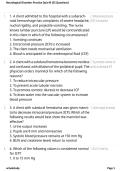
1. 1. A client admitted to the hospital with a subarach- 2. Intracranial pressure
noid hemorrhage has complaints of severe headache, (ICP) is increased
nuchal rigidity, and projectile vomiting. The nurse
knows lumbar puncture (LP) would be contraindicated
in this client in which of the following circumstances?
1. Vomiting continues
2. Intracranial pressure (ICP) is increased
3. The client needs mechanical ventilation
4. Blood is anticipated in the cerebrospinal fluid (CSF)
2. 2. A client with a subdural hematoma becomes restless 3. To promote osmotic di-
and confused, with dilation of the ipsilateral pupil. The uresis to decrease ICP
physician orders mannitol for which of the following
reasons?
1. To reduce intraocular pressure
2. To prevent acute tubular necrosis
3. To promote osmotic diuresis to decrease ICP
4. To draw water into the vascular system to increase
blood pressure
3. 3. A client with subdural hematoma was given manni- 1. Urine output increases
tol to decrease intracranial pressure (ICP). Which of the
following results would best show the mannitol was
effective?
1. Urine output increases
2. Pupils are 8 mm and nonreactive
3. Systolic blood pressure remains at 150 mm Hg
4. BUN and creatinine levels return to normal
4. 4. Which of the following values is considered normal 1. 0 to 15 mm Hg
for ICP?
1. 0 to 15 mm Hg
1/8
actualstudy Page 1
, Neurological Disorders Practice Quiz #3 (25 Questions)
Neurological Disorders Practice Quiz #3 (25 Questions)
Study online at https://quizlet.com/_9gh44u
2. 25 mm Hg
3. 35 to 45 mm Hg
4. 120/80 mm Hg
5. 5. Which of the following symptoms may occur with a 1. Ataxia and confusion
phenytoin level of 32 mg/dl?
1. Ataxia and confusion
2. Sodium depletion
3. Tonic-clonic seizure
4. Urinary incontinence
6. 6. Which of the following signs and symptoms of in- 3. Restlessness and confu-
creased ICP after head trauma would appear first? sion
1. Bradycardia
2. Large amounts of very dilute urine
3. Restlessness and confusion
4. Widened pulse pressure
7. 7. Problems with memory and learning would relate to 4. Temporal
which of the following lobes?
1. Frontal
2. Occipital
3. Parietal
4. Temporal
8. 8. While cooking, your client couldn't feel the tempera- 3. Parietal
ture of a hot oven. Which lobe could be dysfunctional?
1. Frontal
2. Occipital
3. Parietal
4. Temporal
9. 4. Nail bed pressure
2/8
actualstudy Page 2
Neurological Disorders Practice Quiz #3 (25 Questions)
Study online at https://quizlet.com/_9gh44u
1. 1. A client admitted to the hospital with a subarach- 2. Intracranial pressure
noid hemorrhage has complaints of severe headache, (ICP) is increased
nuchal rigidity, and projectile vomiting. The nurse
knows lumbar puncture (LP) would be contraindicated
in this client in which of the following circumstances?
1. Vomiting continues
2. Intracranial pressure (ICP) is increased
3. The client needs mechanical ventilation
4. Blood is anticipated in the cerebrospinal fluid (CSF)
2. 2. A client with a subdural hematoma becomes restless 3. To promote osmotic di-
and confused, with dilation of the ipsilateral pupil. The uresis to decrease ICP
physician orders mannitol for which of the following
reasons?
1. To reduce intraocular pressure
2. To prevent acute tubular necrosis
3. To promote osmotic diuresis to decrease ICP
4. To draw water into the vascular system to increase
blood pressure
3. 3. A client with subdural hematoma was given manni- 1. Urine output increases
tol to decrease intracranial pressure (ICP). Which of the
following results would best show the mannitol was
effective?
1. Urine output increases
2. Pupils are 8 mm and nonreactive
3. Systolic blood pressure remains at 150 mm Hg
4. BUN and creatinine levels return to normal
4. 4. Which of the following values is considered normal 1. 0 to 15 mm Hg
for ICP?
1. 0 to 15 mm Hg
1/8
actualstudy Page 1
, Neurological Disorders Practice Quiz #3 (25 Questions)
Neurological Disorders Practice Quiz #3 (25 Questions)
Study online at https://quizlet.com/_9gh44u
2. 25 mm Hg
3. 35 to 45 mm Hg
4. 120/80 mm Hg
5. 5. Which of the following symptoms may occur with a 1. Ataxia and confusion
phenytoin level of 32 mg/dl?
1. Ataxia and confusion
2. Sodium depletion
3. Tonic-clonic seizure
4. Urinary incontinence
6. 6. Which of the following signs and symptoms of in- 3. Restlessness and confu-
creased ICP after head trauma would appear first? sion
1. Bradycardia
2. Large amounts of very dilute urine
3. Restlessness and confusion
4. Widened pulse pressure
7. 7. Problems with memory and learning would relate to 4. Temporal
which of the following lobes?
1. Frontal
2. Occipital
3. Parietal
4. Temporal
8. 8. While cooking, your client couldn't feel the tempera- 3. Parietal
ture of a hot oven. Which lobe could be dysfunctional?
1. Frontal
2. Occipital
3. Parietal
4. Temporal
9. 4. Nail bed pressure
2/8
actualstudy Page 2