

14-Patho 370 Final Notes
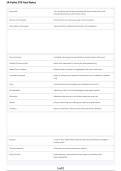
Hemostasis The normal process that stops bleeding after blood vessel injury while
maintaining blood flow within intact vessels.
Purpose of Hemostasis Prevent blood loss while preserving normal circulation.
Three Steps of Hemostasis Vasoconstriction, platelet plug formation, and coagulation.
Vasoconstriction Immediate narrowing of an injured blood vessel to reduce blood loss.
Platelets (Thrombocytes) Blood cells responsible for forming the initial platelet plug.
Platelet Plug Formation Platelets adhere, activate, and aggregate at the site of vessel injury.
Coagulation Cascade Series of clotting factor reactions that produce fibrin to stabilize the platelet
plug.
Fibrin Insoluble protein that strengthens and stabilizes a blood clot.
Clot Retraction Tightening of the clot to bring damaged vessel edges together.
Fibrinolysis Breakdown and removal of a clot after healing has occurred.
Plasmin Enzyme responsible for breaking down fibrin during fibrinolysis.
Thrombus Blood clot that forms within a blood vessel and remains attached.
Embolus A clot or other material that travels through the bloodstream and lodges in
another vessel.
Thromboembolism Obstruction of a blood vessel by an embolus.
Virchow's Triad Endothelial injury, abnormal blood flow (stasis or turbulence), and
hypercoagulability.
1 of 2
Hemostasis The normal process that stops bleeding after blood vessel injury while
maintaining blood flow within intact vessels.
Purpose of Hemostasis Prevent blood loss while preserving normal circulation.
Three Steps of Hemostasis Vasoconstriction, platelet plug formation, and coagulation.
Vasoconstriction Immediate narrowing of an injured blood vessel to reduce blood loss.
Platelets (Thrombocytes) Blood cells responsible for forming the initial platelet plug.
Platelet Plug Formation Platelets adhere, activate, and aggregate at the site of vessel injury.
Coagulation Cascade Series of clotting factor reactions that produce fibrin to stabilize the platelet
plug.
Fibrin Insoluble protein that strengthens and stabilizes a blood clot.
Clot Retraction Tightening of the clot to bring damaged vessel edges together.
Fibrinolysis Breakdown and removal of a clot after healing has occurred.
Plasmin Enzyme responsible for breaking down fibrin during fibrinolysis.
Thrombus Blood clot that forms within a blood vessel and remains attached.
Embolus A clot or other material that travels through the bloodstream and lodges in
another vessel.
Thromboembolism Obstruction of a blood vessel by an embolus.
Virchow's Triad Endothelial injury, abnormal blood flow (stasis or turbulence), and
hypercoagulability.
1 of 2


