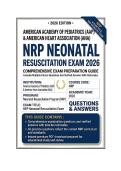
,NRP Neonatal Resuscitation Exam 2026 | Comprehensive Test Bank |
Questions And Answers
TABLE OF CONTENTS
1. Foundations of Neonatal Resuscitation — Q1–Q15
2. Anticipating and Preparing for Resuscitation — Q16–Q30
3. Initial Steps of Newborn Care — Q31–Q50
4. Ventilation — Q51–Q80
5. Endotracheal Intubation — Q81–Q95
6. Chest Compressions — Q96–Q115
7. Medications — Q116–Q135
8. Resuscitation and Stabilization of Infants Born Preterm — Q136–Q150
9. Post-resuscitation Care — Q151–Q165
10. Special Considerations — Q166–Q185
11. Ethics and Care at the End of Life — Q186–Q200
1. FOUNDATIONS OF NEONATAL RESUSCITATION
Q1. What is the primary goal of neonatal resuscitation at birth?
A) Support the newborn's transition to effective spontaneous breathing and
circulation
B) Prevent all physiologic changes after birth
C) Begin chest compressions in every newborn
D) Administer medications immediately
Correct Answer: A) Support the newborn's transition to effective spontaneous
breathing and circulation
Rationale: Neonatal resuscitation supports the transition from fetal to
newborn life when spontaneous breathing and circulation are inadequate.
Q2. Which physiologic change is essential during transition after
birth?
A) Establishment of effective lung aeration
B) Continued reliance on placental gas exchange
,C) Persistent high pulmonary vascular resistance
D) Closure of all fetal shunts immediately
Correct Answer: A) Establishment of effective lung aeration
Rationale: Aeration of the lungs reduces pulmonary vascular resistance and
allows pulmonary blood flow and oxygenation to increase.
Q3. What normally happens to pulmonary vascular resistance after
the newborn's lungs are aerated?
A) It decreases
B) It increases dramatically
C) It remains unchanged
D) It becomes higher than fetal levels
Correct Answer: A) It decreases
Rationale: Lung aeration and increased oxygen exposure decrease
pulmonary vascular resistance and promote pulmonary blood flow.
Q4. Which change occurs as pulmonary blood flow increases after
birth?
A) Pulmonary venous return increases
B) Placental blood flow increases
C) Pulmonary blood flow stops
D) Left atrial filling decreases
Correct Answer: A) Pulmonary venous return increases
Rationale: Increased pulmonary blood flow raises pulmonary venous return
and left-sided cardiac filling.
Q5. Which factor contributes to the transition from fetal to neonatal
circulation?
A) Removal of the low-resistance placental circulation
B) Continued placental blood flow
C) Increased pulmonary vascular resistance
D) Decreased lung aeration
Correct Answer: A) Removal of the low-resistance placental circulation
Rationale: Clamping the cord eliminates placental circulation, increasing
systemic vascular resistance.
, Q6. Which newborn most likely requires immediate resuscitation
rather than routine care?
A) Apneic newborn with a low heart rate
B) Vigorous newborn who is crying
C) Newborn with good tone and regular breathing
D) Newborn breathing comfortably with normal color
Correct Answer: A) Apneic newborn with a low heart rate
Rationale: Apnea and severe bradycardia indicate failure of normal
transition and require prompt respiratory support.
Q7. Which intervention is most important for a newborn whose
heart rate remains low because the lungs are not adequately
ventilated?
A) Effective positive-pressure ventilation
B) Immediate epinephrine
C) Immediate chest compressions
D) Routine suctioning
Correct Answer: A) Effective positive-pressure ventilation
Rationale: Neonatal bradycardia is most commonly caused by inadequate
oxygenation and lung inflation, making effective ventilation the priority.
Q8. Why is ventilation the most important intervention in most
neonatal resuscitations?
A) Most neonatal bradycardia results from inadequate gas exchange
B) Most newborns are primarily experiencing ventricular fibrillation
C) Medications are required in most newborns
D) Chest compressions are routinely needed
Correct Answer: A) Most neonatal bradycardia results from inadequate gas
exchange
Rationale: Establishing effective ventilation usually corrects hypoxemia and
improves the heart rate.
Q9. Which finding is the best indicator that ventilation is effective?
A) Rising heart rate
B) Increasing skin temperature
Questions And Answers
TABLE OF CONTENTS
1. Foundations of Neonatal Resuscitation — Q1–Q15
2. Anticipating and Preparing for Resuscitation — Q16–Q30
3. Initial Steps of Newborn Care — Q31–Q50
4. Ventilation — Q51–Q80
5. Endotracheal Intubation — Q81–Q95
6. Chest Compressions — Q96–Q115
7. Medications — Q116–Q135
8. Resuscitation and Stabilization of Infants Born Preterm — Q136–Q150
9. Post-resuscitation Care — Q151–Q165
10. Special Considerations — Q166–Q185
11. Ethics and Care at the End of Life — Q186–Q200
1. FOUNDATIONS OF NEONATAL RESUSCITATION
Q1. What is the primary goal of neonatal resuscitation at birth?
A) Support the newborn's transition to effective spontaneous breathing and
circulation
B) Prevent all physiologic changes after birth
C) Begin chest compressions in every newborn
D) Administer medications immediately
Correct Answer: A) Support the newborn's transition to effective spontaneous
breathing and circulation
Rationale: Neonatal resuscitation supports the transition from fetal to
newborn life when spontaneous breathing and circulation are inadequate.
Q2. Which physiologic change is essential during transition after
birth?
A) Establishment of effective lung aeration
B) Continued reliance on placental gas exchange
,C) Persistent high pulmonary vascular resistance
D) Closure of all fetal shunts immediately
Correct Answer: A) Establishment of effective lung aeration
Rationale: Aeration of the lungs reduces pulmonary vascular resistance and
allows pulmonary blood flow and oxygenation to increase.
Q3. What normally happens to pulmonary vascular resistance after
the newborn's lungs are aerated?
A) It decreases
B) It increases dramatically
C) It remains unchanged
D) It becomes higher than fetal levels
Correct Answer: A) It decreases
Rationale: Lung aeration and increased oxygen exposure decrease
pulmonary vascular resistance and promote pulmonary blood flow.
Q4. Which change occurs as pulmonary blood flow increases after
birth?
A) Pulmonary venous return increases
B) Placental blood flow increases
C) Pulmonary blood flow stops
D) Left atrial filling decreases
Correct Answer: A) Pulmonary venous return increases
Rationale: Increased pulmonary blood flow raises pulmonary venous return
and left-sided cardiac filling.
Q5. Which factor contributes to the transition from fetal to neonatal
circulation?
A) Removal of the low-resistance placental circulation
B) Continued placental blood flow
C) Increased pulmonary vascular resistance
D) Decreased lung aeration
Correct Answer: A) Removal of the low-resistance placental circulation
Rationale: Clamping the cord eliminates placental circulation, increasing
systemic vascular resistance.
, Q6. Which newborn most likely requires immediate resuscitation
rather than routine care?
A) Apneic newborn with a low heart rate
B) Vigorous newborn who is crying
C) Newborn with good tone and regular breathing
D) Newborn breathing comfortably with normal color
Correct Answer: A) Apneic newborn with a low heart rate
Rationale: Apnea and severe bradycardia indicate failure of normal
transition and require prompt respiratory support.
Q7. Which intervention is most important for a newborn whose
heart rate remains low because the lungs are not adequately
ventilated?
A) Effective positive-pressure ventilation
B) Immediate epinephrine
C) Immediate chest compressions
D) Routine suctioning
Correct Answer: A) Effective positive-pressure ventilation
Rationale: Neonatal bradycardia is most commonly caused by inadequate
oxygenation and lung inflation, making effective ventilation the priority.
Q8. Why is ventilation the most important intervention in most
neonatal resuscitations?
A) Most neonatal bradycardia results from inadequate gas exchange
B) Most newborns are primarily experiencing ventricular fibrillation
C) Medications are required in most newborns
D) Chest compressions are routinely needed
Correct Answer: A) Most neonatal bradycardia results from inadequate gas
exchange
Rationale: Establishing effective ventilation usually corrects hypoxemia and
improves the heart rate.
Q9. Which finding is the best indicator that ventilation is effective?
A) Rising heart rate
B) Increasing skin temperature