Stuvia.co.uk - The Marketplace for Revision Notes & Study bb bb bb bb bb bb bb bb
Guides
bb
TEST BANK FOR bb K
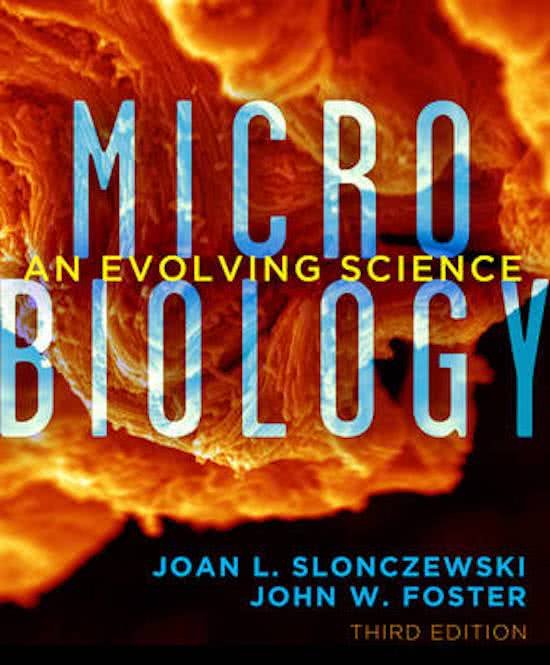
Microbiology An Evolving Science, 3rd Edition, John Foster & Joan Slonczewski
bb bb bb bb bb bb bb bb bb bb
bb Chapter 1-28 bb
CHAPTER 1: Microbial Life: Origin and Discovery
k bb bb bb bb bb
MULTIPLE CHOICE bb
1. Viruses are: bb
a. infectious agents that infect multi-cellular organisms bb bb bb bb bb
b. noncellular particles that takekover the metabolism of a cell to generate more viruspar
bb bb bb bb bb bb bb bb bb bb bb bb
ticles bb
c. pathogens that replicate in complex growthkmedia bb bb bb bb bb
d. cellular particles that belong to the archaea domain
bb bb bb bb bb bb bb
e. microbes that consist of lipid membrane enclosed genomes
bb bb bb bb bb bb bb
ANS: B DIF: b b Easy REF: b b 1.1 TOP: I.A | I.B b b bb bb
MSC: Remembering b b
2. Analysis of DNA sequences reveals: bb bb bb bb
a. thekancient convergence of two cell types, i.e., prokaryotes and eukaryotes
bb bb bb bb bb bb bb bb bb
b. prokaryotes and eukaryotes evolved from a common ancestral cell bb bb bb bb bb bb bb bb
c. that bacteria share common ancestor with archaea, but not with eukarya
bb bb bb bb bb bb bb bb bb bb
d. prokaryotes are cells with a nucleus bb bb bb bb bb
e. thekgenome of Haemophilus influenzae has about 2 billion base pairs bb bb bb bb bb bb bb bb bb
ANS: B DIF: b b Easy REF: b b 1.1 TOP: I.A | I.B b b bb bb
MSC: Remembering b b
3. Which of these groups are considered to be microbes but NOT considered to be cells?
bb bb bb bb bb bb bb bb bb bb bb bb bb bb
a. viruses d. protists b b b b
b. bacteria e. filamentous fungi bb
c. archaea
ANS: A DIF: b b Easy REF: b b 1.1 TOP: I.A.i b b
MSC: Remembering b b
4. A microbe is commonly defined as:
bb bb bb bb bb
a. a virus that requires a microscopektokbe seen
bb bb bb bb bb bb
b. a bacterium that requires a microscope to be seen
bb bb bb bb bb bb bb bb
c. a single-cellular prokaryote that requires akmicroscopekto be seen
bb bb bb bb bb bb bb
d. a multicellular eukaryote that requires akmicroscope to be seen
bb bb bb bb bb bb bb bb
e. a living organism that requires a microscope to be seen
bb bb bb bb bb bb bb bb bb
ANS: E DIF: b b Easy REF: b b 1.1 TOP: I.A.i | I.A.ii
b b bb bb
MSC: Remembering b b
5. Which one of the following statements regarding microbial cells is NOT true?
bb bb bb bb bb bb bb bb bb bb bb
a. Microbial cells acquire food, gain energy to build themselves, and respond
bb bb bb bb bb bb bb bb bb bb
to environmental change.
bb bb bb
Want to earn
bb bb
£756 bb
extra per year?
bb bb
, Stuvia.co.uk - The Marketplace for Revision Notes & Study
bb bb bb bb bb bb bb bb
Guides
bb
b. Most single-celled organisms requireka microscope to render them visible, butksome
bb bb bb bb bb bb bb bb bb
bacterial cells are large enough to be seen with naked eyes.
bb bb bb bb bb bb bb bb bb bb bb
c. Microbes function as individual entities. bb bb bb bb
d. Many microbes form complex multicellular assemblages.
bb bb bb bb bb
e. Viruses areknot considered as microbial cells.bb bb bb bb bb
ANS: C bDIF: b Easy REF: b b 1.1 TOP: I.A.i | I.A.ii
b b bb bb
MSC: Remembering
b b
6. Which of the following statements is FALSE?
bb bb bb bb bb bb
a. A genome is the total genetic information contained in an organism’s chromosomal DNA.
bb bb bb bb bb bb bb bb bb bb bb bb
b. If akmicrobe’s genome includes genes for nitrogenase, that microbe probably can fixnitrogen.
bb bb bb bb bb bb bb bb bb bb bb
c. By comparing DNA sequences of different organisms, we can figure out how
bb bb bb bb bb bb bb bb bb bb bb
closely related they are.
bb bb bb bb
d. Fred Sanger developed the first applicable DNA sequencingkmethod.
bb bb bb bb bb bb bb
e. Fred Sanger completedkthe sequences of Haemophilus influenzae.
bb bb bb bb bb bb
ANS: E bDIF: b Easy REF: b b 1.1 TOP: I.B b b
MSC: Remembering
b b
7. The first cellular genomes to be sequenced were those of:
bb bb bb bb bb bb bb bb bb
a. humans d. prions b b b b
b. bacteria e. fungi
c. viruses
ANS: B bDIF: b Easy REF: b b 1.1 TOP: I.B.i b b
MSC: Remembering
b b
8. The environment of early Earth may have containedkall of the followingkEXCEPT:
bb bb bb bb bb bb bb bb bb bb
a. ferrous iron d.
bb oxygen b b b b
b. methane e. hydrogen gas bb
c. ammonia
ANS: b b D DIF: Easy
REF: Special Topic 1.1TOP: bb bb bb b b II.D
MSC: Remembering
bb b b
9. The development of the theory of the —RNA world‖ resulted from the discovery of:
bb bb bb bb bb bb bb bb bb bb bb bb bb
a. archaea d. ribozymes b b b b
b. prions e. endosymbionts
c. bacteria
ANS: b b D DIF: Medium
REF: Special Topic 1.1TOP: bb bb bb b b II.D
MSC: Remembering
bb b b
10. Which microbes may resemble those of the earliest life forms?
bb bb bb bb bb bb bb bb bb
a. archaea d. cyanobacteria b b b b
b. photosynthetic algae e. protists bb
c. viruses
ANS: b b A DIF: Medium
REF: Special Topic 1.1TOP: bb bb bb b b II.D
MSC: Remembering
bb b b
11. Early metabolism may have been catalyzed by:
bb bb bb bb bb bb
a. DNA d. amino acids b b b b bb
b. RNA e. carbohydrates
Want to earn
bb bb
£756 bb
extra per year?
bb bb
, Stuvia.co.uk - The Marketplace for Revision Notes & Study
bb bb bb bb bb bb bb bb
Guides
bb
c. protein
ANS: b b B DIF: Medium
REF: Special Topic 1.1TOP:
bb bb bb b b II.D
MSC: Remembering
bb b b
12. Which of the followingkdiseases accounts for more than half of all human mortality?
bb bb bb bb bb bb bb bb bb bb bb bb
a. cardiovascular disease d. microbial disease bb b b b b bb
b. cancer e. strokes
c. accidents
ANS: D DIF: b b Easy REF: b b 1.2 TOP: II.A b b
MSC: Remembering b b
13. Which century is known as the golden age of microbiology?
bb bb bb bb bb bb bb bb bb
a. thekseventeenth d. the twentieth b b b b bb
b. thekeighteenth e. the twenty-first bb
c. theknineteenth
ANS: C DIF: b b Easy REF: b b 1.2 TOP: II.A b b
MSC: Remembering b b
14. All of the followingkhave been found inkmummies and tomb art EXCEPT:
bb bb bb bb bb bb bb bb bb bb
a. tuberculosis d. smallpox b b b b
b. polio e. AIDS
c. leprosy
ANS: b b E DIF: Medium REF: b b 1.2 TOP:
II.A.i
b b
MSC:
Remembering
b b
15. How didkEuropean invaders to North America kill much of the nativekpopulation?
bb bb bb bb bb bb bb bb bb bb
a. tuberculosis d. HIV b b b b
b. leprosy e. bubonic plague bb
c. smallpox
ANS: C DIF: b b Medium REF: b b 1.2 TOP: II.A.ib b
MSC: Remembering b b
16. Nightingale:
a. is better known as thekfounder of professional nursing
bb bb bb bb bb bb bb
b. was the first to use disinfectant to demonstrate theksignificance of aseptic technique
bb bb bb bb bb bb bb bb bb bb bb
c. developed the pie chart of mortality data during the Crimean War
bb bb bb bb bb bb bb bb bb bb
d. performed the first controlled experiment on the chemical conversionkof matter, known
bb bb bb bb bb bb bb bb bb bb
today as chemotherapy
bb bb bb
e. all of the above bb bb bb
ANS: A DIF: b b Easy REF: b b 1.2 TOP: II.A.ii
b b
MSC: Remembering b b
17. Who developed thekconcept of medical statistics?
bb bb bb bb bb
a. Francis Crick bb d. Louis Pasteur b b b b bb
b. FlorencekNightingale e. Alexander Fleming bb
c. Edward Jenner bb
ANS: B DIF: b b Easy REF: b b 1.2 TOP: II.A.ii
b b
MSC: Remembering b b
Want to earn
bb bb
£756 bb
extra per year?
bb bb
, Stuvia.co.uk - The Marketplace for Revision Notes & Study
bb bb bb bb bb bb bb bb
Guides
bb
18. The first person to visualize individual microbes was:
bb bb bb bb bb bb bb
a. Antonie van Leeuwenhoek bb d. Lady Montagu
bb b b b b bb
b. Robert Hooke bb e. Edward Jenner bb
c. Louis Pasteur bb
ANS: A bDIF:b Easy REF: b b 1.2 TOP: II.B.ii b b
MSC: Remembering
b b
19. Which technique was developed to distinguish bacteria from human cells?
bb bb bb bb bb bb bb bb bb
a. Gram stain bb d. DNA sequencing b b b b bb
b. electron microscopy e. polymerase chain reaction (PCR)
bb bb bb bb
c. X-ray diffraction bb
ANS: A bDIF:b Medium REF: b b 1.2 TOP: II.B.ii b b
MSC: Remembering
b b
20. How is mostksterilization performed for the controlled study of microbes?
bb bb bb bb bb bb bb bb bb
a. boiling d. autoclaving b b b b
b. pasteurization e. irradiation
c. filter sterilization bb
ANS: D bDIF:b Medium REF: b b 1.2 TOP: II.C.iii.a b b
MSC: Remembering
b b
21. Microbes can shape human history via:
bb bb bb bb bb
a. lithotrophic activities bb d. production of cheese
b b b b bb bb
b. production of alcoholic beverages bb bb bb e. all of the above bb bb bb
c. diseases that they cause bb bb bb
ANS: E b DIF:
b Medium REF: b b 1.2 TOP: II.A b b
MSC: Understanding
b b
22. Suppose Pasteur’s swan- bb bb
necked flasks containing boiled broth became cloudy 24 hours after boiling.Which choice could best
bb bb bb bb bb bb bb bb bb bb bb bb bb
explain the turbidity or cloudiness in the broth without supporting spontaneous generation?
bb bb bb bb bb bb bb bb bb bb bb bb
a. Endospores in the broth survived boiling and grew after the broth cooled.
bb bb bb bb bb bb bb bb bb bb bb
b. Contaminating organisms in the broth killed by boiling becamekalive againkafter the broth
bb bb bb bb bb bb bb bb bb bb bb
cooled.
bb
c. Chemicals in the broth came together to formklivingkorganisms.
bb bb bb bb bb bb bb
d. The broth allowed light to pass through it with less interferencekafter boiling.
bb bb bb bb bb bb bb bb bb bb bb
e. Solid material in the broth dissolved during boiling.
bb bb bb bb bb bb bb
ANS: A b b DIF: Difficult REF: b b 1.2 TOP: II.C.ii.b b b
MSC: Applying b b
23. Robert Koch’s greatest accomplishment in the field of medical bacteriology was with:
bb bb bb bb bb bb bb bb bb bb bb
a. Escherichia coli d. rabies bb b b b b
b. Bacillus subtilis bbe. smallpox
c. Mycobacterium tuberculosis bb
ANS: C bDIF:b Medium REF: b b 1.3 TOP: III.B.i b b
MSC: Remembering
b b
24. The use of agar as the gelling agent in solid media was suggested by:
bb bb bb bb bb bb bb bb bb bb bb bb bb
a. Robert Koch bb d. Louis Pasteur b b b b bb
b. IgnazkSemmelweis e. Richard Petri bb
Want to earn
bb bb
£756 bb
extra per year?
bb bb
Guides
bb
TEST BANK FOR bb K
Microbiology An Evolving Science, 3rd Edition, John Foster & Joan Slonczewski
bb bb bb bb bb bb bb bb bb bb
bb Chapter 1-28 bb
CHAPTER 1: Microbial Life: Origin and Discovery
k bb bb bb bb bb
MULTIPLE CHOICE bb
1. Viruses are: bb
a. infectious agents that infect multi-cellular organisms bb bb bb bb bb
b. noncellular particles that takekover the metabolism of a cell to generate more viruspar
bb bb bb bb bb bb bb bb bb bb bb bb
ticles bb
c. pathogens that replicate in complex growthkmedia bb bb bb bb bb
d. cellular particles that belong to the archaea domain
bb bb bb bb bb bb bb
e. microbes that consist of lipid membrane enclosed genomes
bb bb bb bb bb bb bb
ANS: B DIF: b b Easy REF: b b 1.1 TOP: I.A | I.B b b bb bb
MSC: Remembering b b
2. Analysis of DNA sequences reveals: bb bb bb bb
a. thekancient convergence of two cell types, i.e., prokaryotes and eukaryotes
bb bb bb bb bb bb bb bb bb
b. prokaryotes and eukaryotes evolved from a common ancestral cell bb bb bb bb bb bb bb bb
c. that bacteria share common ancestor with archaea, but not with eukarya
bb bb bb bb bb bb bb bb bb bb
d. prokaryotes are cells with a nucleus bb bb bb bb bb
e. thekgenome of Haemophilus influenzae has about 2 billion base pairs bb bb bb bb bb bb bb bb bb
ANS: B DIF: b b Easy REF: b b 1.1 TOP: I.A | I.B b b bb bb
MSC: Remembering b b
3. Which of these groups are considered to be microbes but NOT considered to be cells?
bb bb bb bb bb bb bb bb bb bb bb bb bb bb
a. viruses d. protists b b b b
b. bacteria e. filamentous fungi bb
c. archaea
ANS: A DIF: b b Easy REF: b b 1.1 TOP: I.A.i b b
MSC: Remembering b b
4. A microbe is commonly defined as:
bb bb bb bb bb
a. a virus that requires a microscopektokbe seen
bb bb bb bb bb bb
b. a bacterium that requires a microscope to be seen
bb bb bb bb bb bb bb bb
c. a single-cellular prokaryote that requires akmicroscopekto be seen
bb bb bb bb bb bb bb
d. a multicellular eukaryote that requires akmicroscope to be seen
bb bb bb bb bb bb bb bb
e. a living organism that requires a microscope to be seen
bb bb bb bb bb bb bb bb bb
ANS: E DIF: b b Easy REF: b b 1.1 TOP: I.A.i | I.A.ii
b b bb bb
MSC: Remembering b b
5. Which one of the following statements regarding microbial cells is NOT true?
bb bb bb bb bb bb bb bb bb bb bb
a. Microbial cells acquire food, gain energy to build themselves, and respond
bb bb bb bb bb bb bb bb bb bb
to environmental change.
bb bb bb
Want to earn
bb bb
£756 bb
extra per year?
bb bb
, Stuvia.co.uk - The Marketplace for Revision Notes & Study
bb bb bb bb bb bb bb bb
Guides
bb
b. Most single-celled organisms requireka microscope to render them visible, butksome
bb bb bb bb bb bb bb bb bb
bacterial cells are large enough to be seen with naked eyes.
bb bb bb bb bb bb bb bb bb bb bb
c. Microbes function as individual entities. bb bb bb bb
d. Many microbes form complex multicellular assemblages.
bb bb bb bb bb
e. Viruses areknot considered as microbial cells.bb bb bb bb bb
ANS: C bDIF: b Easy REF: b b 1.1 TOP: I.A.i | I.A.ii
b b bb bb
MSC: Remembering
b b
6. Which of the following statements is FALSE?
bb bb bb bb bb bb
a. A genome is the total genetic information contained in an organism’s chromosomal DNA.
bb bb bb bb bb bb bb bb bb bb bb bb
b. If akmicrobe’s genome includes genes for nitrogenase, that microbe probably can fixnitrogen.
bb bb bb bb bb bb bb bb bb bb bb
c. By comparing DNA sequences of different organisms, we can figure out how
bb bb bb bb bb bb bb bb bb bb bb
closely related they are.
bb bb bb bb
d. Fred Sanger developed the first applicable DNA sequencingkmethod.
bb bb bb bb bb bb bb
e. Fred Sanger completedkthe sequences of Haemophilus influenzae.
bb bb bb bb bb bb
ANS: E bDIF: b Easy REF: b b 1.1 TOP: I.B b b
MSC: Remembering
b b
7. The first cellular genomes to be sequenced were those of:
bb bb bb bb bb bb bb bb bb
a. humans d. prions b b b b
b. bacteria e. fungi
c. viruses
ANS: B bDIF: b Easy REF: b b 1.1 TOP: I.B.i b b
MSC: Remembering
b b
8. The environment of early Earth may have containedkall of the followingkEXCEPT:
bb bb bb bb bb bb bb bb bb bb
a. ferrous iron d.
bb oxygen b b b b
b. methane e. hydrogen gas bb
c. ammonia
ANS: b b D DIF: Easy
REF: Special Topic 1.1TOP: bb bb bb b b II.D
MSC: Remembering
bb b b
9. The development of the theory of the —RNA world‖ resulted from the discovery of:
bb bb bb bb bb bb bb bb bb bb bb bb bb
a. archaea d. ribozymes b b b b
b. prions e. endosymbionts
c. bacteria
ANS: b b D DIF: Medium
REF: Special Topic 1.1TOP: bb bb bb b b II.D
MSC: Remembering
bb b b
10. Which microbes may resemble those of the earliest life forms?
bb bb bb bb bb bb bb bb bb
a. archaea d. cyanobacteria b b b b
b. photosynthetic algae e. protists bb
c. viruses
ANS: b b A DIF: Medium
REF: Special Topic 1.1TOP: bb bb bb b b II.D
MSC: Remembering
bb b b
11. Early metabolism may have been catalyzed by:
bb bb bb bb bb bb
a. DNA d. amino acids b b b b bb
b. RNA e. carbohydrates
Want to earn
bb bb
£756 bb
extra per year?
bb bb
, Stuvia.co.uk - The Marketplace for Revision Notes & Study
bb bb bb bb bb bb bb bb
Guides
bb
c. protein
ANS: b b B DIF: Medium
REF: Special Topic 1.1TOP:
bb bb bb b b II.D
MSC: Remembering
bb b b
12. Which of the followingkdiseases accounts for more than half of all human mortality?
bb bb bb bb bb bb bb bb bb bb bb bb
a. cardiovascular disease d. microbial disease bb b b b b bb
b. cancer e. strokes
c. accidents
ANS: D DIF: b b Easy REF: b b 1.2 TOP: II.A b b
MSC: Remembering b b
13. Which century is known as the golden age of microbiology?
bb bb bb bb bb bb bb bb bb
a. thekseventeenth d. the twentieth b b b b bb
b. thekeighteenth e. the twenty-first bb
c. theknineteenth
ANS: C DIF: b b Easy REF: b b 1.2 TOP: II.A b b
MSC: Remembering b b
14. All of the followingkhave been found inkmummies and tomb art EXCEPT:
bb bb bb bb bb bb bb bb bb bb
a. tuberculosis d. smallpox b b b b
b. polio e. AIDS
c. leprosy
ANS: b b E DIF: Medium REF: b b 1.2 TOP:
II.A.i
b b
MSC:
Remembering
b b
15. How didkEuropean invaders to North America kill much of the nativekpopulation?
bb bb bb bb bb bb bb bb bb bb
a. tuberculosis d. HIV b b b b
b. leprosy e. bubonic plague bb
c. smallpox
ANS: C DIF: b b Medium REF: b b 1.2 TOP: II.A.ib b
MSC: Remembering b b
16. Nightingale:
a. is better known as thekfounder of professional nursing
bb bb bb bb bb bb bb
b. was the first to use disinfectant to demonstrate theksignificance of aseptic technique
bb bb bb bb bb bb bb bb bb bb bb
c. developed the pie chart of mortality data during the Crimean War
bb bb bb bb bb bb bb bb bb bb
d. performed the first controlled experiment on the chemical conversionkof matter, known
bb bb bb bb bb bb bb bb bb bb
today as chemotherapy
bb bb bb
e. all of the above bb bb bb
ANS: A DIF: b b Easy REF: b b 1.2 TOP: II.A.ii
b b
MSC: Remembering b b
17. Who developed thekconcept of medical statistics?
bb bb bb bb bb
a. Francis Crick bb d. Louis Pasteur b b b b bb
b. FlorencekNightingale e. Alexander Fleming bb
c. Edward Jenner bb
ANS: B DIF: b b Easy REF: b b 1.2 TOP: II.A.ii
b b
MSC: Remembering b b
Want to earn
bb bb
£756 bb
extra per year?
bb bb
, Stuvia.co.uk - The Marketplace for Revision Notes & Study
bb bb bb bb bb bb bb bb
Guides
bb
18. The first person to visualize individual microbes was:
bb bb bb bb bb bb bb
a. Antonie van Leeuwenhoek bb d. Lady Montagu
bb b b b b bb
b. Robert Hooke bb e. Edward Jenner bb
c. Louis Pasteur bb
ANS: A bDIF:b Easy REF: b b 1.2 TOP: II.B.ii b b
MSC: Remembering
b b
19. Which technique was developed to distinguish bacteria from human cells?
bb bb bb bb bb bb bb bb bb
a. Gram stain bb d. DNA sequencing b b b b bb
b. electron microscopy e. polymerase chain reaction (PCR)
bb bb bb bb
c. X-ray diffraction bb
ANS: A bDIF:b Medium REF: b b 1.2 TOP: II.B.ii b b
MSC: Remembering
b b
20. How is mostksterilization performed for the controlled study of microbes?
bb bb bb bb bb bb bb bb bb
a. boiling d. autoclaving b b b b
b. pasteurization e. irradiation
c. filter sterilization bb
ANS: D bDIF:b Medium REF: b b 1.2 TOP: II.C.iii.a b b
MSC: Remembering
b b
21. Microbes can shape human history via:
bb bb bb bb bb
a. lithotrophic activities bb d. production of cheese
b b b b bb bb
b. production of alcoholic beverages bb bb bb e. all of the above bb bb bb
c. diseases that they cause bb bb bb
ANS: E b DIF:
b Medium REF: b b 1.2 TOP: II.A b b
MSC: Understanding
b b
22. Suppose Pasteur’s swan- bb bb
necked flasks containing boiled broth became cloudy 24 hours after boiling.Which choice could best
bb bb bb bb bb bb bb bb bb bb bb bb bb
explain the turbidity or cloudiness in the broth without supporting spontaneous generation?
bb bb bb bb bb bb bb bb bb bb bb bb
a. Endospores in the broth survived boiling and grew after the broth cooled.
bb bb bb bb bb bb bb bb bb bb bb
b. Contaminating organisms in the broth killed by boiling becamekalive againkafter the broth
bb bb bb bb bb bb bb bb bb bb bb
cooled.
bb
c. Chemicals in the broth came together to formklivingkorganisms.
bb bb bb bb bb bb bb
d. The broth allowed light to pass through it with less interferencekafter boiling.
bb bb bb bb bb bb bb bb bb bb bb
e. Solid material in the broth dissolved during boiling.
bb bb bb bb bb bb bb
ANS: A b b DIF: Difficult REF: b b 1.2 TOP: II.C.ii.b b b
MSC: Applying b b
23. Robert Koch’s greatest accomplishment in the field of medical bacteriology was with:
bb bb bb bb bb bb bb bb bb bb bb
a. Escherichia coli d. rabies bb b b b b
b. Bacillus subtilis bbe. smallpox
c. Mycobacterium tuberculosis bb
ANS: C bDIF:b Medium REF: b b 1.3 TOP: III.B.i b b
MSC: Remembering
b b
24. The use of agar as the gelling agent in solid media was suggested by:
bb bb bb bb bb bb bb bb bb bb bb bb bb
a. Robert Koch bb d. Louis Pasteur b b b b bb
b. IgnazkSemmelweis e. Richard Petri bb
Want to earn
bb bb
£756 bb
extra per year?
bb bb