Curriculum and Instruction I – D630
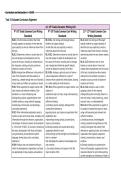
Task 3: Evaluates Curriculum Alignment
A1: 10th Grade Literature: Writing Unit
9th-10th Grade Common Core Writing 9th-10th Grade Common Core Writing 11th-12th Grade Common Core
Standards Standards Writing Standards
RL.8.1: Cite the textual evidence that most RL.9-10.1. Cite strong and thorough textual RL.11-12.1: Cite strong and thorough
strongly supports an analysis of what the text evidence to support analysis textual evidence to support analysis of
says explicitly as well as inferences drawn from of what the text says explicitly as well as what the text says explicitly as well as
the text. inferences drawn from the text inferences drawn from the text, including
RL.8.2: Determine a theme or central idea of a RL.9-10.2. Determine a theme or central idea of a determining where the text leaves matters
text and analyze its development over the text and analyze in detail its development over uncertain.
course of the text, including its relationship to the course of the text, including how it emerges RL.11-12.2: Determine two or more
the characters, setting, and plot; provide an and is shaped and refined by specific details; themes or central ideas of a text and
objective summary of the text. provide an objective summary of the text analyze their development over the course
RL.8.6: Analyze how differences in the points of RL.9-10.6. Analyze a particular point of view or of the text, including how they interact
view of the characters and the audience or cultural experience reflected in a work of and build on one another to produce a
reader (e.g., created through the use of dramatic literature from outside the United States, drawing complex account; provide an objective
irony) create such effects as suspense or humor. on a wide reading of world literature summary of the text.
W.8.1: Write arguments to support claims with W.9-10.1. Write arguments to support claims in an RL.11-12.6: Analyze a case in which
clear reasons and relevant evidence. (Sub- analysis of grasping a point of view requires
standards a–e cover introducing and substantive topics or texts, using valid reasoning distinguishing what is directly stated in a
distinguishing claims, supporting them with and relevant and text from what is really meant (e.g., satire,
credible evidence, using cohesive language, sufficient evidence. sarcasm, irony, or understatement).
maintaining a formal style, and providing a a. Introduce precise claim(s), distinguish the W.11-12.1: Write arguments to support in
concluding statement.) claim(s) from alternate or an analysis of substantive topics or texts,
W.8.2: Write informative/explanatory texts to opposing claims, and create an organization that using valid reasoning and relevant and
examine a topic and convey ideas, concepts, and establishes clear sufficient evidence.
information through the selection, organization, relationships among claim(s), counterclaims, a. Introduce precise, knowledgeable
and analysis of relevant content. (Sub-standards reasons, and evidence. claim(s), establish the significance of the
a–f mirror the 9-10/11-12 structure: introducing b. Develop claim(s) and counterclaims fairly, claim(s), distinguish the claim(s) from
the topic, developing it with facts and details, supplying evidence for each alternate or opposing claims, and create an
using transitions, precise/domain-specific while pointing out the strengths and limitations of organization that logically sequences
language, formal style, and a concluding both in a manner claim(s), counterclaims, reasons, and
statement.) that anticipates the audience’s knowledge level evidence.
W.8.4: Produce clear and coherent writing in and concerns. b. Develop claim(s) and counterclaims
which the development, organization, and style c. Use words, phrases, and clauses to link the fairly and thoroughly, supplying the most
are appropriate to task, purpose, and audience. major sections of the relevant evidence for each while pointing
out the strengths and limitations of both in
, W.8.5: With some guidance and support from text, create cohesion, and clarify the relationships a manner that anticipates the audience's
peers and adults, develop and strengthen between claim(s) knowledge level, concerns, values, and
writing as needed by planning, revising, editing, and reasons, between reasons and evidence, and possible biases.
rewriting, or trying a new approach, focusing on between claim(s) c. Use words, phrases, and clauses as well
how well purpose and audience have been and counterclaims. as varied syntax to link the major sections
addressed. d. Establish and maintain a formal style and of the text, create cohesion, and clarify the
W.8.6: Use technology, including the Internet, to objective tone while relationships between claim(s) and
produce and publish writing and present the attending to the norms and conventions of the reasons, between reasons and evidence,
relationships between information and ideas discipline in which and between claim(s) and counterclaims.
efficiently as well as to interact and collaborate they are writing. d. Establish and maintain a formal style
with others. e. Provide a concluding statement or section that and objective tone while attending to the
W.8.8: Gather relevant information from follows from and norms and conventions of the discipline in
multiple print and digital sources, using search supports the argument presented. which they are writing.
terms effectively; assess the credibility and W.9-10.2. Write informative/explanatory texts to e. Provide a concluding statement or
accuracy of each source; and quote or examine and convey section that follows from and supports the
paraphrase the data and conclusions of others complex ideas, concepts, and information clearly argument presented.
while avoiding plagiarism and following a and accurately W.11-12.2: Write informative/explanatory
standard format for citation. through the effective selection, organization, and texts to examine and convey complex
W.8.9: Draw evidence from literary or analysis of content. ideas, concepts, and information clearly
informational texts to support analysis, a. Introduce a topic; organize complex ideas, and accurately through the effective
reflection, and research. concepts, and selection, organization, and analysis of
W.8.10: Write routinely over extended time information to make important connections and content.
frames (time for research, reflection, and distinctions; include a. Introduce a topic; organize complex
revision) and shorter time frames (a single formatting (e.g., headings), graphics (e.g., figures, ideas, concepts, and information so that
sitting or a day or two) for a range of discipline- tables), and each new element builds on that which
specific tasks, purposes, and audiences. multimedia when useful to aiding comprehension. precedes it to create a unified whole;
SL.8.2: Analyze the purpose of information b. Develop the topic with well-chosen, relevant, include formatting, graphics, and
presented in diverse media and formats (e.g., and sufficient facts, multimedia when useful.
visually, quantitatively, orally) and evaluate the extended definitions, concrete details, quotations, b. Develop the topic thoroughly by
motives (e.g., social, commercial, political) or other information selecting the most significant and relevant
behind its presentation. and examples appropriate to the audience’s facts, extended definitions, concrete
L.8.1: Demonstrate command of the knowledge of the topic. details, quotations, or other information
conventions of standard English grammar and c. Use appropriate and varied transitions to link and examples appropriate to the
usage when writing or speaking. (Sub-standards the major sections of audience's knowledge of the topic.
cover verbals, active/passive voice, and verb the text, create cohesion, and clarify the c. Use appropriate and varied transitions
mood.) relationships among and syntax to link the major sections of
L.8.2: Demonstrate command of the complex ideas and concepts. the text, create cohesion, and clarify the
conventions of standard English capitalization, d. Use precise language and domain-specific relationships among complex ideas and
punctuation, and spelling when writing. (Sub- vocabulary to manage the complexity of the topic. concepts.
standards cover comma/ellipsis/dash use and e. Establish and maintain a formal style and d. Use precise language, domain-specific
spelling.) objective tone while attending to the norms and vocabulary, and techniques such as
Task 3: Evaluates Curriculum Alignment
A1: 10th Grade Literature: Writing Unit
9th-10th Grade Common Core Writing 9th-10th Grade Common Core Writing 11th-12th Grade Common Core
Standards Standards Writing Standards
RL.8.1: Cite the textual evidence that most RL.9-10.1. Cite strong and thorough textual RL.11-12.1: Cite strong and thorough
strongly supports an analysis of what the text evidence to support analysis textual evidence to support analysis of
says explicitly as well as inferences drawn from of what the text says explicitly as well as what the text says explicitly as well as
the text. inferences drawn from the text inferences drawn from the text, including
RL.8.2: Determine a theme or central idea of a RL.9-10.2. Determine a theme or central idea of a determining where the text leaves matters
text and analyze its development over the text and analyze in detail its development over uncertain.
course of the text, including its relationship to the course of the text, including how it emerges RL.11-12.2: Determine two or more
the characters, setting, and plot; provide an and is shaped and refined by specific details; themes or central ideas of a text and
objective summary of the text. provide an objective summary of the text analyze their development over the course
RL.8.6: Analyze how differences in the points of RL.9-10.6. Analyze a particular point of view or of the text, including how they interact
view of the characters and the audience or cultural experience reflected in a work of and build on one another to produce a
reader (e.g., created through the use of dramatic literature from outside the United States, drawing complex account; provide an objective
irony) create such effects as suspense or humor. on a wide reading of world literature summary of the text.
W.8.1: Write arguments to support claims with W.9-10.1. Write arguments to support claims in an RL.11-12.6: Analyze a case in which
clear reasons and relevant evidence. (Sub- analysis of grasping a point of view requires
standards a–e cover introducing and substantive topics or texts, using valid reasoning distinguishing what is directly stated in a
distinguishing claims, supporting them with and relevant and text from what is really meant (e.g., satire,
credible evidence, using cohesive language, sufficient evidence. sarcasm, irony, or understatement).
maintaining a formal style, and providing a a. Introduce precise claim(s), distinguish the W.11-12.1: Write arguments to support in
concluding statement.) claim(s) from alternate or an analysis of substantive topics or texts,
W.8.2: Write informative/explanatory texts to opposing claims, and create an organization that using valid reasoning and relevant and
examine a topic and convey ideas, concepts, and establishes clear sufficient evidence.
information through the selection, organization, relationships among claim(s), counterclaims, a. Introduce precise, knowledgeable
and analysis of relevant content. (Sub-standards reasons, and evidence. claim(s), establish the significance of the
a–f mirror the 9-10/11-12 structure: introducing b. Develop claim(s) and counterclaims fairly, claim(s), distinguish the claim(s) from
the topic, developing it with facts and details, supplying evidence for each alternate or opposing claims, and create an
using transitions, precise/domain-specific while pointing out the strengths and limitations of organization that logically sequences
language, formal style, and a concluding both in a manner claim(s), counterclaims, reasons, and
statement.) that anticipates the audience’s knowledge level evidence.
W.8.4: Produce clear and coherent writing in and concerns. b. Develop claim(s) and counterclaims
which the development, organization, and style c. Use words, phrases, and clauses to link the fairly and thoroughly, supplying the most
are appropriate to task, purpose, and audience. major sections of the relevant evidence for each while pointing
out the strengths and limitations of both in
, W.8.5: With some guidance and support from text, create cohesion, and clarify the relationships a manner that anticipates the audience's
peers and adults, develop and strengthen between claim(s) knowledge level, concerns, values, and
writing as needed by planning, revising, editing, and reasons, between reasons and evidence, and possible biases.
rewriting, or trying a new approach, focusing on between claim(s) c. Use words, phrases, and clauses as well
how well purpose and audience have been and counterclaims. as varied syntax to link the major sections
addressed. d. Establish and maintain a formal style and of the text, create cohesion, and clarify the
W.8.6: Use technology, including the Internet, to objective tone while relationships between claim(s) and
produce and publish writing and present the attending to the norms and conventions of the reasons, between reasons and evidence,
relationships between information and ideas discipline in which and between claim(s) and counterclaims.
efficiently as well as to interact and collaborate they are writing. d. Establish and maintain a formal style
with others. e. Provide a concluding statement or section that and objective tone while attending to the
W.8.8: Gather relevant information from follows from and norms and conventions of the discipline in
multiple print and digital sources, using search supports the argument presented. which they are writing.
terms effectively; assess the credibility and W.9-10.2. Write informative/explanatory texts to e. Provide a concluding statement or
accuracy of each source; and quote or examine and convey section that follows from and supports the
paraphrase the data and conclusions of others complex ideas, concepts, and information clearly argument presented.
while avoiding plagiarism and following a and accurately W.11-12.2: Write informative/explanatory
standard format for citation. through the effective selection, organization, and texts to examine and convey complex
W.8.9: Draw evidence from literary or analysis of content. ideas, concepts, and information clearly
informational texts to support analysis, a. Introduce a topic; organize complex ideas, and accurately through the effective
reflection, and research. concepts, and selection, organization, and analysis of
W.8.10: Write routinely over extended time information to make important connections and content.
frames (time for research, reflection, and distinctions; include a. Introduce a topic; organize complex
revision) and shorter time frames (a single formatting (e.g., headings), graphics (e.g., figures, ideas, concepts, and information so that
sitting or a day or two) for a range of discipline- tables), and each new element builds on that which
specific tasks, purposes, and audiences. multimedia when useful to aiding comprehension. precedes it to create a unified whole;
SL.8.2: Analyze the purpose of information b. Develop the topic with well-chosen, relevant, include formatting, graphics, and
presented in diverse media and formats (e.g., and sufficient facts, multimedia when useful.
visually, quantitatively, orally) and evaluate the extended definitions, concrete details, quotations, b. Develop the topic thoroughly by
motives (e.g., social, commercial, political) or other information selecting the most significant and relevant
behind its presentation. and examples appropriate to the audience’s facts, extended definitions, concrete
L.8.1: Demonstrate command of the knowledge of the topic. details, quotations, or other information
conventions of standard English grammar and c. Use appropriate and varied transitions to link and examples appropriate to the
usage when writing or speaking. (Sub-standards the major sections of audience's knowledge of the topic.
cover verbals, active/passive voice, and verb the text, create cohesion, and clarify the c. Use appropriate and varied transitions
mood.) relationships among and syntax to link the major sections of
L.8.2: Demonstrate command of the complex ideas and concepts. the text, create cohesion, and clarify the
conventions of standard English capitalization, d. Use precise language and domain-specific relationships among complex ideas and
punctuation, and spelling when writing. (Sub- vocabulary to manage the complexity of the topic. concepts.
standards cover comma/ellipsis/dash use and e. Establish and maintain a formal style and d. Use precise language, domain-specific
spelling.) objective tone while attending to the norms and vocabulary, and techniques such as