
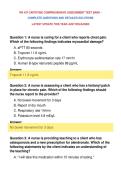
RN ATI CAPSTONE COMPREHENSIVE ASSESSMENT TEST BANK -
COMPLETE QUESTIONS AND DETAILED SOLUTIONS
LATEST UPDATE THIS YEAR JUST RELEASED
Question 1: A nurse is caring for a client who reports chest pain.
Which of the following findings indicates myocardial damage?
A. aPTT 80 seconds
B. Troponin I 1.8 ng/mL
C. Erythrocyte sedimentation rate 17 mm/hr
D. Human B-type natriuretic peptide 88 pg/mL
Answer:
Troponin I 1.8 ng/mL
Question 2: A nurse is assessing a client who has a fentanyl patch
in place for chronic pain. Which of the following findings should
the nurse report to the provider?
A. No bowel movement for 3 days
B. Report of dry mouth
C. Respiratory rate 14/min
D. Potassium level 4.8 mEq/L
Answer:
No bowel movement for 3 days
Question 3: A nurse is providing teaching to a client who has
osteoporosis and a new prescription for alendronate. Which of the
following statements by the client indicates an understanding of
the teaching?
A. "I will take this medication within 15 minutes of eating."
, B. "I will take this medication at bedtime."
C. "I will take this medication with 8 ounces of water."
D. "I will increase my caffeine intake while taking this medication."
Answer:
I will take this medication with 8 ounces of water
Question 4: A nurse is caring for a client who experienced a stroke
and has dysphagia. Which of the following findings should indicate
to the nurse the client is at risk for aspiration?
A. The client tucks his chin while swallowing food
B. The client sits upright in bed during meals
C. The client pockets food on one side of his mouth
D. The client has a cough reflex
Answer:
The client pockets food on one side of his mouth
Question 5: A nurse is caring for a group of clients. Which of the
following clients should the nurse assign to an assistive
personnel?
A. A client who has chronic obstructive pulmonary disease and needs
guidance on incentive spirometry
B. A client who had a myocardial infarction 3 days ago and reports
chest pain
C. A client who had a stroke 2 days ago and needs help toileting
D. A client who has awoken following a bronchoscopy and requests a
drink
Answer:
A client who had a stroke 2 days ago and needs help toileting
,Question 6: A nurse is caring for a client who is receiving
continuous enteral feedings and reports diarrhea. Which of the
following actions should the nurse take?
A. Discard opened cans of formula after 24 hrs
B. Replace the extension tubing every 48 hrs
C. Irrigate the tubing every 12 hr with 50 mL of warm water
D. Increase the infusion rate
Answer:
Discard opened cans of formula after 24 hrs
Question 7: A nurse is caring for an adolescent who is receiving
treatment for heart failure. Based on the client's chart findings,
which of the following actions should the nurse plan to take?
A. Administer furosemide
B. Withhold digoxin
C. Withhold spironolactone
D. Administer ferrous sulfate
Answer:
Withhold digoxin
Question 8: A nurse is reviewing the employee health program for
new employees. Which of the following diagnostic assessments
should the nurse recommend for all new employees to screen for
the presence of tuberculosis?
A. Sputum culture
B. Chest x-ray
C. QuantiFERON-TB Gold blood analysis
D. Mantoux test
, Answer:
Mantoux test
Question 9: A nurse is providing teaching about car seat safety to
the parent of a term newborn. Which of the following statements by
the parent indicates an understanding of the teaching?
A. "I should place a rolled blanket along each side of my baby's head
in the car seat."
B. "I should place my baby's car seat rear-facing until 6 months of
age."
C. "I should put the car seat retainer clip at the level of my baby's
belly button."
D. "I should position my baby's car seat at a 90-degree angle in the
car."
Answer:
I should place my baby's car seat rear-facing until 6 months of age
Question 10: A nurse in the labor and delivery unit is reviewing
medications for a group of clients. Which of the following
medications places the fetus at risk for teratogenic effects?
A. Levothyroxine for hypothyroidism
B. Phenytoin for seizure disorder
C. Magnesium oxide for constipation
D. Ferrous sulfate for chronic anemia
Answer:
Phenytoin for seizure disorder
Question 11: An emergency department nurse triages a group of
school children injured in a school bus crash. Which of the
COMPLETE QUESTIONS AND DETAILED SOLUTIONS
LATEST UPDATE THIS YEAR JUST RELEASED
Question 1: A nurse is caring for a client who reports chest pain.
Which of the following findings indicates myocardial damage?
A. aPTT 80 seconds
B. Troponin I 1.8 ng/mL
C. Erythrocyte sedimentation rate 17 mm/hr
D. Human B-type natriuretic peptide 88 pg/mL
Answer:
Troponin I 1.8 ng/mL
Question 2: A nurse is assessing a client who has a fentanyl patch
in place for chronic pain. Which of the following findings should
the nurse report to the provider?
A. No bowel movement for 3 days
B. Report of dry mouth
C. Respiratory rate 14/min
D. Potassium level 4.8 mEq/L
Answer:
No bowel movement for 3 days
Question 3: A nurse is providing teaching to a client who has
osteoporosis and a new prescription for alendronate. Which of the
following statements by the client indicates an understanding of
the teaching?
A. "I will take this medication within 15 minutes of eating."
, B. "I will take this medication at bedtime."
C. "I will take this medication with 8 ounces of water."
D. "I will increase my caffeine intake while taking this medication."
Answer:
I will take this medication with 8 ounces of water
Question 4: A nurse is caring for a client who experienced a stroke
and has dysphagia. Which of the following findings should indicate
to the nurse the client is at risk for aspiration?
A. The client tucks his chin while swallowing food
B. The client sits upright in bed during meals
C. The client pockets food on one side of his mouth
D. The client has a cough reflex
Answer:
The client pockets food on one side of his mouth
Question 5: A nurse is caring for a group of clients. Which of the
following clients should the nurse assign to an assistive
personnel?
A. A client who has chronic obstructive pulmonary disease and needs
guidance on incentive spirometry
B. A client who had a myocardial infarction 3 days ago and reports
chest pain
C. A client who had a stroke 2 days ago and needs help toileting
D. A client who has awoken following a bronchoscopy and requests a
drink
Answer:
A client who had a stroke 2 days ago and needs help toileting
,Question 6: A nurse is caring for a client who is receiving
continuous enteral feedings and reports diarrhea. Which of the
following actions should the nurse take?
A. Discard opened cans of formula after 24 hrs
B. Replace the extension tubing every 48 hrs
C. Irrigate the tubing every 12 hr with 50 mL of warm water
D. Increase the infusion rate
Answer:
Discard opened cans of formula after 24 hrs
Question 7: A nurse is caring for an adolescent who is receiving
treatment for heart failure. Based on the client's chart findings,
which of the following actions should the nurse plan to take?
A. Administer furosemide
B. Withhold digoxin
C. Withhold spironolactone
D. Administer ferrous sulfate
Answer:
Withhold digoxin
Question 8: A nurse is reviewing the employee health program for
new employees. Which of the following diagnostic assessments
should the nurse recommend for all new employees to screen for
the presence of tuberculosis?
A. Sputum culture
B. Chest x-ray
C. QuantiFERON-TB Gold blood analysis
D. Mantoux test
, Answer:
Mantoux test
Question 9: A nurse is providing teaching about car seat safety to
the parent of a term newborn. Which of the following statements by
the parent indicates an understanding of the teaching?
A. "I should place a rolled blanket along each side of my baby's head
in the car seat."
B. "I should place my baby's car seat rear-facing until 6 months of
age."
C. "I should put the car seat retainer clip at the level of my baby's
belly button."
D. "I should position my baby's car seat at a 90-degree angle in the
car."
Answer:
I should place my baby's car seat rear-facing until 6 months of age
Question 10: A nurse in the labor and delivery unit is reviewing
medications for a group of clients. Which of the following
medications places the fetus at risk for teratogenic effects?
A. Levothyroxine for hypothyroidism
B. Phenytoin for seizure disorder
C. Magnesium oxide for constipation
D. Ferrous sulfate for chronic anemia
Answer:
Phenytoin for seizure disorder
Question 11: An emergency department nurse triages a group of
school children injured in a school bus crash. Which of the


