
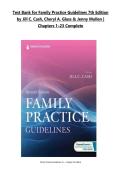
Test Bank for Family Practice Guidelines 7th Edition
by Jill C. Cash, Cheryl A. Glass & Jenny Mullen |
Chapters 1–23 Complete
Family Practice Guidelines 7e — Original Test Bank
, FAMILY PRACTICE GUIDELINES — 7TH EDITION
Complete Chapters 1–23
1. Health Maintenance Guidelines
1. Which statement is most accurate about Cultural humility?
A. ask about individual beliefs and preferences rather than making assumptions
B. use age, risk, history, and risk factors to individualize recommendations
C. use plain language and teach-back to confirm understanding
D. combine clinical evidence with patient values and preferences
Answer: A
Rationale: Ask about individual beliefs and preferences rather than making assumptions.
2. In a primary-care setting, which finding or action best reflects the principle of Cultural
humility?
A. ask about individual beliefs and preferences rather than making assumptions
B. review modifiable cardiovascular, cancer, metabolic, and lifestyle risks
C. involve other professionals when needs exceed the clinician's scope or require
coordination
D. check vaccination status and indications during preventive care
Answer: A
Rationale: Ask about individual beliefs and preferences rather than making assumptions.
3. A clinician is reviewing Cultural humility with a patient. Which statement is the best
interpretation?
A. ask about individual beliefs and preferences rather than making assumptions
B. set specific, achievable goals for activity, nutrition, sleep, and risk reduction
C. use age, risk, history, and risk factors to individualize recommendations
D. use plain language and teach-back to confirm understanding
Answer: A
Rationale: Ask about individual beliefs and preferences rather than making assumptions.
4. Which option would be most appropriate when applying the concept of Cultural
humility?
A. ask about individual beliefs and preferences rather than making assumptions
B. combine clinical evidence with patient values and preferences
C. review modifiable cardiovascular, cancer, metabolic, and lifestyle risks
Family Practice Guidelines 7e — Original Test Bank
, D. involve other professionals when needs exceed the clinician's scope or require
coordination
Answer: A
Rationale: Ask about individual beliefs and preferences rather than making assumptions.
5. Which clinical teaching point about Cultural humility is correct?
A. ask about individual beliefs and preferences rather than making assumptions
B. check vaccination status and indications during preventive care
C. set specific, achievable goals for activity, nutrition, sleep, and risk reduction
D. use age, risk, history, and risk factors to individualize recommendations
Answer: A
Rationale: Ask about individual beliefs and preferences rather than making assumptions.
6. Which statement is most accurate about Preventive care?
A. use age, risk, history, and risk factors to individualize recommendations
B. ask about individual beliefs and preferences rather than making assumptions
C. use plain language and teach-back to confirm understanding
D. combine clinical evidence with patient values and preferences
Answer: A
Rationale: Use age, risk, history, and risk factors to individualize recommendations.
7. In a primary-care setting, which finding or action best reflects the principle of
Preventive care?
A. use age, risk, history, and risk factors to individualize recommendations
B. review modifiable cardiovascular, cancer, metabolic, and lifestyle risks
C. involve other professionals when needs exceed the clinician's scope or require
coordination
D. check vaccination status and indications during preventive care
Answer: A
Rationale: Use age, risk, history, and risk factors to individualize recommendations.
8. A clinician is reviewing Preventive care with a patient. Which statement is the best
interpretation?
A. use age, risk, history, and risk factors to individualize recommendations
B. set specific, achievable goals for activity, nutrition, sleep, and risk reduction
C. ask about individual beliefs and preferences rather than making assumptions
D. use plain language and teach-back to confirm understanding
Answer: A
Rationale: Use age, risk, history, and risk factors to individualize recommendations.
9. Which option would be most appropriate when applying the concept of Preventive
care?
Family Practice Guidelines 7e — Original Test Bank
, A. use age, risk, history, and risk factors to individualize recommendations
B. combine clinical evidence with patient values and preferences
C. review modifiable cardiovascular, cancer, metabolic, and lifestyle risks
D. involve other professionals when needs exceed the clinician's scope or require
coordination
Answer: A
Rationale: Use age, risk, history, and risk factors to individualize recommendations.
10. Which clinical teaching point about Preventive care is correct?
A. use age, risk, history, and risk factors to individualize recommendations
B. check vaccination status and indications during preventive care
C. set specific, achievable goals for activity, nutrition, sleep, and risk reduction
D. ask about individual beliefs and preferences rather than making assumptions
Answer: A
Rationale: Use age, risk, history, and risk factors to individualize recommendations.
11. Which statement is most accurate about Health literacy?
A. use plain language and teach-back to confirm understanding
B. ask about individual beliefs and preferences rather than making assumptions
C. use age, risk, history, and risk factors to individualize recommendations
D. combine clinical evidence with patient values and preferences
Answer: A
Rationale: Use plain language and teach-back to confirm understanding.
12. In a primary-care setting, which finding or action best reflects the principle of Health
literacy?
A. use plain language and teach-back to confirm understanding
B. review modifiable cardiovascular, cancer, metabolic, and lifestyle risks
C. involve other professionals when needs exceed the clinician's scope or require
coordination
D. check vaccination status and indications during preventive care
Answer: A
Rationale: Use plain language and teach-back to confirm understanding.
13. A clinician is reviewing Health literacy with a patient. Which statement is the best
interpretation?
A. use plain language and teach-back to confirm understanding
B. set specific, achievable goals for activity, nutrition, sleep, and risk reduction
C. ask about individual beliefs and preferences rather than making assumptions
D. use age, risk, history, and risk factors to individualize recommendations
Answer: A
Family Practice Guidelines 7e — Original Test Bank
by Jill C. Cash, Cheryl A. Glass & Jenny Mullen |
Chapters 1–23 Complete
Family Practice Guidelines 7e — Original Test Bank
, FAMILY PRACTICE GUIDELINES — 7TH EDITION
Complete Chapters 1–23
1. Health Maintenance Guidelines
1. Which statement is most accurate about Cultural humility?
A. ask about individual beliefs and preferences rather than making assumptions
B. use age, risk, history, and risk factors to individualize recommendations
C. use plain language and teach-back to confirm understanding
D. combine clinical evidence with patient values and preferences
Answer: A
Rationale: Ask about individual beliefs and preferences rather than making assumptions.
2. In a primary-care setting, which finding or action best reflects the principle of Cultural
humility?
A. ask about individual beliefs and preferences rather than making assumptions
B. review modifiable cardiovascular, cancer, metabolic, and lifestyle risks
C. involve other professionals when needs exceed the clinician's scope or require
coordination
D. check vaccination status and indications during preventive care
Answer: A
Rationale: Ask about individual beliefs and preferences rather than making assumptions.
3. A clinician is reviewing Cultural humility with a patient. Which statement is the best
interpretation?
A. ask about individual beliefs and preferences rather than making assumptions
B. set specific, achievable goals for activity, nutrition, sleep, and risk reduction
C. use age, risk, history, and risk factors to individualize recommendations
D. use plain language and teach-back to confirm understanding
Answer: A
Rationale: Ask about individual beliefs and preferences rather than making assumptions.
4. Which option would be most appropriate when applying the concept of Cultural
humility?
A. ask about individual beliefs and preferences rather than making assumptions
B. combine clinical evidence with patient values and preferences
C. review modifiable cardiovascular, cancer, metabolic, and lifestyle risks
Family Practice Guidelines 7e — Original Test Bank
, D. involve other professionals when needs exceed the clinician's scope or require
coordination
Answer: A
Rationale: Ask about individual beliefs and preferences rather than making assumptions.
5. Which clinical teaching point about Cultural humility is correct?
A. ask about individual beliefs and preferences rather than making assumptions
B. check vaccination status and indications during preventive care
C. set specific, achievable goals for activity, nutrition, sleep, and risk reduction
D. use age, risk, history, and risk factors to individualize recommendations
Answer: A
Rationale: Ask about individual beliefs and preferences rather than making assumptions.
6. Which statement is most accurate about Preventive care?
A. use age, risk, history, and risk factors to individualize recommendations
B. ask about individual beliefs and preferences rather than making assumptions
C. use plain language and teach-back to confirm understanding
D. combine clinical evidence with patient values and preferences
Answer: A
Rationale: Use age, risk, history, and risk factors to individualize recommendations.
7. In a primary-care setting, which finding or action best reflects the principle of
Preventive care?
A. use age, risk, history, and risk factors to individualize recommendations
B. review modifiable cardiovascular, cancer, metabolic, and lifestyle risks
C. involve other professionals when needs exceed the clinician's scope or require
coordination
D. check vaccination status and indications during preventive care
Answer: A
Rationale: Use age, risk, history, and risk factors to individualize recommendations.
8. A clinician is reviewing Preventive care with a patient. Which statement is the best
interpretation?
A. use age, risk, history, and risk factors to individualize recommendations
B. set specific, achievable goals for activity, nutrition, sleep, and risk reduction
C. ask about individual beliefs and preferences rather than making assumptions
D. use plain language and teach-back to confirm understanding
Answer: A
Rationale: Use age, risk, history, and risk factors to individualize recommendations.
9. Which option would be most appropriate when applying the concept of Preventive
care?
Family Practice Guidelines 7e — Original Test Bank
, A. use age, risk, history, and risk factors to individualize recommendations
B. combine clinical evidence with patient values and preferences
C. review modifiable cardiovascular, cancer, metabolic, and lifestyle risks
D. involve other professionals when needs exceed the clinician's scope or require
coordination
Answer: A
Rationale: Use age, risk, history, and risk factors to individualize recommendations.
10. Which clinical teaching point about Preventive care is correct?
A. use age, risk, history, and risk factors to individualize recommendations
B. check vaccination status and indications during preventive care
C. set specific, achievable goals for activity, nutrition, sleep, and risk reduction
D. ask about individual beliefs and preferences rather than making assumptions
Answer: A
Rationale: Use age, risk, history, and risk factors to individualize recommendations.
11. Which statement is most accurate about Health literacy?
A. use plain language and teach-back to confirm understanding
B. ask about individual beliefs and preferences rather than making assumptions
C. use age, risk, history, and risk factors to individualize recommendations
D. combine clinical evidence with patient values and preferences
Answer: A
Rationale: Use plain language and teach-back to confirm understanding.
12. In a primary-care setting, which finding or action best reflects the principle of Health
literacy?
A. use plain language and teach-back to confirm understanding
B. review modifiable cardiovascular, cancer, metabolic, and lifestyle risks
C. involve other professionals when needs exceed the clinician's scope or require
coordination
D. check vaccination status and indications during preventive care
Answer: A
Rationale: Use plain language and teach-back to confirm understanding.
13. A clinician is reviewing Health literacy with a patient. Which statement is the best
interpretation?
A. use plain language and teach-back to confirm understanding
B. set specific, achievable goals for activity, nutrition, sleep, and risk reduction
C. ask about individual beliefs and preferences rather than making assumptions
D. use age, risk, history, and risk factors to individualize recommendations
Answer: A
Family Practice Guidelines 7e — Original Test Bank


