
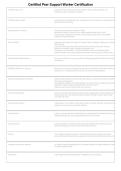
Certified Peer Support Worker Certification
CPSW program can: prepare peers for employment and volunteer roles in NM via training and
certification after successful completion
CPSW program cannot: guarantee the individual skills and competencies of the trainees or employment as a
peer following the training
Qualifications for training 18 years old, high school diploma or GED
self-attest to being in recovery from mental health disorder and/or SUD
provide proof of sustained recovery of at least three years from mental health
professional/sponsor/doctor
Role of CPSW a)provide peer clients with support in steps of their choosing to obtain and maintain
their recovery
b)provide resources at the national and local level for services such as harm
reduction, mental/bx health, housing, employment, etc.
c)continuing own education via CEUs to remain current and informed about
potential barriers and cultural aspects that clients may encounter on their journey
Recertification Requirements 40 hours of CEUs over two years with six units being related to ethics and cultural
competency
SAMHSA definition of recovery Recovery is a process of change through which individuals improve their health and
wellness, live a self-directed life, and strive to reach their full potential.
Employer Expectations of CPSWs a)utilize lived experience to work with peer clients in a way that promotes empathy
connection and guidance
b)knowledge of stages of change/resiliency as well as local and national resources
available to clients c)display professionalism and team work
d)practice self care to maintain their own recovery
serious mental illness Occurs at any time during the last year having a diagnosable, mental, behavioral, or
emotional disorder that causes functional impairment that interferes with at least
one major life event
mental health disorder a disturbance in the ability to cope with or adjust to stress; behavior and function are
impaired; mental illness, psychiatric disorder
Schizophrenia a group of severe disorders characterized by disorganized and delusional thinking,
disturbed perceptions, and inappropriate emotions and actions
bipolar disorder A mood disorder in which the person alternates between the hopelessness and
lethargy of depression and the overexcited state of mania.
Anxiety The condition of feeling uneasy or worried about what may happen, increased
levels of the body's natural stress response, most common mental illness in the US
obsessive-compulsive disorder An anxiety disorder characterized by unwanted repetitive thoughts (obsession) and/
or actions (compulsions).
Depression A prolonged feeling of helplessness, hopelessness, and sadness
, Certified Peer Support Worker Certification
eating disorders extreme, harmful eating behaviors that can cause serious illness or even death
Mental Health First Aid help offered to a person developing a mental health problem or experiencing a
mental health crisis
Crisis Behavior a person suffering from a temporary breakdown in coping skills that includes
perception, decision-making ability, and problem solving ability is experiencing crisis
behavior.
The top two reasons people don't seek treatment in NM 47.5% can't afford it, 28% think they can do it on their own
addiction brain disorder characterized by compuslive bx (can be the form of substances but
also applies to things like gambling, sex, food etc.) that continues over a significant
period of time despite harmful effects on the sufferer's personal, professional,
financial or other aspects of life
Characteristics of addiction a) failed attempts to control or cut down
b) strong desires and sometimes physical cravings
c) larger amounts needed to satisfy cravings or feel the initial high
Co-occurring disorders Disorders that occur at the same time as the psychiatric disorder and may be
associated with the disorder.
OUD Opioid Use Disorder
Naloxone rescue drug administered via nasal cavity or injection to reverse the effect of opioids
pulling the user out of the state of unconsciousness and increase respiration,
antagonist
Medicated Assisted Treatment (MAT) regulated dispensing of both opioid and non opioid medications to assist those with
OUD in achieving detoxification and long term recovery from illicit opioid drugs
Naltrexone opioid antagonist, given after two weeks remission from use blocking the opioid
receptors in the brain that gives users their high, used to reduce cravings over time
but user still feels the effects of withdrawal
Methadone opioid agonist, saves user from withdrawal symptoms without giving them a feeling
of being high due to controlled and smaller doses, higher risk of abuse if taken
outside of clincs
Buprenorphine partial agonist, some withdrawal effects are still felt and risk of abuse is less likely
than Methadone but still happens ex. Suboxone
Elements of Recovery a) understanding personal shortcomings and how symptoms affect life
b) choosing to be in an environment that is conducive to wellbeing
c) demonstrating mindfulness in daily activities as they relate to and support
recovery
d) remaining accountable
e) setting goals and going after them
f) honoring constant nature of change
CPSW program can: prepare peers for employment and volunteer roles in NM via training and
certification after successful completion
CPSW program cannot: guarantee the individual skills and competencies of the trainees or employment as a
peer following the training
Qualifications for training 18 years old, high school diploma or GED
self-attest to being in recovery from mental health disorder and/or SUD
provide proof of sustained recovery of at least three years from mental health
professional/sponsor/doctor
Role of CPSW a)provide peer clients with support in steps of their choosing to obtain and maintain
their recovery
b)provide resources at the national and local level for services such as harm
reduction, mental/bx health, housing, employment, etc.
c)continuing own education via CEUs to remain current and informed about
potential barriers and cultural aspects that clients may encounter on their journey
Recertification Requirements 40 hours of CEUs over two years with six units being related to ethics and cultural
competency
SAMHSA definition of recovery Recovery is a process of change through which individuals improve their health and
wellness, live a self-directed life, and strive to reach their full potential.
Employer Expectations of CPSWs a)utilize lived experience to work with peer clients in a way that promotes empathy
connection and guidance
b)knowledge of stages of change/resiliency as well as local and national resources
available to clients c)display professionalism and team work
d)practice self care to maintain their own recovery
serious mental illness Occurs at any time during the last year having a diagnosable, mental, behavioral, or
emotional disorder that causes functional impairment that interferes with at least
one major life event
mental health disorder a disturbance in the ability to cope with or adjust to stress; behavior and function are
impaired; mental illness, psychiatric disorder
Schizophrenia a group of severe disorders characterized by disorganized and delusional thinking,
disturbed perceptions, and inappropriate emotions and actions
bipolar disorder A mood disorder in which the person alternates between the hopelessness and
lethargy of depression and the overexcited state of mania.
Anxiety The condition of feeling uneasy or worried about what may happen, increased
levels of the body's natural stress response, most common mental illness in the US
obsessive-compulsive disorder An anxiety disorder characterized by unwanted repetitive thoughts (obsession) and/
or actions (compulsions).
Depression A prolonged feeling of helplessness, hopelessness, and sadness
, Certified Peer Support Worker Certification
eating disorders extreme, harmful eating behaviors that can cause serious illness or even death
Mental Health First Aid help offered to a person developing a mental health problem or experiencing a
mental health crisis
Crisis Behavior a person suffering from a temporary breakdown in coping skills that includes
perception, decision-making ability, and problem solving ability is experiencing crisis
behavior.
The top two reasons people don't seek treatment in NM 47.5% can't afford it, 28% think they can do it on their own
addiction brain disorder characterized by compuslive bx (can be the form of substances but
also applies to things like gambling, sex, food etc.) that continues over a significant
period of time despite harmful effects on the sufferer's personal, professional,
financial or other aspects of life
Characteristics of addiction a) failed attempts to control or cut down
b) strong desires and sometimes physical cravings
c) larger amounts needed to satisfy cravings or feel the initial high
Co-occurring disorders Disorders that occur at the same time as the psychiatric disorder and may be
associated with the disorder.
OUD Opioid Use Disorder
Naloxone rescue drug administered via nasal cavity or injection to reverse the effect of opioids
pulling the user out of the state of unconsciousness and increase respiration,
antagonist
Medicated Assisted Treatment (MAT) regulated dispensing of both opioid and non opioid medications to assist those with
OUD in achieving detoxification and long term recovery from illicit opioid drugs
Naltrexone opioid antagonist, given after two weeks remission from use blocking the opioid
receptors in the brain that gives users their high, used to reduce cravings over time
but user still feels the effects of withdrawal
Methadone opioid agonist, saves user from withdrawal symptoms without giving them a feeling
of being high due to controlled and smaller doses, higher risk of abuse if taken
outside of clincs
Buprenorphine partial agonist, some withdrawal effects are still felt and risk of abuse is less likely
than Methadone but still happens ex. Suboxone
Elements of Recovery a) understanding personal shortcomings and how symptoms affect life
b) choosing to be in an environment that is conducive to wellbeing
c) demonstrating mindfulness in daily activities as they relate to and support
recovery
d) remaining accountable
e) setting goals and going after them
f) honoring constant nature of change


