

i-Human Clinical Case Report | Advanced Practice Nursing Simulation Case Week #9
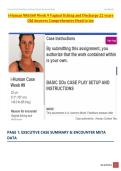
i-Human NR6560 Week 9 Vaginal Itching and Discharge 22 years
Old Answers Comprehensive Head to toe
PAGE 1: EXECUTIVE CASE SUMMARY & ENCOUNTER META
DATA
@CAZORLA 1
,i-Human Clinical Case Report | Advanced Practice Nursing Simulation Case Week #9
Patient Name: Maya Lin Age / Sex: 22 y/o Female
Height / Weight: 5′ 2″ (157 cm) / 145.0 lb (65.9 kg) BMI: 26.5 kg/m² (Overweight)
Chief Complaint: Acute shortness of breath and chest tightness Setting: Urgent Care / Outpatient Emergency Clinic
x 6 hours
Level of Care: Advanced Health Assessment & DDx Primary Evaluator: MSN, APRN, FNP Student Assessment
Executive Summary
This clinical case report presents a comprehensive evaluation of Maya Lin, a 22-year-old female who presented to the
outpatient urgent care clinic exhibiting acute dyspnea, non-productive cough, and chest tightness that began
approximately 6 hours prior to arrival. The patient has a background history of mild seasonal allergies and childhood
"reactive airway disease" which was presumed resolved, with no active prescription maintenance therapies. The episode
was reportedly triggered following exposure to cold air during an early morning outdoor jog, combined with recent dust
exposure during a home renovation project.
Initial clinical evaluation revealed moderate respiratory distress with prominent end-expiratory wheezing bilaterally,
tachypnea (respiratory rate 26 breaths/min), and mild oxygen desaturation (93% on room air). Physical examination
demonstrated prolonged expiratory phase and use of accessory neck muscles. Prompt recognition of an acute moderate
exacerbation of asthma was established. Initial emergency bronchodilator therapy with inhaled short-acting beta-2 agonist
(Albuterol) and anticholinergic (Ipratropium) resulted in marked clinical improvement, reversing airway obstruction and
normalizing peripheral oxygen saturation.
CRITICAL CLINICAL ALERT
Acute asthma exacerbations represent potential life-threatening medical emergencies. Rapid triage, objective measurement
of airflow obstruction (PEFR/FEV1), early administration of inhaled SABA, and timely systemic corticosteroid therapy are
essential to prevent progressive respiratory fatigue, hypercapnic failure, and intubation.
Primary Learning Objectives
1. Systematic Data Collection: Perform a targeted, thorough history taking utilizing structured interview techniques to
isolate respiratory exacerbation triggers and risk factors.
2. Objective Assessment & Triage: Conduct a comprehensive physical examination focusing on pulmonary
biomechanics, accessory muscle use, and objective severity staging of obstructive airway pathology.
3. Differential Diagnosis Formulation: Synthesize clinical data to differentiate acute asthma exacerbation from
pulmonary embolism, anaphylaxis, acute viral bronchitis, foreign body aspiration, and panic disorder.
4. Evidence-Based Management: Formulate an emergency stabilization plan and a long-term outpatient asthma
management strategy aligned with NAEPP/GINA guidelines.
5. Interprofessional Communication: Construct an detailed EHR-compliant SOAP note, patient discharge education
plan, and transition of care summary.
Patient: Maya Lin | 22 y/o F Page 1 of 16
@CAZORLA 2
, i-Human Clinical Case Report | History Log Case Week #9
PAGE 2: COMPREHENSIVE PATIENT HISTORY LOG (PART 1)
Structured record of initial clinical interview questions, direct patient responses, and diagnostic rationale formulated
during the interactive assessment phase.
# EHR / iHuman Interview Question Patient Response Clinical Rationale
1 "What specific problem brought you to the "I can't catch my breath, and my chest feels Establishes primary chief
clinic today?" really tight. It started earlier this morning complaint (dyspnea/chest
and keeps getting worse." tightness) and acute onset
timeline.
2 "How long have you been experiencing this "It started about 6 hours ago when I went Identifies exact duration and
shortness of breath?" for a morning run outside. It was pretty cold potential physical trigger (cold
out." air exercise).
3 "Are you coughing? If so, are you bringing "I've been coughing, but it's totally dry. No Differentiates reactive airway
up any sputum or blood?" phlegm or blood at all." disease (dry cough) from
infectious
bronchitis/pneumonia or PE.
4 "Have you ever felt like this before in your "I had 'wheezing' as a kid and used a red Uncovers historical baseline of
life?" inhaler, but the doctor said I outgrew it by pediatric asthma / reactive
age 12. I haven't used an inhaler in years." airway disease.
5 "Do you have any known allergies to foods, "I get bad hay fever in the spring—pollen Establishes presence of the
medications, or environmental triggers?" makes my eyes itch and nose run. No food Atopic Triad (allergic rhinitis,
or drug allergies." asthma, eczema connection).
6 "Have you noticed anything else that seems "Dust definitely makes me sneeze. We Identifies major environmental
to trigger these breathing symptoms?" started sanding drywall for a kitchen allergen/irritant trigger
remodel at home two days ago." (drywall particulate dust).
CLINICAL PEARL: THE ATOPIC TRIAD
A history of allergic rhinitis, atopic dermatitis (eczema), and asthma frequently co-occur due to shared Type I
hypersensitivity (IgE-mediated) pathway hyperresponsiveness. Identifying one component should prompt investigation for
the others.
Patient: Maya Lin | 22 y/o F Page 2 of 16
@CAZORLA 2
i-Human NR6560 Week 9 Vaginal Itching and Discharge 22 years
Old Answers Comprehensive Head to toe
PAGE 1: EXECUTIVE CASE SUMMARY & ENCOUNTER META
DATA
@CAZORLA 1
,i-Human Clinical Case Report | Advanced Practice Nursing Simulation Case Week #9
Patient Name: Maya Lin Age / Sex: 22 y/o Female
Height / Weight: 5′ 2″ (157 cm) / 145.0 lb (65.9 kg) BMI: 26.5 kg/m² (Overweight)
Chief Complaint: Acute shortness of breath and chest tightness Setting: Urgent Care / Outpatient Emergency Clinic
x 6 hours
Level of Care: Advanced Health Assessment & DDx Primary Evaluator: MSN, APRN, FNP Student Assessment
Executive Summary
This clinical case report presents a comprehensive evaluation of Maya Lin, a 22-year-old female who presented to the
outpatient urgent care clinic exhibiting acute dyspnea, non-productive cough, and chest tightness that began
approximately 6 hours prior to arrival. The patient has a background history of mild seasonal allergies and childhood
"reactive airway disease" which was presumed resolved, with no active prescription maintenance therapies. The episode
was reportedly triggered following exposure to cold air during an early morning outdoor jog, combined with recent dust
exposure during a home renovation project.
Initial clinical evaluation revealed moderate respiratory distress with prominent end-expiratory wheezing bilaterally,
tachypnea (respiratory rate 26 breaths/min), and mild oxygen desaturation (93% on room air). Physical examination
demonstrated prolonged expiratory phase and use of accessory neck muscles. Prompt recognition of an acute moderate
exacerbation of asthma was established. Initial emergency bronchodilator therapy with inhaled short-acting beta-2 agonist
(Albuterol) and anticholinergic (Ipratropium) resulted in marked clinical improvement, reversing airway obstruction and
normalizing peripheral oxygen saturation.
CRITICAL CLINICAL ALERT
Acute asthma exacerbations represent potential life-threatening medical emergencies. Rapid triage, objective measurement
of airflow obstruction (PEFR/FEV1), early administration of inhaled SABA, and timely systemic corticosteroid therapy are
essential to prevent progressive respiratory fatigue, hypercapnic failure, and intubation.
Primary Learning Objectives
1. Systematic Data Collection: Perform a targeted, thorough history taking utilizing structured interview techniques to
isolate respiratory exacerbation triggers and risk factors.
2. Objective Assessment & Triage: Conduct a comprehensive physical examination focusing on pulmonary
biomechanics, accessory muscle use, and objective severity staging of obstructive airway pathology.
3. Differential Diagnosis Formulation: Synthesize clinical data to differentiate acute asthma exacerbation from
pulmonary embolism, anaphylaxis, acute viral bronchitis, foreign body aspiration, and panic disorder.
4. Evidence-Based Management: Formulate an emergency stabilization plan and a long-term outpatient asthma
management strategy aligned with NAEPP/GINA guidelines.
5. Interprofessional Communication: Construct an detailed EHR-compliant SOAP note, patient discharge education
plan, and transition of care summary.
Patient: Maya Lin | 22 y/o F Page 1 of 16
@CAZORLA 2
, i-Human Clinical Case Report | History Log Case Week #9
PAGE 2: COMPREHENSIVE PATIENT HISTORY LOG (PART 1)
Structured record of initial clinical interview questions, direct patient responses, and diagnostic rationale formulated
during the interactive assessment phase.
# EHR / iHuman Interview Question Patient Response Clinical Rationale
1 "What specific problem brought you to the "I can't catch my breath, and my chest feels Establishes primary chief
clinic today?" really tight. It started earlier this morning complaint (dyspnea/chest
and keeps getting worse." tightness) and acute onset
timeline.
2 "How long have you been experiencing this "It started about 6 hours ago when I went Identifies exact duration and
shortness of breath?" for a morning run outside. It was pretty cold potential physical trigger (cold
out." air exercise).
3 "Are you coughing? If so, are you bringing "I've been coughing, but it's totally dry. No Differentiates reactive airway
up any sputum or blood?" phlegm or blood at all." disease (dry cough) from
infectious
bronchitis/pneumonia or PE.
4 "Have you ever felt like this before in your "I had 'wheezing' as a kid and used a red Uncovers historical baseline of
life?" inhaler, but the doctor said I outgrew it by pediatric asthma / reactive
age 12. I haven't used an inhaler in years." airway disease.
5 "Do you have any known allergies to foods, "I get bad hay fever in the spring—pollen Establishes presence of the
medications, or environmental triggers?" makes my eyes itch and nose run. No food Atopic Triad (allergic rhinitis,
or drug allergies." asthma, eczema connection).
6 "Have you noticed anything else that seems "Dust definitely makes me sneeze. We Identifies major environmental
to trigger these breathing symptoms?" started sanding drywall for a kitchen allergen/irritant trigger
remodel at home two days ago." (drywall particulate dust).
CLINICAL PEARL: THE ATOPIC TRIAD
A history of allergic rhinitis, atopic dermatitis (eczema), and asthma frequently co-occur due to shared Type I
hypersensitivity (IgE-mediated) pathway hyperresponsiveness. Identifying one component should prompt investigation for
the others.
Patient: Maya Lin | 22 y/o F Page 2 of 16
@CAZORLA 2


