

ADVANCED PEDIATRIC CLINICAL CASE REPORT IHUMAN CASE: #8942-LS
Advanced Health Assessment & Pathophysiology Patient: Layla Stevens
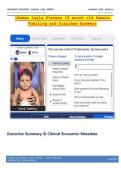
iHuman Layla Stevens 18 month old female
Vomiting and Diarrhea Answers
Executive Summary & Clinical Encounter Metadata
IHUMAN CASE REPORT: LAYLA STEVENS - ACUTE PEDIATRIC
@CAZORLA
GASTROENTERITIS & DEHYDRATION
,ADVANCED PEDIATRIC CLINICAL CASE REPORT IHUMAN CASE: #8942-LS
Advanced Health Assessment & Pathophysiology Patient: Layla Stevens
Case Context & Clinical Scenario
Layla Stevens is an 18-month-old female brought to the pediatric urgent care clinic by her mother, Sarah Stevens, due to acute
onset of persistent non-bloody, non-bilious vomiting and watery, non-bloody diarrhea lasting for the past 48 hours. The
mother notes a dramatic drop in fluid intake over the past 24 hours, accompanied by low-grade fever, marked lethargy,
fussiness, and a noticeable decrease in wet diapers (only 1 wet diaper in the last 14 hours). Layla attends a local daycare facility
4 days a week, where several other children have recently experienced similar gastrointestinal symptoms.
Primary Learning Objectives
Pediatric Clinical Assessment: Demonstrate proficiency in evaluating acute pediatric gastrointestinal disorders, focusing on
early identification of dehydration severity and hypovolemia using objective clinical parameters.
Pathophysiologic Differential Diagnosis: Formulate a comprehensive, prioritized differential diagnosis differentiating viral
gastroenteritis (e.g., Rotavirus, Norovirus) from bacterial enteritis, parasitic infections, surgical abdomens (intussusception),
and systemic non-GI infections.
Diagnostic Laboratory Interpretation: Order and critically analyze pediatric serum electrolyte panels, urine specific gravity,
blood gas, and stool diagnostics to assess fluid status, acid-base balance, and infectious etiology.
Evidence-Based Management & Rehydration: Formulate an evidence-based treatment plan utilizing WHO and AAP oral
rehydration therapy (ORT) algorithms, isotonic IV fluid resuscitation protocols when indicated, and appropriate antiemetic
therapy.
Interprofessional Communication & Caregiver Education: Construct a complete, standardized EHR SOAP note and a
caregiver discharge plan at an accessible reading level, emphasizing red flags, oral rehydration guidelines, and infection
control.
CLINICAL PEARL: PEDIATRIC DEHYDRATION ASSESSMENT
In pediatric gastroenteritis, body weight loss percentage is the gold standard for defining dehydration severity: Mild
(<5%), Moderate (5%–10%), and Severe (>10%). Tachycardia is often the earliest physiological compensatory mechanism
for hypovolemia in toddlers, preceding hypotension which represents late, decompensated shock.
IHUMAN CASE REPORT: LAYLA STEVENS - ACUTE PEDIATRIC
@CAZORLA
GASTROENTERITIS & DEHYDRATION
, PATIENT HISTORY LOG — PART I LAYLA STEVENS | 18M
Structured Clinical Interview & Diagnostic Reasoning iHuman Clinical Report
Focused Interview Log & Rationale (Questions 1 – 6)
The following structured interview log details the specific questions asked during the clinical encounter, the response provided
by the mother (informant), and the detailed clinical rationale guiding the diagnostic inquiry.
# QUESTION ASKED PATIENT / INFORMANT RESPONSE CLINICAL RATIONALE & DIAGNOSTIC
SIGNIFICANCE
1 How long has Layla been "It started suddenly about 2 days Establishes acute timeline (<14 days), ruling
experiencing vomiting and diarrhea? ago. The vomiting was constant the out chronic inflammatory bowel diseases or
first day, and the diarrhea started long-standing malabsorption. Points
yesterday morning." strongly toward acute viral or bacterial
gastroenteritis.
2 How many episodes of vomiting and "She vomited about 5 times Quantifies total fluid loss to estimate
diarrhea has she had in the past 24 yesterday and twice this morning. dehydration severity and calculate
hours? She has had 6 to 8 loose, watery maintenance vs. replacement fluid
diapers in the last day." requirements. High frequency indicates high
risk for rapid metabolic derangement.
3 What does the vomit and stool look "The vomit is clear to yellow fluid. No Absence of bilious emesis rules out acute
like? Is there any blood or dark green blood and not green. The diarrhea is intestinal obstruction (e.g., volvulus).
bilious material? very watery, yellowish-brown, with no Absence of blood reduces likelihood of
bright red blood or black mucus." invasive bacterial pathogens (Shigella, EHEC,
EIEC) or intussusception ("currant jelly").
4 How many wet diapers has Layla had "She usually has 5 to 6 heavy wet Direct measure of renal perfusion and
today compared to normal? diapers a day. Today she only had 1 intravascular volume status. Severe oliguria
slightly wet diaper over 14 hours ago, (<1 mL/kg/hr) indicates significant
and her urine was very dark." intravascular depletion (moderate-to-severe
dehydration).
5 Has she been able to keep any fluids "No, every time I try to give her milk Evaluates failure of home oral intake and
or food down today? or juice, she throws it up within 15 readiness for Oral Rehydration Therapy
minutes. She takes a tiny sip of water (ORT) vs. requirement for antiemetic
and pushes the cup away." priming or intravenous fluid therapy.
6 Has Layla had a fever or chills? "Yes, she felt warm last night. I took Low-grade fever supports infectious
her temperature under her arm and it enteritis (viral vs. non-invasive bacterial).
was 100.8°F (38.2°C). I gave her High spiking fevers would raise suspicion
acetaminophen once." for occult bacteremia, urinary tract infection,
or systemic disease.
HIGH ALERT: PEDIATRIC RED FLAGS IDENTIFIED
Reported oliguria (1 wet diaper in 14 hours) combined with inability to retain oral fluids and high-frequency fluid loss
indicates significant intracellular and extracellular fluid depletion. Immediate objective fluid status assessment is required.
Student / Clinician Evaluation Module Page 2 of 16 CONFIDENTIAL MEDICAL RECORD
Advanced Health Assessment & Pathophysiology Patient: Layla Stevens
iHuman Layla Stevens 18 month old female
Vomiting and Diarrhea Answers
Executive Summary & Clinical Encounter Metadata
IHUMAN CASE REPORT: LAYLA STEVENS - ACUTE PEDIATRIC
@CAZORLA
GASTROENTERITIS & DEHYDRATION
,ADVANCED PEDIATRIC CLINICAL CASE REPORT IHUMAN CASE: #8942-LS
Advanced Health Assessment & Pathophysiology Patient: Layla Stevens
Case Context & Clinical Scenario
Layla Stevens is an 18-month-old female brought to the pediatric urgent care clinic by her mother, Sarah Stevens, due to acute
onset of persistent non-bloody, non-bilious vomiting and watery, non-bloody diarrhea lasting for the past 48 hours. The
mother notes a dramatic drop in fluid intake over the past 24 hours, accompanied by low-grade fever, marked lethargy,
fussiness, and a noticeable decrease in wet diapers (only 1 wet diaper in the last 14 hours). Layla attends a local daycare facility
4 days a week, where several other children have recently experienced similar gastrointestinal symptoms.
Primary Learning Objectives
Pediatric Clinical Assessment: Demonstrate proficiency in evaluating acute pediatric gastrointestinal disorders, focusing on
early identification of dehydration severity and hypovolemia using objective clinical parameters.
Pathophysiologic Differential Diagnosis: Formulate a comprehensive, prioritized differential diagnosis differentiating viral
gastroenteritis (e.g., Rotavirus, Norovirus) from bacterial enteritis, parasitic infections, surgical abdomens (intussusception),
and systemic non-GI infections.
Diagnostic Laboratory Interpretation: Order and critically analyze pediatric serum electrolyte panels, urine specific gravity,
blood gas, and stool diagnostics to assess fluid status, acid-base balance, and infectious etiology.
Evidence-Based Management & Rehydration: Formulate an evidence-based treatment plan utilizing WHO and AAP oral
rehydration therapy (ORT) algorithms, isotonic IV fluid resuscitation protocols when indicated, and appropriate antiemetic
therapy.
Interprofessional Communication & Caregiver Education: Construct a complete, standardized EHR SOAP note and a
caregiver discharge plan at an accessible reading level, emphasizing red flags, oral rehydration guidelines, and infection
control.
CLINICAL PEARL: PEDIATRIC DEHYDRATION ASSESSMENT
In pediatric gastroenteritis, body weight loss percentage is the gold standard for defining dehydration severity: Mild
(<5%), Moderate (5%–10%), and Severe (>10%). Tachycardia is often the earliest physiological compensatory mechanism
for hypovolemia in toddlers, preceding hypotension which represents late, decompensated shock.
IHUMAN CASE REPORT: LAYLA STEVENS - ACUTE PEDIATRIC
@CAZORLA
GASTROENTERITIS & DEHYDRATION
, PATIENT HISTORY LOG — PART I LAYLA STEVENS | 18M
Structured Clinical Interview & Diagnostic Reasoning iHuman Clinical Report
Focused Interview Log & Rationale (Questions 1 – 6)
The following structured interview log details the specific questions asked during the clinical encounter, the response provided
by the mother (informant), and the detailed clinical rationale guiding the diagnostic inquiry.
# QUESTION ASKED PATIENT / INFORMANT RESPONSE CLINICAL RATIONALE & DIAGNOSTIC
SIGNIFICANCE
1 How long has Layla been "It started suddenly about 2 days Establishes acute timeline (<14 days), ruling
experiencing vomiting and diarrhea? ago. The vomiting was constant the out chronic inflammatory bowel diseases or
first day, and the diarrhea started long-standing malabsorption. Points
yesterday morning." strongly toward acute viral or bacterial
gastroenteritis.
2 How many episodes of vomiting and "She vomited about 5 times Quantifies total fluid loss to estimate
diarrhea has she had in the past 24 yesterday and twice this morning. dehydration severity and calculate
hours? She has had 6 to 8 loose, watery maintenance vs. replacement fluid
diapers in the last day." requirements. High frequency indicates high
risk for rapid metabolic derangement.
3 What does the vomit and stool look "The vomit is clear to yellow fluid. No Absence of bilious emesis rules out acute
like? Is there any blood or dark green blood and not green. The diarrhea is intestinal obstruction (e.g., volvulus).
bilious material? very watery, yellowish-brown, with no Absence of blood reduces likelihood of
bright red blood or black mucus." invasive bacterial pathogens (Shigella, EHEC,
EIEC) or intussusception ("currant jelly").
4 How many wet diapers has Layla had "She usually has 5 to 6 heavy wet Direct measure of renal perfusion and
today compared to normal? diapers a day. Today she only had 1 intravascular volume status. Severe oliguria
slightly wet diaper over 14 hours ago, (<1 mL/kg/hr) indicates significant
and her urine was very dark." intravascular depletion (moderate-to-severe
dehydration).
5 Has she been able to keep any fluids "No, every time I try to give her milk Evaluates failure of home oral intake and
or food down today? or juice, she throws it up within 15 readiness for Oral Rehydration Therapy
minutes. She takes a tiny sip of water (ORT) vs. requirement for antiemetic
and pushes the cup away." priming or intravenous fluid therapy.
6 Has Layla had a fever or chills? "Yes, she felt warm last night. I took Low-grade fever supports infectious
her temperature under her arm and it enteritis (viral vs. non-invasive bacterial).
was 100.8°F (38.2°C). I gave her High spiking fevers would raise suspicion
acetaminophen once." for occult bacteremia, urinary tract infection,
or systemic disease.
HIGH ALERT: PEDIATRIC RED FLAGS IDENTIFIED
Reported oliguria (1 wet diaper in 14 hours) combined with inability to retain oral fluids and high-frequency fluid loss
indicates significant intracellular and extracellular fluid depletion. Immediate objective fluid status assessment is required.
Student / Clinician Evaluation Module Page 2 of 16 CONFIDENTIAL MEDICAL RECORD


