

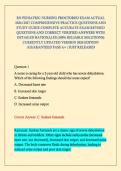
RN PEDIATRIC NURSING PROCTORED EXAM ACTUAL
2026/2027 COMPREHENSIVE PRACTICE QUESTIONS AND
STUDY GUIDE COMPLETE ACCURATE EXAM REVISED
QUESTIONS AND CORRECT VERIFIED ANSWERS WITH
DETAILED RATIONALES (100% RELIABLE SOLUTIONS)
CURRENTLY UPDATED VERSION 2026 EDITION
|GUARANTEED PASS A+ |JUST RELEASED
Question 1
A nurse is caring for a 2-year-old child who has severe dehydration.
Which of the following findings should the nurse expect?
A. Decreased heart rate
B. Increased skin turgor
C. Sunken fontanels
D. Increased urine output
Correct Answer: C. Sunken fontanels
Rationale: Sunken fontanels are a classic sign of severe dehydration
in infants and toddlers. Other signs include tachycardia (increased
heart rate, not decreased), decreased skin turgor, and decreased urine
output. The body conserves fluids during dehydration, leading to
reduced urine output and poor skin turgor.
,Question 2
A nurse is assessing a 4-year-old child. According to Erikson's theory
of psychosocial development, which developmental task should the
nurse expect the child to be working on?
A. Trust vs. mistrust
B. Autonomy vs. shame and doubt
C. Initiative vs. guilt
D. Industry vs. inferiority
Correct Answer: C. Initiative vs. guilt
Rationale: According to Erikson, preschoolers (ages 3-5) are in the
initiative vs. guilt stage. They begin to assert control and power over
their environment by initiating activities. Trust vs. mistrust occurs in
infancy (0-1 year), autonomy vs. shame and doubt occurs in
toddlerhood (1-3 years), and industry vs. inferiority occurs in school-
age children (6-12 years).
Question 3
A nurse is performing a developmental screening on a 12-month-old
infant. Which of the following fine motor milestones should the
nurse expect the infant to have achieved?
A. Pincer grasp
,B. Building a tower of two blocks
C. Scribbling spontaneously
D. Using a spoon without spilling
Correct Answer: A. Pincer grasp
Rationale: By 12 months, infants typically have developed a pincer
grasp (using thumb and forefinger to pick up small objects). Building
a tower of two blocks usually occurs around 15 months, and
scribbling spontaneously around 18 months. Using a spoon without
spilling typically develops around 24 months.
Question 4
A nurse is teaching a parent about car seat safety for a 6-month-old
infant. Which of the following instructions should the nurse include?
A. Place the infant in a forward-facing car seat
B. Place the infant in a rear-facing car seat in the back seat
C. Place the infant in a booster seat in the front seat
D. Place the infant in a rear-facing car seat in the front seat with
airbag disabled
Correct Answer: B. Place the infant in a rear-facing car seat in the
back seat
, Rationale: Infants and toddlers should remain in a rear-facing car
seat in the back seat until they reach the maximum height or weight
limit for the seat (typically at least 2 years of age). Rear-facing
positioning provides optimal protection for the head, neck, and spine
in the event of a collision.
Question 5
A nurse is caring for a child who has suspected epiglottitis. Which of
the following actions should the nurse take FIRST?
A. Obtain a throat culture
B. Prepare for endotracheal intubation
C. Place the child in a supine position
D. Administer oral antibiotics
Correct Answer: B. Prepare for endotracheal intubation
Rationale: Epiglottitis is a medical emergency that can cause rapid
airway obstruction. The nurse should prepare for possible intubation
and avoid any procedures that could agitate the child (such as throat
cultures or placing the child supine). Airway stabilization is the
highest priority according to ABC (Airway, Breathing, Circulation)
principles.
2026/2027 COMPREHENSIVE PRACTICE QUESTIONS AND
STUDY GUIDE COMPLETE ACCURATE EXAM REVISED
QUESTIONS AND CORRECT VERIFIED ANSWERS WITH
DETAILED RATIONALES (100% RELIABLE SOLUTIONS)
CURRENTLY UPDATED VERSION 2026 EDITION
|GUARANTEED PASS A+ |JUST RELEASED
Question 1
A nurse is caring for a 2-year-old child who has severe dehydration.
Which of the following findings should the nurse expect?
A. Decreased heart rate
B. Increased skin turgor
C. Sunken fontanels
D. Increased urine output
Correct Answer: C. Sunken fontanels
Rationale: Sunken fontanels are a classic sign of severe dehydration
in infants and toddlers. Other signs include tachycardia (increased
heart rate, not decreased), decreased skin turgor, and decreased urine
output. The body conserves fluids during dehydration, leading to
reduced urine output and poor skin turgor.
,Question 2
A nurse is assessing a 4-year-old child. According to Erikson's theory
of psychosocial development, which developmental task should the
nurse expect the child to be working on?
A. Trust vs. mistrust
B. Autonomy vs. shame and doubt
C. Initiative vs. guilt
D. Industry vs. inferiority
Correct Answer: C. Initiative vs. guilt
Rationale: According to Erikson, preschoolers (ages 3-5) are in the
initiative vs. guilt stage. They begin to assert control and power over
their environment by initiating activities. Trust vs. mistrust occurs in
infancy (0-1 year), autonomy vs. shame and doubt occurs in
toddlerhood (1-3 years), and industry vs. inferiority occurs in school-
age children (6-12 years).
Question 3
A nurse is performing a developmental screening on a 12-month-old
infant. Which of the following fine motor milestones should the
nurse expect the infant to have achieved?
A. Pincer grasp
,B. Building a tower of two blocks
C. Scribbling spontaneously
D. Using a spoon without spilling
Correct Answer: A. Pincer grasp
Rationale: By 12 months, infants typically have developed a pincer
grasp (using thumb and forefinger to pick up small objects). Building
a tower of two blocks usually occurs around 15 months, and
scribbling spontaneously around 18 months. Using a spoon without
spilling typically develops around 24 months.
Question 4
A nurse is teaching a parent about car seat safety for a 6-month-old
infant. Which of the following instructions should the nurse include?
A. Place the infant in a forward-facing car seat
B. Place the infant in a rear-facing car seat in the back seat
C. Place the infant in a booster seat in the front seat
D. Place the infant in a rear-facing car seat in the front seat with
airbag disabled
Correct Answer: B. Place the infant in a rear-facing car seat in the
back seat
, Rationale: Infants and toddlers should remain in a rear-facing car
seat in the back seat until they reach the maximum height or weight
limit for the seat (typically at least 2 years of age). Rear-facing
positioning provides optimal protection for the head, neck, and spine
in the event of a collision.
Question 5
A nurse is caring for a child who has suspected epiglottitis. Which of
the following actions should the nurse take FIRST?
A. Obtain a throat culture
B. Prepare for endotracheal intubation
C. Place the child in a supine position
D. Administer oral antibiotics
Correct Answer: B. Prepare for endotracheal intubation
Rationale: Epiglottitis is a medical emergency that can cause rapid
airway obstruction. The nurse should prepare for possible intubation
and avoid any procedures that could agitate the child (such as throat
cultures or placing the child supine). Airway stabilization is the
highest priority according to ABC (Airway, Breathing, Circulation)
principles.


