Computer
SimulatedComputer
Simulated
Dental Hygiene
Simulated
DentalExam.pdf~~~!!!!!!!!!!!!!!!!!!!!!!!!!!@#!#@@@@@@@@@@@@@@@@@@@!!!!!!!!!!!!!!!!!!!!!!@@@@@@@@@@@@@@@@@@@@
Hygiene
DentalExam.pdf~~~!!!!!!!!!!!!!!!!!!!!!!!!!!@#!#@@@@@@@@@@@@@@@@@@@!!!!!!!!!!!!!!!!!!!!!!@@@@@@@@@@@@@@@@@@@@
Hygiene Exam.pdf~~Computer Simulated Dental Hygiene Exam.pdf~~~!!!!!!!!!!!!!!!!!!!!!!!!!!@#!#@@@@@@@@@@@@@@@@@@@
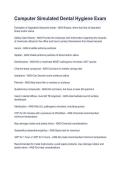
Computer Simulated Dental Hygiene Exam
Examples of regulated biohazard waste - ANS-Sharps, items that drip of saturated
blood and/or saliva
Safety Data Sheets - ANS-Provide the employee with information regarding the hazards
of chemicals utilized in the office and how to protect themselves from these hazards
Aersol - ANS-Invisible airborne particles
Spatter - ANS-Visible airborne particles of blood and/or saliva
Disinfectants - ANS-Kill or inactivate MOST pathogenic microbes, NOT spores
Chlorine-base compound - ANS-Corrosive to metals; strong odor
Iodophors - ANS-Can discolor some surfaces yellow
Phenols - ANS-May leave film or residue on surfaces
Quarternary compounds - ANS-Not corrosive, but have a lower kill spectrum
Used in dental offices, must kill TB organism - ANS-Intermediate level of surface
disinfectant
Sterilization - ANS-Kills ALL pathogenic microbes, including spores
273º for 20 minutes with a pressure of kPa/25psi - ANS-Chemical recommended
minimum temperature
May damage rubber and plastic items - ANS-Chemical considerations
Geobacillus stearothermophilus - ANS-Spore test for chemical
340º for 1 hour or 320º for 2 hours - ANS-Dry heat recommended minimum temperature
Recommended for metal instruments, avoid paper products, may damage rubber and
plastic items - ANS-Dry heat considerations
Computer
SimulatedComputer
Simulated
Dental Hygiene
Simulated
DentalExam.pdf~~~!!!!!!!!!!!!!!!!!!!!!!!!!!@#!#@@@@@@@@@@@@@@@@@@@!!!!!!!!!!!!!!!!!!!!!!@@@@@@@@@@@@@@@@@@@@
Hygiene
DentalExam.pdf~~~!!!!!!!!!!!!!!!!!!!!!!!!!!@#!#@@@@@@@@@@@@@@@@@@@!!!!!!!!!!!!!!!!!!!!!!@@@@@@@@@@@@@@@@@@@@
Hygiene Exam.pdf~~~!!!!!!!!!!!!!!!!!!!!!!!!!!@#!#@@@@@@@@@@@@@@@@@@@!!!!!!!!!!!!!!!!!!!!!!@@@@@@@@@@@@@@@
,Computer
SimulatedComputer
Simulated
Dental Hygiene
Simulated
DentalExam.pdf~~~!!!!!!!!!!!!!!!!!!!!!!!!!!@#!#@@@@@@@@@@@@@@@@@@@!!!!!!!!!!!!!!!!!!!!!!@@@@@@@@@@@@@@@@@@@@
Hygiene
DentalExam.pdf~~~!!!!!!!!!!!!!!!!!!!!!!!!!!@#!#@@@@@@@@@@@@@@@@@@@!!!!!!!!!!!!!!!!!!!!!!@@@@@@@@@@@@@@@@@@@@
Hygiene Exam.pdf~~Computer Simulated Dental Hygiene Exam.pdf~~~!!!!!!!!!!!!!!!!!!!!!!!!!!@#!#@@@@@@@@@@@@@@@@@@@
Bacillus atrophaeus - ANS-Spore test for dry heat
250º with 15 or 20 lbs for 30 minutes - ANS-Steam recommended minimum sterilization
Corrodes non-stainless (carbon) steel instruments, dulls instruments, OK for some
plastics - ANS-Steam considerations
Geobacillus stearothermophilus - ANS-Spore test for steam
Class I (G.V Black Classification for Caries and Restorations) - ANS-Pits and fissures
Class II (G.V Black Classification for Caries and Restorations) - ANS-Proximal surface
of posterior teeth
Class III (G.V Black Classification for Caries and Restorations) - ANS-Proximal surface
of anterior teeth
Class IV (G.V Black Classification for Caries and Restorations) - ANS-Proximal surface
of anterior teeth including incisal edge
Class V (G.V Black Classification for Caries and Restorations) - ANS-Root caries
Class VI (G.V Black Classification for Caries and Restorations) - ANS-Incisal edge or
cusp tips
Class I (Angle's classification) - ANS-Normal; mesiobuccal cusp of the maxillary first
molar is positioned in the buccal groove of the mandibular first molar
Class II (Angle's classification) - ANS-(Retrognathic) Buccal groove of the mandiublar
first permanent molar is distal to the mesiobuccal cusp of the maxillary first molar
Class II Div I (Angle's classification) - ANS-Retruded mandible with one or more
maxillary anterior teeth protruded facially
Class II Div II (Angle's classification) - ANS-Retruded mandible with one or more
maxillary anterior teeth inclined lingually
Class III - ANS-(Prognathic) Buccal groove of the mandibular first molar is mesial to the
mesiobuccal cusp of the maxillary first molar
Computer
SimulatedComputer
Simulated
Dental Hygiene
Simulated
DentalExam.pdf~~~!!!!!!!!!!!!!!!!!!!!!!!!!!@#!#@@@@@@@@@@@@@@@@@@@!!!!!!!!!!!!!!!!!!!!!!@@@@@@@@@@@@@@@@@@@@
Hygiene
DentalExam.pdf~~~!!!!!!!!!!!!!!!!!!!!!!!!!!@#!#@@@@@@@@@@@@@@@@@@@!!!!!!!!!!!!!!!!!!!!!!@@@@@@@@@@@@@@@@@@@@
Hygiene Exam.pdf~~~!!!!!!!!!!!!!!!!!!!!!!!!!!@#!#@@@@@@@@@@@@@@@@@@@!!!!!!!!!!!!!!!!!!!!!!@@@@@@@@@@@@@@@
SimulatedComputer
Simulated
Dental Hygiene
Simulated
DentalExam.pdf~~~!!!!!!!!!!!!!!!!!!!!!!!!!!@#!#@@@@@@@@@@@@@@@@@@@!!!!!!!!!!!!!!!!!!!!!!@@@@@@@@@@@@@@@@@@@@
Hygiene
DentalExam.pdf~~~!!!!!!!!!!!!!!!!!!!!!!!!!!@#!#@@@@@@@@@@@@@@@@@@@!!!!!!!!!!!!!!!!!!!!!!@@@@@@@@@@@@@@@@@@@@
Hygiene Exam.pdf~~Computer Simulated Dental Hygiene Exam.pdf~~~!!!!!!!!!!!!!!!!!!!!!!!!!!@#!#@@@@@@@@@@@@@@@@@@@
Computer Simulated Dental Hygiene Exam
Examples of regulated biohazard waste - ANS-Sharps, items that drip of saturated
blood and/or saliva
Safety Data Sheets - ANS-Provide the employee with information regarding the hazards
of chemicals utilized in the office and how to protect themselves from these hazards
Aersol - ANS-Invisible airborne particles
Spatter - ANS-Visible airborne particles of blood and/or saliva
Disinfectants - ANS-Kill or inactivate MOST pathogenic microbes, NOT spores
Chlorine-base compound - ANS-Corrosive to metals; strong odor
Iodophors - ANS-Can discolor some surfaces yellow
Phenols - ANS-May leave film or residue on surfaces
Quarternary compounds - ANS-Not corrosive, but have a lower kill spectrum
Used in dental offices, must kill TB organism - ANS-Intermediate level of surface
disinfectant
Sterilization - ANS-Kills ALL pathogenic microbes, including spores
273º for 20 minutes with a pressure of kPa/25psi - ANS-Chemical recommended
minimum temperature
May damage rubber and plastic items - ANS-Chemical considerations
Geobacillus stearothermophilus - ANS-Spore test for chemical
340º for 1 hour or 320º for 2 hours - ANS-Dry heat recommended minimum temperature
Recommended for metal instruments, avoid paper products, may damage rubber and
plastic items - ANS-Dry heat considerations
Computer
SimulatedComputer
Simulated
Dental Hygiene
Simulated
DentalExam.pdf~~~!!!!!!!!!!!!!!!!!!!!!!!!!!@#!#@@@@@@@@@@@@@@@@@@@!!!!!!!!!!!!!!!!!!!!!!@@@@@@@@@@@@@@@@@@@@
Hygiene
DentalExam.pdf~~~!!!!!!!!!!!!!!!!!!!!!!!!!!@#!#@@@@@@@@@@@@@@@@@@@!!!!!!!!!!!!!!!!!!!!!!@@@@@@@@@@@@@@@@@@@@
Hygiene Exam.pdf~~~!!!!!!!!!!!!!!!!!!!!!!!!!!@#!#@@@@@@@@@@@@@@@@@@@!!!!!!!!!!!!!!!!!!!!!!@@@@@@@@@@@@@@@
,Computer
SimulatedComputer
Simulated
Dental Hygiene
Simulated
DentalExam.pdf~~~!!!!!!!!!!!!!!!!!!!!!!!!!!@#!#@@@@@@@@@@@@@@@@@@@!!!!!!!!!!!!!!!!!!!!!!@@@@@@@@@@@@@@@@@@@@
Hygiene
DentalExam.pdf~~~!!!!!!!!!!!!!!!!!!!!!!!!!!@#!#@@@@@@@@@@@@@@@@@@@!!!!!!!!!!!!!!!!!!!!!!@@@@@@@@@@@@@@@@@@@@
Hygiene Exam.pdf~~Computer Simulated Dental Hygiene Exam.pdf~~~!!!!!!!!!!!!!!!!!!!!!!!!!!@#!#@@@@@@@@@@@@@@@@@@@
Bacillus atrophaeus - ANS-Spore test for dry heat
250º with 15 or 20 lbs for 30 minutes - ANS-Steam recommended minimum sterilization
Corrodes non-stainless (carbon) steel instruments, dulls instruments, OK for some
plastics - ANS-Steam considerations
Geobacillus stearothermophilus - ANS-Spore test for steam
Class I (G.V Black Classification for Caries and Restorations) - ANS-Pits and fissures
Class II (G.V Black Classification for Caries and Restorations) - ANS-Proximal surface
of posterior teeth
Class III (G.V Black Classification for Caries and Restorations) - ANS-Proximal surface
of anterior teeth
Class IV (G.V Black Classification for Caries and Restorations) - ANS-Proximal surface
of anterior teeth including incisal edge
Class V (G.V Black Classification for Caries and Restorations) - ANS-Root caries
Class VI (G.V Black Classification for Caries and Restorations) - ANS-Incisal edge or
cusp tips
Class I (Angle's classification) - ANS-Normal; mesiobuccal cusp of the maxillary first
molar is positioned in the buccal groove of the mandibular first molar
Class II (Angle's classification) - ANS-(Retrognathic) Buccal groove of the mandiublar
first permanent molar is distal to the mesiobuccal cusp of the maxillary first molar
Class II Div I (Angle's classification) - ANS-Retruded mandible with one or more
maxillary anterior teeth protruded facially
Class II Div II (Angle's classification) - ANS-Retruded mandible with one or more
maxillary anterior teeth inclined lingually
Class III - ANS-(Prognathic) Buccal groove of the mandibular first molar is mesial to the
mesiobuccal cusp of the maxillary first molar
Computer
SimulatedComputer
Simulated
Dental Hygiene
Simulated
DentalExam.pdf~~~!!!!!!!!!!!!!!!!!!!!!!!!!!@#!#@@@@@@@@@@@@@@@@@@@!!!!!!!!!!!!!!!!!!!!!!@@@@@@@@@@@@@@@@@@@@
Hygiene
DentalExam.pdf~~~!!!!!!!!!!!!!!!!!!!!!!!!!!@#!#@@@@@@@@@@@@@@@@@@@!!!!!!!!!!!!!!!!!!!!!!@@@@@@@@@@@@@@@@@@@@
Hygiene Exam.pdf~~~!!!!!!!!!!!!!!!!!!!!!!!!!!@#!#@@@@@@@@@@@@@@@@@@@!!!!!!!!!!!!!!!!!!!!!!@@@@@@@@@@@@@@@