
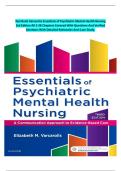
Test Bank Varcarolis Essentials of Psychiatric Mental Health Nursing
3rd Edition All 1-28 Chapters Covered With Questions And Verified
Solutions With Detailed Rationales And Case Study.
, TABLE OF CONTENT vr vr
Unit I: Essential Theoretical Concepts for Practice
vr vr vr vr vr vr
1. Practicing the Science and the Art of Psychiatric Nursing
vr vr vr vr vr vr vr vr vr
2. Mental Health and Mental Illness
vr vr vr vr vr
3. Theories and Therapies
vr vr vr
4. Biological Basis for Understanding Psychopharmacology
vr vr vr vr vr
5. Settings for Psychiatric Care
vr vr vr vr
6. Legal and Ethical Basis for Practice
vr vr vr vr vr vr
Unit II: Tools for Practice of the Art
vr vr vr vr vr vr vr
7. Nursing Process and QSEN: The Foundation for Safe and Effective Care
vr vr vr vr vr vr vr vr vr vr vr
8. Skills: Medium for All Nursing Practice
vr vr vr vr vr vr
9. Therapeutic Relationships and the Clinical Interview
vr vr vr vr vr vr
Unit III: Caring for Patients with Psychobiological Disorders
vr vr vr vr vr vr vr
10. Stress and Stress-Related Disorders
vr vr vr vr
11. Anxiety, Anxiety Disorders, and Obsessive-Compulsive Disorders
vr vr vr vr vr vr
12. Somatic Symptom Disorders and Related Disorders
vr vr vr vr vr vr
13. Personality Disorders
vr vr
14. Eating Disorders
vr vr
15. Mood Disorders: Depression
vr vr vr
16. Bipolar Spectrum Disorders
vr vr vr
17. Schizophrenia Spectrum Disorders and Other Psychotic Disorders
vr vr vr vr vr vr vr
18. Neurocognitive Disorders
vr vr
19. Substance-Related and Addictive Disorders
vr vr vr vr
,Unit IV: Caring for Patients Experiencing Psychiatric Emergencies
vr vr vr vr vr vr vr
20. Crisis and Mass Disaster
vr vr vr vr
21. Child, Partner, and Elder Violence
vr vr vr vr vr
22. Sexual Violence
vr vr
23. Suicidal Thoughts and Behaviors
vr vr vr vr
24. Anger, Aggression, and Violence
vr vr vr vr
25. Care for the Dying and Those Who Grieve
vr vr vr vr vr vr vr vr
Unit V: Age-Related Mental Health Disorders
vr vr vr vr vr
26. Children and Adolescents
vr vr vr
27. Adults
vr
28. Older Adults
vr vr
Appendixes
A. DSM-5 Classification
vr vr
B. NANDA-Approved Nursing Diagnoses
vr vr vr
, 🧠 Chapter 1: Practicing the Science and the Art of Psychiatric Nursing
vr vr vr vr vr vr vr vr vr vr vr
📘 Multiple-Choice Questions (21)
vr vr vr
Q1. Psychiatric–mental health nursing is best described as:
vr vr vr vr vr vr vr
A. The administration of psychiatric medications
vr vr vr vr vr
B. A discipline focused only on mental illness
vr vr vr vr vr vr vr
C. A holistic nursing specialty integrating science and therapeutic relationships
vr vr vr vr vr vr vr vr vr
D. A counseling profession separate from nursing
vr vr vr vr vr vr
✅ Correct Answer: C
vr vr vr
Rationale: Psychiatric nursing integrates evidence-
vr vr vr vr
based science with therapeutic use of self and holistic care, addressing biological, psychological, so
vr vr vr vr vr vr vr vr vr vr vr vr vr
cial, and spiritual needs.
vr vr vr
Q2. Which statement best reflects the “art” of psychiatric nursing?
vr vr vr vr vr vr vr vr vr
A. Performing mental status exams
vr vr vr vr
B. Applying standardized protocols
vr vr vr
C. Using empathy and therapeutic communication
vr vr vr vr vr
D. Documenting patient behavior
vr vr vr
✅ Correct Answer: C
vr vr vr
Rationale: The “art” refers to interpersonal skills such as empathy, trust, and therapeutic communi
vr vr vr vr vr vr vr vr vr vr vr vr vr
cation.
Q3. Evidence-based practice (EBP) primarily relies on:
vr vr vr vr vr vr
A. Nurse intuition alone
vr vr vr
B. Patient preference only
vr vr vr
C. Research evidence, clinical expertise, and patient values
vr vr vr vr vr vr vr
D. Hospital policy
vr vr
✅ Correct Answer: C
vr vr vr
Rationale: EBP integrates best research evidence, clinical judgment, and patient values.
vr vr vr vr vr vr vr vr vr vr
Q4. Which role is unique to the psychiatric nurse?
vr vr vr vr vr vr vr vr
A. Prescribing medication
vr vr
B. Therapeutic use of self
vr vr vr vr
C. Conducting laboratory tests
vr vr vr
D. Diagnosing mental illness
vr vr vr
✅ Correct Answer: B
vr vr vr
Rationale: Therapeutic use of self is a cornerstone of psychiatric nursing practice.
vr vr vr vr vr vr vr vr vr vr vr
Q5. The nurse’s self-awareness is important because it:
vr vr vr vr vr vr vr
A. Eliminates patient anxiety
vr vr vr
3rd Edition All 1-28 Chapters Covered With Questions And Verified
Solutions With Detailed Rationales And Case Study.
, TABLE OF CONTENT vr vr
Unit I: Essential Theoretical Concepts for Practice
vr vr vr vr vr vr
1. Practicing the Science and the Art of Psychiatric Nursing
vr vr vr vr vr vr vr vr vr
2. Mental Health and Mental Illness
vr vr vr vr vr
3. Theories and Therapies
vr vr vr
4. Biological Basis for Understanding Psychopharmacology
vr vr vr vr vr
5. Settings for Psychiatric Care
vr vr vr vr
6. Legal and Ethical Basis for Practice
vr vr vr vr vr vr
Unit II: Tools for Practice of the Art
vr vr vr vr vr vr vr
7. Nursing Process and QSEN: The Foundation for Safe and Effective Care
vr vr vr vr vr vr vr vr vr vr vr
8. Skills: Medium for All Nursing Practice
vr vr vr vr vr vr
9. Therapeutic Relationships and the Clinical Interview
vr vr vr vr vr vr
Unit III: Caring for Patients with Psychobiological Disorders
vr vr vr vr vr vr vr
10. Stress and Stress-Related Disorders
vr vr vr vr
11. Anxiety, Anxiety Disorders, and Obsessive-Compulsive Disorders
vr vr vr vr vr vr
12. Somatic Symptom Disorders and Related Disorders
vr vr vr vr vr vr
13. Personality Disorders
vr vr
14. Eating Disorders
vr vr
15. Mood Disorders: Depression
vr vr vr
16. Bipolar Spectrum Disorders
vr vr vr
17. Schizophrenia Spectrum Disorders and Other Psychotic Disorders
vr vr vr vr vr vr vr
18. Neurocognitive Disorders
vr vr
19. Substance-Related and Addictive Disorders
vr vr vr vr
,Unit IV: Caring for Patients Experiencing Psychiatric Emergencies
vr vr vr vr vr vr vr
20. Crisis and Mass Disaster
vr vr vr vr
21. Child, Partner, and Elder Violence
vr vr vr vr vr
22. Sexual Violence
vr vr
23. Suicidal Thoughts and Behaviors
vr vr vr vr
24. Anger, Aggression, and Violence
vr vr vr vr
25. Care for the Dying and Those Who Grieve
vr vr vr vr vr vr vr vr
Unit V: Age-Related Mental Health Disorders
vr vr vr vr vr
26. Children and Adolescents
vr vr vr
27. Adults
vr
28. Older Adults
vr vr
Appendixes
A. DSM-5 Classification
vr vr
B. NANDA-Approved Nursing Diagnoses
vr vr vr
, 🧠 Chapter 1: Practicing the Science and the Art of Psychiatric Nursing
vr vr vr vr vr vr vr vr vr vr vr
📘 Multiple-Choice Questions (21)
vr vr vr
Q1. Psychiatric–mental health nursing is best described as:
vr vr vr vr vr vr vr
A. The administration of psychiatric medications
vr vr vr vr vr
B. A discipline focused only on mental illness
vr vr vr vr vr vr vr
C. A holistic nursing specialty integrating science and therapeutic relationships
vr vr vr vr vr vr vr vr vr
D. A counseling profession separate from nursing
vr vr vr vr vr vr
✅ Correct Answer: C
vr vr vr
Rationale: Psychiatric nursing integrates evidence-
vr vr vr vr
based science with therapeutic use of self and holistic care, addressing biological, psychological, so
vr vr vr vr vr vr vr vr vr vr vr vr vr
cial, and spiritual needs.
vr vr vr
Q2. Which statement best reflects the “art” of psychiatric nursing?
vr vr vr vr vr vr vr vr vr
A. Performing mental status exams
vr vr vr vr
B. Applying standardized protocols
vr vr vr
C. Using empathy and therapeutic communication
vr vr vr vr vr
D. Documenting patient behavior
vr vr vr
✅ Correct Answer: C
vr vr vr
Rationale: The “art” refers to interpersonal skills such as empathy, trust, and therapeutic communi
vr vr vr vr vr vr vr vr vr vr vr vr vr
cation.
Q3. Evidence-based practice (EBP) primarily relies on:
vr vr vr vr vr vr
A. Nurse intuition alone
vr vr vr
B. Patient preference only
vr vr vr
C. Research evidence, clinical expertise, and patient values
vr vr vr vr vr vr vr
D. Hospital policy
vr vr
✅ Correct Answer: C
vr vr vr
Rationale: EBP integrates best research evidence, clinical judgment, and patient values.
vr vr vr vr vr vr vr vr vr vr
Q4. Which role is unique to the psychiatric nurse?
vr vr vr vr vr vr vr vr
A. Prescribing medication
vr vr
B. Therapeutic use of self
vr vr vr vr
C. Conducting laboratory tests
vr vr vr
D. Diagnosing mental illness
vr vr vr
✅ Correct Answer: B
vr vr vr
Rationale: Therapeutic use of self is a cornerstone of psychiatric nursing practice.
vr vr vr vr vr vr vr vr vr vr vr
Q5. The nurse’s self-awareness is important because it:
vr vr vr vr vr vr vr
A. Eliminates patient anxiety
vr vr vr


