
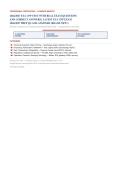
PROFESSIONAL CERTIFICATION — PAYMENTS INDUSTRY
2026/2027 ETA CPP TEST WITH REAL EXAM QUESTIONS
AND CORRECT ANSWERS | LATEST ETA CPP EXAM
2026/2027 PREP QS AND ANSWERS (BRAND NEW!)
Electronic Transactions Association Certified Payments Professional — Complete Practice Assessment
A+ QUESTIONS 5 SECTIONS 100% RATIONALES
VERIFIED COMPREHENSIVE INCLUDED
CATEGORIES
■ 1. Payments Ecosystem, Sales & Pricing — Interchange, quotes, residuals, PCI cost
■ 2. Processing, Authorization & Settlement — Auth, capture, EMV, dual-message, PayFac
■ 3. Risk, Underwriting & Chargebacks — Reserves, friendly fraud, MATCH, retrievals
■ 4. Regulations, Compliance & Security — PCI DSS, Reg E, tokenization, OFAC, liability shift
■ 5. Operations, Products & Emerging Technology — Wallets, 3DS, gateways, APMs, recurring
Passing Score: 80% | 1 mark per question | Format: Multiple Choice (A–D)
Original practice content aligned to ETA Certified Payments Professional domain areas.
STUVIAACTUALEXAM
, SECTION 1: Payments Ecosystem, Sales & Pricing
Q1.
A merchant is evaluating card-not-present rates and asks why e-commerce transactions often cost more than in-person swiped sales.
The payments professional explains that higher CNP pricing primarily reflects
A. Increased fraud and chargeback risk associated with card-not-present channels
B. Lower fraud risk compared with face-to-face transactions
C. A government surcharge applied only to online sales
D. The requirement to use only paper receipts
Correct Answer: A
Rationale: Card-not-present transactions carry higher fraud exposure because the card and cardholder are not present, which is reflected in interchange
and pricing.
Q2.
When presenting a merchant pricing proposal, an ETA CPP should ensure the quote clearly distinguishes
A. Only the processor’s brand colors
B. A single blended number with no breakdown
C. Interchange, assessments, and the processor’s markup so the merchant understands the cost structure
D. Fees that apply only to competitors
Correct Answer: C
Rationale: Transparent pricing that separates interchange, network assessments, and processor fees helps merchants compare offers and builds trust.
Q3.
A sales agent is explaining interchange to a new restaurant owner. Interchange is best described as
A. A fee set solely by the merchant’s bank with no network involvement
B. Fees paid to the card-issuing bank (and related parties) according to card network schedules for each transaction type
C. A one-time setup fee charged by the terminal manufacturer
D. Sales tax collected by the state
Correct Answer: B
Rationale: Interchange is determined by card networks and paid primarily to issuers based on card type, transaction method, and merchant category.
Q4.
A merchant asks whether they may add a surcharge to credit card transactions. The professional should respond that
A. Surcharging is always illegal in every U.S. jurisdiction
B. No disclosure to the customer is ever needed
C. Surcharging is required for all debit transactions
D. Surcharging rules vary by network, state law, and disclosure requirements; the merchant must follow current applicable rules
Correct Answer: D
Rationale: Credit surcharging is permitted in many jurisdictions under specific network and state rules that require clear disclosure and limits.
Q5.
In a competitive bid, a processor offers a very low rate but includes high monthly minimums and early termination fees. The ethical sales
approach is to
A. Disclose all material fees, terms, and conditions so the merchant can make an informed decision
B. Hide the minimums and ETF until after boarding
C. Promise that fees will never apply
D. Compare only the headline rate and ignore other costs
Correct Answer: A
Rationale: Professional sales practice requires full disclosure of material pricing terms, not just the advertised rate.
Q6.
A merchant’s average ticket and card mix significantly affect effective rate. The professional should therefore
A. Ignore historical volume data when quoting
B. Assume every merchant has identical interchange
C. Analyze the merchant’s transaction profile (ticket size, card types, CNP vs. CP) to project realistic costs
D. Quote only the lowest published interchange category
Correct Answer: C
Rationale: Accurate pricing depends on understanding the merchant’s actual volume characteristics rather than generic assumptions.
ETA CPP Test 2026/2027 | Page 2
2026/2027 ETA CPP TEST WITH REAL EXAM QUESTIONS
AND CORRECT ANSWERS | LATEST ETA CPP EXAM
2026/2027 PREP QS AND ANSWERS (BRAND NEW!)
Electronic Transactions Association Certified Payments Professional — Complete Practice Assessment
A+ QUESTIONS 5 SECTIONS 100% RATIONALES
VERIFIED COMPREHENSIVE INCLUDED
CATEGORIES
■ 1. Payments Ecosystem, Sales & Pricing — Interchange, quotes, residuals, PCI cost
■ 2. Processing, Authorization & Settlement — Auth, capture, EMV, dual-message, PayFac
■ 3. Risk, Underwriting & Chargebacks — Reserves, friendly fraud, MATCH, retrievals
■ 4. Regulations, Compliance & Security — PCI DSS, Reg E, tokenization, OFAC, liability shift
■ 5. Operations, Products & Emerging Technology — Wallets, 3DS, gateways, APMs, recurring
Passing Score: 80% | 1 mark per question | Format: Multiple Choice (A–D)
Original practice content aligned to ETA Certified Payments Professional domain areas.
STUVIAACTUALEXAM
, SECTION 1: Payments Ecosystem, Sales & Pricing
Q1.
A merchant is evaluating card-not-present rates and asks why e-commerce transactions often cost more than in-person swiped sales.
The payments professional explains that higher CNP pricing primarily reflects
A. Increased fraud and chargeback risk associated with card-not-present channels
B. Lower fraud risk compared with face-to-face transactions
C. A government surcharge applied only to online sales
D. The requirement to use only paper receipts
Correct Answer: A
Rationale: Card-not-present transactions carry higher fraud exposure because the card and cardholder are not present, which is reflected in interchange
and pricing.
Q2.
When presenting a merchant pricing proposal, an ETA CPP should ensure the quote clearly distinguishes
A. Only the processor’s brand colors
B. A single blended number with no breakdown
C. Interchange, assessments, and the processor’s markup so the merchant understands the cost structure
D. Fees that apply only to competitors
Correct Answer: C
Rationale: Transparent pricing that separates interchange, network assessments, and processor fees helps merchants compare offers and builds trust.
Q3.
A sales agent is explaining interchange to a new restaurant owner. Interchange is best described as
A. A fee set solely by the merchant’s bank with no network involvement
B. Fees paid to the card-issuing bank (and related parties) according to card network schedules for each transaction type
C. A one-time setup fee charged by the terminal manufacturer
D. Sales tax collected by the state
Correct Answer: B
Rationale: Interchange is determined by card networks and paid primarily to issuers based on card type, transaction method, and merchant category.
Q4.
A merchant asks whether they may add a surcharge to credit card transactions. The professional should respond that
A. Surcharging is always illegal in every U.S. jurisdiction
B. No disclosure to the customer is ever needed
C. Surcharging is required for all debit transactions
D. Surcharging rules vary by network, state law, and disclosure requirements; the merchant must follow current applicable rules
Correct Answer: D
Rationale: Credit surcharging is permitted in many jurisdictions under specific network and state rules that require clear disclosure and limits.
Q5.
In a competitive bid, a processor offers a very low rate but includes high monthly minimums and early termination fees. The ethical sales
approach is to
A. Disclose all material fees, terms, and conditions so the merchant can make an informed decision
B. Hide the minimums and ETF until after boarding
C. Promise that fees will never apply
D. Compare only the headline rate and ignore other costs
Correct Answer: A
Rationale: Professional sales practice requires full disclosure of material pricing terms, not just the advertised rate.
Q6.
A merchant’s average ticket and card mix significantly affect effective rate. The professional should therefore
A. Ignore historical volume data when quoting
B. Assume every merchant has identical interchange
C. Analyze the merchant’s transaction profile (ticket size, card types, CNP vs. CP) to project realistic costs
D. Quote only the lowest published interchange category
Correct Answer: C
Rationale: Accurate pricing depends on understanding the merchant’s actual volume characteristics rather than generic assumptions.
ETA CPP Test 2026/2027 | Page 2


