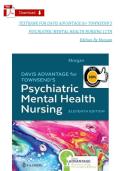
TESTBANK FOR DAVIS ADVANTAGE for TOWNSEND’S
PSYCHIATRIC MENTAL HEALTH NURSING 11TH
Edition By Morgan
T
E
S
T
, Table of Contents mz mz
Chapter 01. The Concept of Stress Adaptation
mz mz mz mz mz mz
Chapter 02. Mental Health/Mental Illness: Historical and Theor
mz mz mz mz mz mz mz
etical Concepts mz
Chapter 03. Psychopharmacology
mz mz mz
Chapter 04. Concepts of Psychobiol
mz mz mz mz
ogy
Chapter 05. Ethical and Legal Issues in Psychiatric/Mental Health Nursing
mz mz mz mz mz mz mz mz mz
Chapter 06. Cultural and Spiritual Concepts Relevant to Psychiatric/Mental Healt
mz mz mz mz mz mz mz mz mz
h Nursing
mz mz
Chapter 07. Relationship Development
mz mz mz
Chapter 08. Therapeutic Communication
mz mz mz
Chapter 09. The Nursing Process in Psychiatric/Mental Health
mz mz mz mz mz mz mz mz
Nursing mz
Chapter 10. Therapeutic Groups
mz mz mz
Chapter 11. Intervention With Families
mz mz mz mz
Chapter 12. Milieu Therapy -
mz mz mz mz
The Therapeutic Community
mz mz mz mz
Chapter 13. Crisis Intervention
mz mz mz
Chapter 14. Assertiveness Training
mz mz mz
mz
Chapter 15. Promoting Self-
mz mz mz
Esteem
Chapter 16. Anger/Aggression Manageme
mz mz mz
nt mz
Chapter 17. The Suicidal Client
mz mz mz mz
Chapter 18. Behavior Therapy
mz mz m z mz
,Chapter 19. Cognitive Therapy
mz mz m z mz
Chapter 20. ElectroconvulsiveTh
mz mz
erapy Chapter 21. The Recover
mz mz mz mz
y Model
mz mz
Chapter 22. Neurocognitive Diso
mz mz mz
rders
Chapter 23. Substance-Related and Addictive Disorders
mz mz mz mz mz
Chapter 24. Schizophrenia Spectrum and Other Psychotic Diso
mz mz mz mz mz mz mz
rders mz
Chapter 25. Depressive Disorders
mz mz mz
Chapter 26. Bipolar and Related Disorders
mz mz mz mz mz
Chapter 27. Anxiety, Obsessive-
mz mz mz
Compulsive, and Related Disorders
mz mz mz mz
Chapter 28: Trauma and Stressor-Related Disorders
mz mz mz mz mz
Chapter 29. Somatic Symptom and Dissociative Disorders
mz mz mz mz mz mz
Chapter 30. Issues Related to Human Sexuality and Gender D
mz mz mz mz mz mz mz mz mz
ysphoria mz
Chapter 31. Eating Disorders
mz mz mz
Chapter 32. Personality Disorders
mz mz mz mz
Chapter 33. Children and Adolesce
mz mz mz mz
nts mz
Chapter 34. The Aging Individual
mz mz mz mz
Chapter 35. Survivors of Abuse or Neglec
mz mz mz mz mz mz
t
mz
Chapter 36. Community Mental Health Nu
mz mz mz mz mz
rsing mz
Chapter 37. The Bereaved Individual
mz mz mz mz
Chapter 38. Military Families
mz mz mz
, Chapter 01. Psychopharmacology mz mz
Multiple Choice mz
1. The NURSE manager on the psychiatric unit was explaining to the new staff the
mz mz mz mz mz mz mz mz mz mz mz mz mz mz
differences between typical and atypical antipsychotics. The NURSE correctly states
mz mz mz mz mz mz mz mz mz mz
that atypical antipsychotics:
mz mz
A. Remain in the system longer mz mz mz mz
B. Act more quickly to reduce delusions
mz mz mz mz mz
C. Produce fewer extrapyramidal effects mz mz mz
D. Are risk free for neuroleptic malignant syndrome (NMS)
mz mz mz mz mz mz mz
ANSWER:C
Atypical antipsychotics produce less D2blockade; thus movement disorders are less of a pro
mz mz mz mz mz mz mz mz mz mz mz mz
blem. No evidence suggests that the medication remains in the system longer nor that it ac
mz mz mz mz mz mz mz mz mz mz mz mz mz mz mz
ts more quicklyto reduce delusions. The atypicals are not risk free for NMS.
mz m z mz mz m z mz mz mz mz mz mz mz
KEY: Cognitive Level: Application | Integrated Processes: Nursing Process: Implementation
mz mz mz mz mz mz mz mz mz mz
| Client Need:
mz mz
Physiological Integrity: Pharmacological and Parenteral Therapies
mz mz mz mz mz
2. The NURSE would assess for neuroleptic malignant syndrome (NMS) i
mz mz mz mz mz mz mz mz mz
f a patient on haloperidol (Haldol) develops a:
mz mz mz mz mz mz mz
A. 30 mm Hg decrease in blood pressure reading
mz mz mz mz mz mz mz
B. Respiratory rate of 24 respirations per minute mz mz mz mz mz mz
C. Temperature reading of 104° F mz mz mz mz
D. Pulse rate of 70 beats per minute
mz mz mz mz mz mz
ANSWER:C
Increased temperature is the cardinal sign of NMS. This BP is not a significant feature of NMS.
mz mz mz mz mz mz mz mz mz mz mz mz mz mz mz mz mz
There are no significant findings to support the options related to respirations or pulse rate.
mz mz mz mz mz mz mz mz mz mz mz mz mz mz
KEY: Cognitive Level: Application | Integrated Processes: Nursing Process: Assessment | Cl
mz mz mz mz mz mz mz mz mz mz mz
ient Need: mz
Physiological Integrity: Pharmacological and Parenteral Therapies
mz mz mz mz mz
3. A patient taking fluphenazine (Prolixin) complains of dry mouth and blurred vision.
mz mz mz mz mz mz mz mz mz mz mz mz
What would the NURSE assess as the likely cause of these symptoms?
mz mz mz mz mz mz mz mz mz mz mz
A. Decreased dopamine at receptor sites mz mz mz mz
B. Blockade of histamine mz mz
C. Cholinergic blockade mz
D. Adrenergic blocking mz
ANSWER:C
Fluphenazine administration produces blockade of cholinergic receptors giving rise to antic
mz mz mz mz mz mz mz mz mz mz
holinergic effects, such as dry mouth, blurred vision, and constipation.
mz mz mz mz mz mz mz mz mz
PSYCHIATRIC MENTAL HEALTH NURSING 11TH
Edition By Morgan
T
E
S
T
, Table of Contents mz mz
Chapter 01. The Concept of Stress Adaptation
mz mz mz mz mz mz
Chapter 02. Mental Health/Mental Illness: Historical and Theor
mz mz mz mz mz mz mz
etical Concepts mz
Chapter 03. Psychopharmacology
mz mz mz
Chapter 04. Concepts of Psychobiol
mz mz mz mz
ogy
Chapter 05. Ethical and Legal Issues in Psychiatric/Mental Health Nursing
mz mz mz mz mz mz mz mz mz
Chapter 06. Cultural and Spiritual Concepts Relevant to Psychiatric/Mental Healt
mz mz mz mz mz mz mz mz mz
h Nursing
mz mz
Chapter 07. Relationship Development
mz mz mz
Chapter 08. Therapeutic Communication
mz mz mz
Chapter 09. The Nursing Process in Psychiatric/Mental Health
mz mz mz mz mz mz mz mz
Nursing mz
Chapter 10. Therapeutic Groups
mz mz mz
Chapter 11. Intervention With Families
mz mz mz mz
Chapter 12. Milieu Therapy -
mz mz mz mz
The Therapeutic Community
mz mz mz mz
Chapter 13. Crisis Intervention
mz mz mz
Chapter 14. Assertiveness Training
mz mz mz
mz
Chapter 15. Promoting Self-
mz mz mz
Esteem
Chapter 16. Anger/Aggression Manageme
mz mz mz
nt mz
Chapter 17. The Suicidal Client
mz mz mz mz
Chapter 18. Behavior Therapy
mz mz m z mz
,Chapter 19. Cognitive Therapy
mz mz m z mz
Chapter 20. ElectroconvulsiveTh
mz mz
erapy Chapter 21. The Recover
mz mz mz mz
y Model
mz mz
Chapter 22. Neurocognitive Diso
mz mz mz
rders
Chapter 23. Substance-Related and Addictive Disorders
mz mz mz mz mz
Chapter 24. Schizophrenia Spectrum and Other Psychotic Diso
mz mz mz mz mz mz mz
rders mz
Chapter 25. Depressive Disorders
mz mz mz
Chapter 26. Bipolar and Related Disorders
mz mz mz mz mz
Chapter 27. Anxiety, Obsessive-
mz mz mz
Compulsive, and Related Disorders
mz mz mz mz
Chapter 28: Trauma and Stressor-Related Disorders
mz mz mz mz mz
Chapter 29. Somatic Symptom and Dissociative Disorders
mz mz mz mz mz mz
Chapter 30. Issues Related to Human Sexuality and Gender D
mz mz mz mz mz mz mz mz mz
ysphoria mz
Chapter 31. Eating Disorders
mz mz mz
Chapter 32. Personality Disorders
mz mz mz mz
Chapter 33. Children and Adolesce
mz mz mz mz
nts mz
Chapter 34. The Aging Individual
mz mz mz mz
Chapter 35. Survivors of Abuse or Neglec
mz mz mz mz mz mz
t
mz
Chapter 36. Community Mental Health Nu
mz mz mz mz mz
rsing mz
Chapter 37. The Bereaved Individual
mz mz mz mz
Chapter 38. Military Families
mz mz mz
, Chapter 01. Psychopharmacology mz mz
Multiple Choice mz
1. The NURSE manager on the psychiatric unit was explaining to the new staff the
mz mz mz mz mz mz mz mz mz mz mz mz mz mz
differences between typical and atypical antipsychotics. The NURSE correctly states
mz mz mz mz mz mz mz mz mz mz
that atypical antipsychotics:
mz mz
A. Remain in the system longer mz mz mz mz
B. Act more quickly to reduce delusions
mz mz mz mz mz
C. Produce fewer extrapyramidal effects mz mz mz
D. Are risk free for neuroleptic malignant syndrome (NMS)
mz mz mz mz mz mz mz
ANSWER:C
Atypical antipsychotics produce less D2blockade; thus movement disorders are less of a pro
mz mz mz mz mz mz mz mz mz mz mz mz
blem. No evidence suggests that the medication remains in the system longer nor that it ac
mz mz mz mz mz mz mz mz mz mz mz mz mz mz mz
ts more quicklyto reduce delusions. The atypicals are not risk free for NMS.
mz m z mz mz m z mz mz mz mz mz mz mz
KEY: Cognitive Level: Application | Integrated Processes: Nursing Process: Implementation
mz mz mz mz mz mz mz mz mz mz
| Client Need:
mz mz
Physiological Integrity: Pharmacological and Parenteral Therapies
mz mz mz mz mz
2. The NURSE would assess for neuroleptic malignant syndrome (NMS) i
mz mz mz mz mz mz mz mz mz
f a patient on haloperidol (Haldol) develops a:
mz mz mz mz mz mz mz
A. 30 mm Hg decrease in blood pressure reading
mz mz mz mz mz mz mz
B. Respiratory rate of 24 respirations per minute mz mz mz mz mz mz
C. Temperature reading of 104° F mz mz mz mz
D. Pulse rate of 70 beats per minute
mz mz mz mz mz mz
ANSWER:C
Increased temperature is the cardinal sign of NMS. This BP is not a significant feature of NMS.
mz mz mz mz mz mz mz mz mz mz mz mz mz mz mz mz mz
There are no significant findings to support the options related to respirations or pulse rate.
mz mz mz mz mz mz mz mz mz mz mz mz mz mz
KEY: Cognitive Level: Application | Integrated Processes: Nursing Process: Assessment | Cl
mz mz mz mz mz mz mz mz mz mz mz
ient Need: mz
Physiological Integrity: Pharmacological and Parenteral Therapies
mz mz mz mz mz
3. A patient taking fluphenazine (Prolixin) complains of dry mouth and blurred vision.
mz mz mz mz mz mz mz mz mz mz mz mz
What would the NURSE assess as the likely cause of these symptoms?
mz mz mz mz mz mz mz mz mz mz mz
A. Decreased dopamine at receptor sites mz mz mz mz
B. Blockade of histamine mz mz
C. Cholinergic blockade mz
D. Adrenergic blocking mz
ANSWER:C
Fluphenazine administration produces blockade of cholinergic receptors giving rise to antic
mz mz mz mz mz mz mz mz mz mz
holinergic effects, such as dry mouth, blurred vision, and constipation.
mz mz mz mz mz mz mz mz mz