
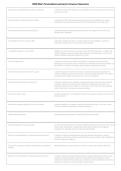
D662 WGU- Personalized Learning for Inclusive Classrooms
Individuals with Disabilities Education Act (IDEA) A federal law that helps students with disabilities receive the support they need to
succeed in school
Free Appropriate Public Education (FAPE) A principle of IDEA that guarantees that students with disabilities can access
educational services that are tailored to their needs without incurring costs
Individualized education programs (IEPs) personalized plans outlining educational goals and support services for each
student with a disability
Least Restrictive Environment (LRE) A principle of IDEA that aims to include students with disabilities in general
education classrooms to the maximum extent feasible
13 eligibility categories under IDEA eligibility for special education services under the IDEA depends on whether the
child's condition adversely impacts their education and falls within one of the 13
specific eligibility categories outlined by the law
Inclusive classrooms Classrooms that cater to all learning styles by employing various teaching
strategies; and approach that not only Taylor is teaching for individual learners but
also foster is a sense of belonging and acceptance among all students
General education classroom with support a student spends the entire school day in a general education classroom but
receives additional support and services such as tutoring, assistance from aides,
specialized technology, related services, or accommodations
Partial mainstream/inclusion classroom a student splits their time between a general education classroom and a special
education setting; they may receive individual or small-group instruction in a
separate classroom or be pulled out of class for certain services while spending
most of their day in the general education setting
Special education class students participate in a specialized instructional program tailored to their specific
learning needs
Specialized program outside of the school district placing a student in a program outside the local school district, such as private
schools, residential programs, or hospital programs
Differentiated Instruction Adjusting teaching methods to meet individual student needs
Universal Design for Learning (UDL) An educational framework for designing flexible learning environments and curricula
that provide all students- including those with diverse cultural and linguistic
backgrounds- equitable access to learning opportunities
Roles and responsibilities of general education teachers a variety of duties and expectations placed on general educators to ensure
compliance with legal mandates and effectively support students with disabilities in
inclusive classroom settings
Council for exceptional children standards for professional Standards teachers must adhere to in order to support all students effectively
practice
Roles and responsibilities of special education teachers a variety of duties and expectations placed on special education teachers to use
evidence, instructional data, research, and professional knowledge to inform
practice and advocate for professional conditions and resources that will enhance
learning outcomes for individuals with exceptionalities
, D662 WGU- Personalized Learning for Inclusive Classrooms
Section 504 A civil rights law that ensures that students with disabilities have equal access to
education; prohibits discrimination against individuals with disabilities in any
program or activity that receives federal financial assistance
504 plans Provide accommodations and supports that remove barriers to learning and ensure
equal access to education for students with disabilities
Accommodations Changes or supports that help students access the same learning materials and
complete the same assignments as their peers
Modifications A change to the Contant in skills that students are expected to learn or master
Section 504 of the Rehabilitation Act of 1973 Schools receiving federal funds must ensure equal educational access and provide
reasonable accommodations for students with disabilities
Title III Federal legislation that focuses explicitly on English language acquisition to support
academic success for ELs
English Learners (ELs) individuals who are learning English as a second (or third, etc.) language and thus
have varying levels of proficiency in English and may need additional support to
access the curriculum
Limited English proficiency Students with language barriers that can hinder their academic progress
Immigrant children and youth individuals who are aged 3 through 21, not born in any state, and have not been
attending schools in any state for more than 3 full academic years
Title III Language instruction for English learners and Federal legislation that funds support for language instruction educational programs
immigrants students for English learners
Home language survey Helps determine students needing language support services upon enrollment
Language Instruction Educational Programs (LIEP) typically fall under federal laws, such as the Individuals with Disabilities Education
Act (IDEA), the Every Student Succeeds Act (ESSA), and state-level education laws
and policies; these programs are structured initiatives designed to facilitate the
learning and acquisition of a particular language, focusing on aspects such as
vocabulary, grammar, pronunciation, and cultural context
Special education Provide extra help to students who need it because of differences and have a
learner behave; this help is Taylor to each students needs is documented in an IEP
and may include different teaching methods unique materials or extra support in the
classroom
Disability A condition that affects a persons body or mind resulting in activity limitation (when
certain activities are more challenging) and participation restrictions (limits to their
interaction with the world around them)
Individuals with Disabilities Education Act (IDEA) A federal law that helps students with disabilities receive the support they need to
succeed in school
Free Appropriate Public Education (FAPE) A principle of IDEA that guarantees that students with disabilities can access
educational services that are tailored to their needs without incurring costs
Individualized education programs (IEPs) personalized plans outlining educational goals and support services for each
student with a disability
Least Restrictive Environment (LRE) A principle of IDEA that aims to include students with disabilities in general
education classrooms to the maximum extent feasible
13 eligibility categories under IDEA eligibility for special education services under the IDEA depends on whether the
child's condition adversely impacts their education and falls within one of the 13
specific eligibility categories outlined by the law
Inclusive classrooms Classrooms that cater to all learning styles by employing various teaching
strategies; and approach that not only Taylor is teaching for individual learners but
also foster is a sense of belonging and acceptance among all students
General education classroom with support a student spends the entire school day in a general education classroom but
receives additional support and services such as tutoring, assistance from aides,
specialized technology, related services, or accommodations
Partial mainstream/inclusion classroom a student splits their time between a general education classroom and a special
education setting; they may receive individual or small-group instruction in a
separate classroom or be pulled out of class for certain services while spending
most of their day in the general education setting
Special education class students participate in a specialized instructional program tailored to their specific
learning needs
Specialized program outside of the school district placing a student in a program outside the local school district, such as private
schools, residential programs, or hospital programs
Differentiated Instruction Adjusting teaching methods to meet individual student needs
Universal Design for Learning (UDL) An educational framework for designing flexible learning environments and curricula
that provide all students- including those with diverse cultural and linguistic
backgrounds- equitable access to learning opportunities
Roles and responsibilities of general education teachers a variety of duties and expectations placed on general educators to ensure
compliance with legal mandates and effectively support students with disabilities in
inclusive classroom settings
Council for exceptional children standards for professional Standards teachers must adhere to in order to support all students effectively
practice
Roles and responsibilities of special education teachers a variety of duties and expectations placed on special education teachers to use
evidence, instructional data, research, and professional knowledge to inform
practice and advocate for professional conditions and resources that will enhance
learning outcomes for individuals with exceptionalities
, D662 WGU- Personalized Learning for Inclusive Classrooms
Section 504 A civil rights law that ensures that students with disabilities have equal access to
education; prohibits discrimination against individuals with disabilities in any
program or activity that receives federal financial assistance
504 plans Provide accommodations and supports that remove barriers to learning and ensure
equal access to education for students with disabilities
Accommodations Changes or supports that help students access the same learning materials and
complete the same assignments as their peers
Modifications A change to the Contant in skills that students are expected to learn or master
Section 504 of the Rehabilitation Act of 1973 Schools receiving federal funds must ensure equal educational access and provide
reasonable accommodations for students with disabilities
Title III Federal legislation that focuses explicitly on English language acquisition to support
academic success for ELs
English Learners (ELs) individuals who are learning English as a second (or third, etc.) language and thus
have varying levels of proficiency in English and may need additional support to
access the curriculum
Limited English proficiency Students with language barriers that can hinder their academic progress
Immigrant children and youth individuals who are aged 3 through 21, not born in any state, and have not been
attending schools in any state for more than 3 full academic years
Title III Language instruction for English learners and Federal legislation that funds support for language instruction educational programs
immigrants students for English learners
Home language survey Helps determine students needing language support services upon enrollment
Language Instruction Educational Programs (LIEP) typically fall under federal laws, such as the Individuals with Disabilities Education
Act (IDEA), the Every Student Succeeds Act (ESSA), and state-level education laws
and policies; these programs are structured initiatives designed to facilitate the
learning and acquisition of a particular language, focusing on aspects such as
vocabulary, grammar, pronunciation, and cultural context
Special education Provide extra help to students who need it because of differences and have a
learner behave; this help is Taylor to each students needs is documented in an IEP
and may include different teaching methods unique materials or extra support in the
classroom
Disability A condition that affects a persons body or mind resulting in activity limitation (when
certain activities are more challenging) and participation restrictions (limits to their
interaction with the world around them)


