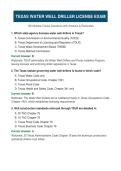
TEXAS WATER WELL DRILLER LICENSE EXAM
120 Multiple-Choice Questions with Answers & Rationales
1. Which state agency licenses water well drillers in Texas?
A. Texas Commission on Environmental Quality (TCEQ)
B. Texas Department of Licensing and Regulation (TDLR)
C. Texas Water Development Board (TWDB)
D. Texas Railroad Commission
Correct Answer: B
Rationale: TDLR administers the Water Well Drillers and Pump Installers Program,
issuing licenses and enforcing driller regulations in Texas.
2. The Texas statute governing water well drillers is found in which code?
A. Texas Water Code only
B. Texas Occupations Code, Chapter 1901
C. Texas Penal Code
D. Texas Health and Safety Code, Chapter 341 only
Correct Answer: B
Rationale: The Water Well Drillers Act is codified primarily in Texas Occupations Code
Chapter 1901, which establishes licensing requirements.
3. Well construction standards enforced through TDLR are detailed in:
A. 30 TAC Chapter 76
B. 16 TAC Chapter 76
C. Texas Penal Code Chapter 76
D. Texas Business Code Chapter 76
Correct Answer: A
Rationale: 30 Texas Administrative Code Chapter 76 sets the technical construction
standards drillers must follow.
,4. A person who drills, alters, or attempts to alter a well in Texas without a valid
license is:
A. Permitted if supervised loosely by phone
B. In violation of state law
C. Allowed if the well is under 50 feet deep
D. Allowed on their own property without exception
Correct Answer: B
Rationale: Drilling or altering a well without an appropriate license is a violation of the
Water Well Drillers Act, regardless of well depth in most cases.
5. Which of the following best describes the purpose of Texas well driller
licensing?
A. To generate state revenue only
B. To protect groundwater resources and public health through proper well
construction
C. To limit the number of wells drilled statewide
D. To regulate only irrigation wells
Correct Answer: B
Rationale: Licensing ensures individuals constructing wells understand standards that
protect groundwater quality and public health.
6. A driller's license issued by TDLR must generally be renewed:
A. Every 10 years
B. Annually
C. Every 6 months
D. Only once, for life
Correct Answer: B
Rationale: Water well driller licenses in Texas are renewed on an annual basis, subject
to continuing education and fee requirements.
,7. Continuing education requirements for license renewal are intended to:
A. Increase state tax revenue
B. Keep licensees informed of current rules, technology, and best practices
C. Replace the need for a written exam entirely
D. Apply only to new licensees
Correct Answer: B
Rationale: Continuing education ensures licensed drillers stay current on regulatory
changes, safety practices, and construction techniques.
8. An apprentice driller in Texas is generally required to:
A. Work independently with no supervision
B. Work under the direct supervision of a licensed driller
C. Hold a pump installer license instead
D. Only assist with paperwork, never fieldwork
Correct Answer: B
Rationale: Apprentices must work under the direct, on-site or otherwise required
supervision of a licensed driller as defined by TDLR rules.
9. Which entity primarily regulates groundwater withdrawal quantities and
management (as opposed to well construction)?
A. TDLR
B. Local Groundwater Conservation Districts (GCDs) and TWDB
C. Texas Department of Transportation
D. Texas Education Agency
Correct Answer: B
Rationale: Groundwater Conservation Districts, working with TWDB guidance,
generally regulate withdrawal amounts and management, while TDLR governs
construction standards.
, 10. A driller who fails to comply with 30 TAC Chapter 76 standards may face:
A. No consequences if the well produces water
B. Disciplinary action including fines or license suspension/revocation
C. Only a warning letter regardless of severity
D. Automatic license renewal
Correct Answer: B
Rationale: TDLR can impose administrative penalties, suspend, or revoke a license for
violations of well construction standards or the Act.
11. A State of Texas Well Report must be filed with TDLR after well completion
within:
A. 60 days
B. 30 days
C. 1 year
D. There is no filing deadline
Correct Answer: B
Rationale: Texas law requires the well report to be submitted to TDLR within 30 days of
completing the well.
12. The well report (drilling log) must include which of the following?
A. Only the well owner's phone number
B. Well location, geologic formations encountered, casing and screen details, and
driller information
C. The well owner's Social Security number
D. Only the total drilling cost
Correct Answer: B
Rationale: A complete well report documents location, lithology/formations,
construction details (casing, screen, grout), and the responsible license holder.
120 Multiple-Choice Questions with Answers & Rationales
1. Which state agency licenses water well drillers in Texas?
A. Texas Commission on Environmental Quality (TCEQ)
B. Texas Department of Licensing and Regulation (TDLR)
C. Texas Water Development Board (TWDB)
D. Texas Railroad Commission
Correct Answer: B
Rationale: TDLR administers the Water Well Drillers and Pump Installers Program,
issuing licenses and enforcing driller regulations in Texas.
2. The Texas statute governing water well drillers is found in which code?
A. Texas Water Code only
B. Texas Occupations Code, Chapter 1901
C. Texas Penal Code
D. Texas Health and Safety Code, Chapter 341 only
Correct Answer: B
Rationale: The Water Well Drillers Act is codified primarily in Texas Occupations Code
Chapter 1901, which establishes licensing requirements.
3. Well construction standards enforced through TDLR are detailed in:
A. 30 TAC Chapter 76
B. 16 TAC Chapter 76
C. Texas Penal Code Chapter 76
D. Texas Business Code Chapter 76
Correct Answer: A
Rationale: 30 Texas Administrative Code Chapter 76 sets the technical construction
standards drillers must follow.
,4. A person who drills, alters, or attempts to alter a well in Texas without a valid
license is:
A. Permitted if supervised loosely by phone
B. In violation of state law
C. Allowed if the well is under 50 feet deep
D. Allowed on their own property without exception
Correct Answer: B
Rationale: Drilling or altering a well without an appropriate license is a violation of the
Water Well Drillers Act, regardless of well depth in most cases.
5. Which of the following best describes the purpose of Texas well driller
licensing?
A. To generate state revenue only
B. To protect groundwater resources and public health through proper well
construction
C. To limit the number of wells drilled statewide
D. To regulate only irrigation wells
Correct Answer: B
Rationale: Licensing ensures individuals constructing wells understand standards that
protect groundwater quality and public health.
6. A driller's license issued by TDLR must generally be renewed:
A. Every 10 years
B. Annually
C. Every 6 months
D. Only once, for life
Correct Answer: B
Rationale: Water well driller licenses in Texas are renewed on an annual basis, subject
to continuing education and fee requirements.
,7. Continuing education requirements for license renewal are intended to:
A. Increase state tax revenue
B. Keep licensees informed of current rules, technology, and best practices
C. Replace the need for a written exam entirely
D. Apply only to new licensees
Correct Answer: B
Rationale: Continuing education ensures licensed drillers stay current on regulatory
changes, safety practices, and construction techniques.
8. An apprentice driller in Texas is generally required to:
A. Work independently with no supervision
B. Work under the direct supervision of a licensed driller
C. Hold a pump installer license instead
D. Only assist with paperwork, never fieldwork
Correct Answer: B
Rationale: Apprentices must work under the direct, on-site or otherwise required
supervision of a licensed driller as defined by TDLR rules.
9. Which entity primarily regulates groundwater withdrawal quantities and
management (as opposed to well construction)?
A. TDLR
B. Local Groundwater Conservation Districts (GCDs) and TWDB
C. Texas Department of Transportation
D. Texas Education Agency
Correct Answer: B
Rationale: Groundwater Conservation Districts, working with TWDB guidance,
generally regulate withdrawal amounts and management, while TDLR governs
construction standards.
, 10. A driller who fails to comply with 30 TAC Chapter 76 standards may face:
A. No consequences if the well produces water
B. Disciplinary action including fines or license suspension/revocation
C. Only a warning letter regardless of severity
D. Automatic license renewal
Correct Answer: B
Rationale: TDLR can impose administrative penalties, suspend, or revoke a license for
violations of well construction standards or the Act.
11. A State of Texas Well Report must be filed with TDLR after well completion
within:
A. 60 days
B. 30 days
C. 1 year
D. There is no filing deadline
Correct Answer: B
Rationale: Texas law requires the well report to be submitted to TDLR within 30 days of
completing the well.
12. The well report (drilling log) must include which of the following?
A. Only the well owner's phone number
B. Well location, geologic formations encountered, casing and screen details, and
driller information
C. The well owner's Social Security number
D. Only the total drilling cost
Correct Answer: B
Rationale: A complete well report documents location, lithology/formations,
construction details (casing, screen, grout), and the responsible license holder.