

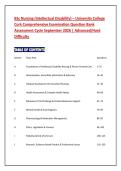
BSc Nursing (Intellectual Disability) – University College
Cork Comprehensive Examination Question Bank
Assessment Cycle September 2026 | Advanced/Hard
Difficulty
Section Topic Area Questions
A Foundations of Intellectual Disability Nursing & Person-Centred Care 1–15
B Normalisation, Social Role Valorisation & Advocacy 16–30
C Lifespan Development & Transition Planning 31–45
D Health Assessment & Complex Health Needs 46–60
E Behaviours That Challenge & Positive Behaviour Support 61–75
F Mental Health & Dual Diagnosis 76–85
G Pharmacology & Medication Management 86–95
H Ethics, Legislation & Consent 96–105
I Palliative & End-of-Life Care 106–115
J Research, Evidence-Based Practice & Professional Issues 116–130
,Section Topic Area Questions
K Interdisciplinary Working & Leadership 131–140
L Clinical Placement, Competency & NMBI Standards 141–150
SECTION A: FOUNDATIONS OF INTELLECTUAL DISABILITY
1. A 24-year-old man with Down syndrome and moderate intellectual disability is admitted
to an acute medical ward with pneumonia. He becomes agitated when approached by multiple
healthcare professionals. The RNID's priority action, consistent with the philosophy
underpinning the BSc Intellectual Disability Nursing programme at UCC, is to:
2. The concept of "person-centred care" in intellectual disability nursing, as articulated in
the UCC programme's foundational module NU1050, requires the nurse to:
3. A 16-year-old with severe intellectual disability and epilepsy is transitioning from
paediatric to adult services. The RNID recognises that effective transition planning must:
4. The UCC BSc Intellectual Disability Nursing programme is delivered in partnership with
which Cork-based organisation?
5. A 45-year-old woman with intellectual disability living in a community residential setting
expresses a desire to attend a local college course. The RNID's most appropriate response,
reflecting the principles of empowerment and self-determination, is to:
6. The term "intellectual disability" as defined in contemporary Irish policy and nursing
practice encompasses which of the following core criteria?
, 7. A 32-year-old man with intellectual disability and communication difficulties is admitted
for a surgical procedure. The RNID's responsibility in ensuring effective communication includes
all of the following EXCEPT:
8. The philosophical foundations of intellectual disability nursing in Ireland, as reflected in
the UCC curriculum, are most closely aligned with which of the following ethical frameworks?
9. A 19-year-old with intellectual disability is starting a new day service. The RNID
facilitating this transition should prioritise which of the following?
10. The UCC BSc Intellectual Disability Nursing programme is a four-year full-time degree
leading to which award?
11. A 28-year-old woman with mild intellectual disability and a history of trauma is
admitted following a fall. She becomes distressed during personal care. The RNID's most
appropriate initial response is to:
12. The concept of "inclusion" in intellectual disability nursing, as taught in the UCC
programme, refers to:
13. A 50-year-old man with intellectual disability living in a residential setting has been
withdrawn and refusing meals. The RNID's comprehensive assessment should include:
14. The UCC BSc Intellectual Disability Nursing programme requires students to study
modules in which of the following configurations?
15. A 22-year-old with intellectual disability wishes to vote in an upcoming election but is
unsure of the process. The RNID's most appropriate action is to:
SECTION B: NORMALISATION, SOCIAL ROLE VALORISATION &
, 16. The principle of normalisation in intellectual disability nursing, as explored in NU1050
The Foundations of Contemporary Intellectual Disability Nursing, primarily refers to:
17. Social Role Valorisation (SRV) theory, which builds upon the principle of normalisation,
emphasises that:
18. A 40-year-old woman with intellectual disability is placed in a segregated activity group
despite expressing interest in community-based activities. The RNID's advocacy response,
grounded in normalisation principles, should be to:
19. The concept of "advocacy" in intellectual disability nursing encompasses which of the
following dimensions?
20. A 55-year-old man with intellectual disability has been living in a large congregated
setting for 30 years. The HSE's policy direction, consistent with normalisation principles,
supports:
21. A 30-year-old woman with Down syndrome wishes to get married. Her family
expresses concerns about her capacity. The RNID's most appropriate response, grounded in
advocacy and rights-based practice, is to:
22. The "ordinary life" principle, derived from normalisation theory, asserts that people
with intellectual disabilities should:
23. A 17-year-old with intellectual disability is being excluded from a local youth group.
The RNID's advocacy intervention should focus on:
24. The concept of "valued social roles" in SRV theory suggests that:
25. A 38-year-old man with intellectual disability is paid sub-minimum wage in a sheltered
workshop. The RNID, applying social justice principles, should:
26. The principle of "age-appropriate" activities in normalisation theory means that:
27. A 25-year-old woman with intellectual disability who is pregnant is being advised to
terminate by healthcare staff citing her disability. The RNID's advocacy responsibility is to:
Cork Comprehensive Examination Question Bank
Assessment Cycle September 2026 | Advanced/Hard
Difficulty
Section Topic Area Questions
A Foundations of Intellectual Disability Nursing & Person-Centred Care 1–15
B Normalisation, Social Role Valorisation & Advocacy 16–30
C Lifespan Development & Transition Planning 31–45
D Health Assessment & Complex Health Needs 46–60
E Behaviours That Challenge & Positive Behaviour Support 61–75
F Mental Health & Dual Diagnosis 76–85
G Pharmacology & Medication Management 86–95
H Ethics, Legislation & Consent 96–105
I Palliative & End-of-Life Care 106–115
J Research, Evidence-Based Practice & Professional Issues 116–130
,Section Topic Area Questions
K Interdisciplinary Working & Leadership 131–140
L Clinical Placement, Competency & NMBI Standards 141–150
SECTION A: FOUNDATIONS OF INTELLECTUAL DISABILITY
1. A 24-year-old man with Down syndrome and moderate intellectual disability is admitted
to an acute medical ward with pneumonia. He becomes agitated when approached by multiple
healthcare professionals. The RNID's priority action, consistent with the philosophy
underpinning the BSc Intellectual Disability Nursing programme at UCC, is to:
2. The concept of "person-centred care" in intellectual disability nursing, as articulated in
the UCC programme's foundational module NU1050, requires the nurse to:
3. A 16-year-old with severe intellectual disability and epilepsy is transitioning from
paediatric to adult services. The RNID recognises that effective transition planning must:
4. The UCC BSc Intellectual Disability Nursing programme is delivered in partnership with
which Cork-based organisation?
5. A 45-year-old woman with intellectual disability living in a community residential setting
expresses a desire to attend a local college course. The RNID's most appropriate response,
reflecting the principles of empowerment and self-determination, is to:
6. The term "intellectual disability" as defined in contemporary Irish policy and nursing
practice encompasses which of the following core criteria?
, 7. A 32-year-old man with intellectual disability and communication difficulties is admitted
for a surgical procedure. The RNID's responsibility in ensuring effective communication includes
all of the following EXCEPT:
8. The philosophical foundations of intellectual disability nursing in Ireland, as reflected in
the UCC curriculum, are most closely aligned with which of the following ethical frameworks?
9. A 19-year-old with intellectual disability is starting a new day service. The RNID
facilitating this transition should prioritise which of the following?
10. The UCC BSc Intellectual Disability Nursing programme is a four-year full-time degree
leading to which award?
11. A 28-year-old woman with mild intellectual disability and a history of trauma is
admitted following a fall. She becomes distressed during personal care. The RNID's most
appropriate initial response is to:
12. The concept of "inclusion" in intellectual disability nursing, as taught in the UCC
programme, refers to:
13. A 50-year-old man with intellectual disability living in a residential setting has been
withdrawn and refusing meals. The RNID's comprehensive assessment should include:
14. The UCC BSc Intellectual Disability Nursing programme requires students to study
modules in which of the following configurations?
15. A 22-year-old with intellectual disability wishes to vote in an upcoming election but is
unsure of the process. The RNID's most appropriate action is to:
SECTION B: NORMALISATION, SOCIAL ROLE VALORISATION &
, 16. The principle of normalisation in intellectual disability nursing, as explored in NU1050
The Foundations of Contemporary Intellectual Disability Nursing, primarily refers to:
17. Social Role Valorisation (SRV) theory, which builds upon the principle of normalisation,
emphasises that:
18. A 40-year-old woman with intellectual disability is placed in a segregated activity group
despite expressing interest in community-based activities. The RNID's advocacy response,
grounded in normalisation principles, should be to:
19. The concept of "advocacy" in intellectual disability nursing encompasses which of the
following dimensions?
20. A 55-year-old man with intellectual disability has been living in a large congregated
setting for 30 years. The HSE's policy direction, consistent with normalisation principles,
supports:
21. A 30-year-old woman with Down syndrome wishes to get married. Her family
expresses concerns about her capacity. The RNID's most appropriate response, grounded in
advocacy and rights-based practice, is to:
22. The "ordinary life" principle, derived from normalisation theory, asserts that people
with intellectual disabilities should:
23. A 17-year-old with intellectual disability is being excluded from a local youth group.
The RNID's advocacy intervention should focus on:
24. The concept of "valued social roles" in SRV theory suggests that:
25. A 38-year-old man with intellectual disability is paid sub-minimum wage in a sheltered
workshop. The RNID, applying social justice principles, should:
26. The principle of "age-appropriate" activities in normalisation theory means that:
27. A 25-year-old woman with intellectual disability who is pregnant is being advised to
terminate by healthcare staff citing her disability. The RNID's advocacy responsibility is to:


