
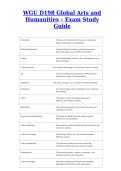
WGU D198 Global Arts and
Humanities – Exam Study
Guide
Humanities The study of human culture through art, literature,
history, philosophy, and language.
Global Perspective Understanding the world by examining cultures,
ideas, and values across different societies.
Culture The shared beliefs, customs, arts, and behaviors of a
group of people.
Cultural Identity The sense of belonging to a particular culture or group.
Art A form of creative expression that reflects human
experience, values, and imagination.
Aesthetics The study of beauty, art, and taste in human expression.
Philosophy The study of ideas about knowledge, truth, existence,
and morality.
Ethics The study of moral principles that govern
behavior and decision-making.
Worldview The overall perspective from which one sees and
interprets the world.
Intercultural Understanding The ability to appreciate and respect cultural
differences and similarities.
Cultural Diffusion The spread of cultural beliefs and practices from one
society to another.
Cultural Exchange The sharing of ideas, art, and traditions between
different cultures.
Cultural Relativism The idea that beliefs and values should be
understood within their own cultural context.
Globalization The process by which cultures, economies, and
societies become interconnected.
Cultural Heritage The legacy of physical artifacts and intangible
attributes inherited from past generations.
Humanities – Exam Study
Guide
Humanities The study of human culture through art, literature,
history, philosophy, and language.
Global Perspective Understanding the world by examining cultures,
ideas, and values across different societies.
Culture The shared beliefs, customs, arts, and behaviors of a
group of people.
Cultural Identity The sense of belonging to a particular culture or group.
Art A form of creative expression that reflects human
experience, values, and imagination.
Aesthetics The study of beauty, art, and taste in human expression.
Philosophy The study of ideas about knowledge, truth, existence,
and morality.
Ethics The study of moral principles that govern
behavior and decision-making.
Worldview The overall perspective from which one sees and
interprets the world.
Intercultural Understanding The ability to appreciate and respect cultural
differences and similarities.
Cultural Diffusion The spread of cultural beliefs and practices from one
society to another.
Cultural Exchange The sharing of ideas, art, and traditions between
different cultures.
Cultural Relativism The idea that beliefs and values should be
understood within their own cultural context.
Globalization The process by which cultures, economies, and
societies become interconnected.
Cultural Heritage The legacy of physical artifacts and intangible
attributes inherited from past generations.


