

Written by students who passed Immediately available after payment Read online or as PDF Wrong document? Swap it for free 4.6 TrustPilot
logo-home
Document preview thumbnail
Preview 3 out of 19 pages
Exam (elaborations)

NSG 3250/ NSG3250 Adult Health I Exam 1 (V2) – Complete Questions and Answers | Galen College of Nursing | Updated 2026–2027.

Document preview thumbnail
Preview 3 out of 19 pages

Galen NSG 3250 (NSG3250) Adult Health I – Exam 1 | Complete Questions & Answers Review Guide | Latest 2026–2027. Below are the **questions and multiple-choice options only** from the uploaded PDF, with **correct answers and rationales removed**: 1. What are the classic 'Three Ps' that clinically manifest in patients with severe hyperglycemia? A. Paresthesia, Pallor, and Palpitations. B. Polycythemia, Pyrexia, and Pain. C. Polyuria, Polydipsia, and Polyphagia. D. Proteinuria, Pruritus, and Papules. 2. What are the typical clinical signs and symptoms of a postoperative wound infection? A. Orthostatic hypotension, decreased urinary output, and local pruritus without pain. B. A sudden drop in blood pressure, Kussmaul breathing, and fruity-smelling breath. C. Bradycardia, decreased temperature, decreased WBC, and pale, cold skin around the incision. D. Increased pulse rate and temperature, elevated WBC, wound swelling, warmth, tenderness, discharge, and increased pain. 3. Under what condition is a signed surgical consent form considered legally valid? A. It can be signed up to 12 hours after the administration of pre-anesthetic sedatives. B. It can only be signed after the surgeon has performed the first surgical incision. C. It must be signed before the administration of any psychoactive premedication. D. It must be witnessed by two physicians if signed after a sedative is given. 4. A patient is undergoing general anesthesia. What is the first clinical sign of Malignant Hyperthermia that the nurse should monitor for? A. Dark red or brown urine. B. A rapid spike in body temperature to 104°F. C. Tachycardia (heart rate higher than 150 bpm) or an unexpected rise in end-tidal CO2. D. Rigidity of the jaw and limbs. 5. Which general anesthetic is the most potent inhalation anesthetic available, producing amnesia, skeletal muscle relaxation, and hypnosis? A. Isoflurane. B. Nitrous Oxide. C. Propofol. D. Vecuronium. 6. A patient is prescribed Acarbose (an Alpha-glucosidase inhibitor). What is the correct administration instruction? A. It is administered at bedtime to prevent morning dawn phenomenon. B. It delays the digestion of carbohydrates and must be taken with the first bite of a meal. C. It is given as an IV bolus only when blood glucose exceeds 240 mg/dL. D. It must be taken 30 minutes before breakfast on an empty stomach. 7. A diabetic patient has consistently elevated blood glucose levels. The nurse knows this stresses the kidneys' filtration mechanism, allowing blood proteins to leak into the urine. What complication does this indicate, and what lab values should be monitored? A. Diabetic Nephropathy; monitor blood urea nitrogen (BUN) and serum creatinine levels. B. Autonomic Neuropathy; monitor thyroid stimulating hormone (TSH). C. Diabetic Retinopathy; monitor intraocular pressure. D. Sudomotor Neuropathy; monitor liver enzymes (AST and ALT). 8. A patient has a Stage II pressure ulcer. Which of the following is an appropriate nursing intervention for this stage? A. Clean with sterile saline and apply a semipermeable, hydrocolloid, or wet saline dressing. B. Maintain the wound dry and uncovered to expose it to air. C. Prepare the patient for immediate surgical debridement. D. Apply prescribed enzyme preparations to dissolve necrotic tissue. 9. How does combining starchy foods with protein and fat affect a patient's glycemic response? A. It accelerates carbohydrate absorption and causes a rapid glucose spike. B. It neutralizes the caloric value of the starchy foods completely. C. It slows down carbohydrate absorption and decreases the glycemic response. D. It prevents insulin from binding to its receptors and triggers ketosis. 10. A patient presents with a closed fracture and is scheduled for surgery within 24 to 30 hours. How is this surgery classified based on urgency? A. Emergent. B. Required. C. Urgent. D. Elective. 11. Which of the following describes the pharmacokinetic profile of Glargine (Lantus)? A. It is a rapid-acting insulin that peaks in 1-2 hours and is given with meals. B. It is an intermediate-acting insulin with a peak of 4-12 hours. C. It is a short-acting insulin that is administered via IV infusion during DKA. D. It is a very long-acting, 'peakless' insulin that provides a continuous basal source of insulin. 12. What objective scoring system is used to determine if a patient is ready for discharge from the Post-Anesthesia Care Unit (PACU)? A. The Barthel Index of ADLs. B. The Aldrete Score (evaluating airway, respirations, circulation, consciousness, and oxygenation). C. The PULSES Profile of physical conditioning. D. The Braden Scale for pressure ulcer risk. 13. A patient on a rehabilitation unit is experiencing urinary incontinence. Which of the following fluid management strategies should the nurse implement? A. Do not restrict fluids; ensure a daily intake of 2 to 3 liters. B. Restrict fluids after 12:00 PM and avoid drinking with meals. C. Limit fluid intake to 1 liter per day to reduce wetting episodes. D. Allow fluids only during mealtimes to coordinate bladder emptyings. 14. A nurse discovers a postoperative patient has an evisceration. What is the immediate priority nursing action? A. Attempt to gently push the organs back into the abdominal cavity using clean gloves. B. Place the patient in a low Fowler's position, cover the protruding content with sterile wet saline dressings, and contact the provider. C. Administer an oral analgesic and instruct the patient to cough and deep breathe. D. Place the patient in Trendelenburg position and apply dry gauze tightly over the wound. 15. When instructing a patient on how to ambulate with a cane, what is the correct technique? A. Advance the cane after both legs have moved forward. B. Advance the cane first, then move the unaffected leg forward. C. Move the cane and the unaffected leg forward at the same time. D. Advance the cane at the same time that the affected leg is moving forward. 16. What is the primary perioperative risk associated with the administration of diuretics prior to surgery? A. Seizures due to a rapid rise in intracranial pressure. B. Hypotension and prolonged recovery from muscle relaxants. C. Excessive respiratory depression during anesthesia due to an electrolyte imbalance. D. Sudden cardiovascular collapse due to blood volume expansion. 17. A patient is prescribed Lispro (Humalog). What is its pharmacokinetic profile, and when should it be administered? A. It is intermediate-acting, has an effect in 2-4 hours, and is given after a person has eaten. B. It is short-acting, has an effect in 30-60 minutes, and is administered 30 minutes before meals. C. It is rapid-acting, has an effect in 10-15 minutes, peaks in 1-2 hours, and must be taken when food is in front of the patient (actively eating). D. It is peakless, long-acting, and is administered only once daily at bedtime. 18. A patient with diabetes is experiencing a 'sick day' with nausea and vomiting. What are the key 'Sick Day Rules' the nurse should teach? A. Check glucose every 12 hours, stop insulin, and take a double dose of sulfonylureas. B. Stop all insulin and oral diabetes medications immediately until the nausea and vomiting resolve. C. Restrict fluid intake to prevent vomiting, and only check glucose once a day. D. Monitor blood glucose every 4 hours, continue taking insulin and diabetes medications as prescribed, drink 8-12 oz of fluid every hour, and check urine ketones if glucose is over 240 mg/dL. 19. To prevent external rotation of the hip in a patient who must remain in the supine position for an extended period, which intervention should the nurse implement? A. Place a pillow under the patient's knees. B. Place a trochanter roll (using a flannel sheet or towel) along the hip. C. Use a footboard to keep the feet flat. D. Apply high-top sneakers to both feet. 20. Which type of exercise is described as contracting and relaxing muscles without moving the joint, used to maintain muscle strength when a joint is immobilized? A. Active exercise. B. Isometric exercise. C. Resistive exercise. D. Passive range of motion exercise. 21. What are the recommended dietary carbohydrate, fat, and fiber guidelines for a patient with diabetes? A. Carbohydrates: 80% of calories, Fats: 10% of calories, and Fiber: 50g daily. B. Carbohydrates: 50-60% of calories, Fats: 30% or less (saturated fats 10%), and Fiber: 30-35g daily. C. Carbohydrates: 30% of calories, Fats: 45% of calories, and Fiber: 15g daily. D. Carbohydrates: 20% of calories, Fats: 50% of calories, and Fiber: 10g daily. 22. How should the nurse manage a patient's regularly scheduled beta-blocker medication on the morning of surgery? A. Replace it with an IV bolus of a corticosteroid. B. Hold the medication for 7 to 10 days before surgery due to bleeding risk. C. Hold the medication because it interactively triggers Malignant Hyperthermia. D. Do not hold the medication; administer it with a clear sip of water as ordered. 23. Which oral antidiabetic agents act by directly stimulating the pancreatic beta cells to secrete insulin, carrying a high risk of hypoglycemia? A. Biguanides (such as Metformin). B. Alpha-glucosidase inhibitors (such as Acarbose). C. Sulfonylureas (such as Glipizide and Glyburide). D. Thiazolidinediones (such as Rosiglitazone). 24. In the post-anesthesia care unit (PACU), when should the nurse remove the patient's oral airway? A. Exactly 30 minutes after general anesthesia is stopped. B. When evidence of a return of the gag reflex is observed (e.g., gagging or swallowing). C. Immediately upon the patient's arrival in the PACU. D. Once the patient's oxygen saturation reaches 90%. 25. Which of the following represents correct daily foot care instructions for a patient with diabetes? A. Soak feet in hot water daily, shave calluses with a razor, and walk barefoot inside the house. B. Apply moisturizer between the toes after taking a hot shower, and wear open-toed shoes. C. Cut toenails in a curved shape deeply into the corners, and use heating pads at night. D. Wash feet daily with lukewarm water and gentle soap, dry thoroughly (especially between toes), moisturize tops and heels but NEVER between toes, and wear light-colored socks. 26. Which of the following is correct regarding the administration of moderate sedation? A. The patient is completely unresponsive and loses all protective airway reflexes. B. It always requires endotracheal intubation and mechanical ventilation. C. It can only be performed in the main operating room suite. D. It can be administered by a specially trained Registered Nurse (RN) who monitors the patient's airway and responses. 27. A nurse is assessing a rehabilitation patient's functional abilities. Which of the following self-care activities is classified as an Activity of Daily Living (ADL)? A. Meal preparation. B. Grocery shopping. C. Managing personal finances. D. Toileting. 28. What is the primary purpose of performing an enema or laxative bowel preparation before bowel surgery? A. To prevent injury to the colon, reduce the number of intestinal bacteria, and decrease the risk of contamination of the peritoneum. B. To prevent deep vein thrombosis through autonomic stimulation. C. To prevent postoperative urinary retention and bladder distention. D. To increase the absorption of oral anesthetics during surgery. 29. If a patient refuses to remove a wedding ring before entering the operating room and it cannot be removed, how should the nurse document and secure it? A. Tape the ring in place and document a descriptive color (e.g., 'yellow-colored band with clear stone') rather than using words like 'gold' or 'diamond'. B. Send the patient to the OR without documenting or securing the ring. C. Lock the ring in a safe and write 'gold ring' on the patient's ID band. D. Cut the ring off and document it as 'gold diamond ring' in the chart. 30. Which areas of a surgical gown are considered sterile during a procedure? A. Only the sleeves from the wrist to the shoulder. B. The front from the chest to the level of the sterile field, and the sleeves from 2 inches above the elbow to the cuff. C. The front from the shoulders to the bottom hem, and the entire sleeve. D. The entire front and back of the gown, including the collar and underarms. 31. A patient who has been taking long-term corticosteroids is scheduled for surgery. What is the primary risk if this medication is discontinued suddenly before surgery? A. Cardiovascular collapse. B. Seizures and neurologic agitation. C. Excessive bleeding and hemorrhage. D. Severe respiratory depression. 32. When does discharge planning begin for a patient admitted to the hospital? A. When the patient is first admitted to the hospital. B. Twenty-four hours prior to scheduled discharge. C. Once the patient has achieved all functional rehabilitation goals. D. Immediately after the patient's surgery. 33. A nurse assesses a patient's skin and finds an area over the sacrum with intact skin and non-blanchable redness. Which stage of pressure ulcer is this? A. Stage II. B. Stage III. C. Suspected Deep Tissue Injury. D. Stage I. 34. Through which organ system are general anesthetics primarily eliminated from the body? A. The liver. B. The gastrointestinal tract. C. The kidneys. D. The lungs. 35. What is the correct technique for mixing regular (clear) and NPH (cloudy) insulin in a single syringe? A. Shake both vials vigorously, draw NPH first, and immediately inject air. B. Inject air into the NPH vial first, then air into the regular vial; draw up the regular (clear) insulin first, then the NPH (cloudy) insulin. C. Mix the two insulins in a cup before drawing them up into the syringe. D. Draw up the NPH (cloudy) insulin first, then the regular (clear) insulin to prevent contamination. 36. A rehabilitation nurse is utilizing the Disability Rating Scale (DRS). What does this specific tool measure? A. Independence in ADLs, continence, toileting, transfers, and ambulation without cognitive elements. B. An 18-item list of self-care scored on a 7-point scale. C. Physical condition, upper/lower extremities, sensory, bowel/bladder, and situational factors. D. Impairment, disability, and handicap to assess functional changes over the course of recovery. 37. Which of the following describes the potential interaction of phenothiazines (such as chlorpromazine) with anesthetics? A. They may inhibit renal excretion of anesthetic agents. B. They may cause severe respiratory depression from electrolyte imbalance. C. They may increase the hypotensive action of anesthetics. D. They may cause sudden seizures upon anesthetic withdrawal. 38. Which of the following describes the Dawn Phenomenon, and how is it managed? A. Normal glucose at bedtime, a drop at 2-3 AM to hypoglycemic levels, and a rebound rise; managed with a bedtime snack. B. Hypoglycemia throughout the entire night; managed by administering rapid-acting insulin at bedtime. C. Relatively normal glucose until about 3 AM when levels begin to rise; managed by moving the evening intermediate-acting NPH insulin from dinnertime to bedtime. D. Progressive increase in blood glucose from bedtime to morning; managed by decreasing NPH insulin. 39. Which of the following activities is classified by the nurse as an Instrumental Activity of Daily Living (IADL)? A. Grocery shopping and managing finances. B. Bathing and grooming. C. Feeding oneself. D. Transferring from bed to wheelchair. 40. A nurse is reviewing lab results for a rehabilitation patient. Which laboratory value indicates an increased risk of developing pressure ulcers and edema? A. Serum creatinine level of 0.8 mg/dL. B. Serum albumin level less than 3.0 g/dL. C. Hemoglobin level of 14.0 g/dL. D. Potassium level of 4.0 mEq/L. 41. Which of the following statements correctly identifies the nurse's legal role regarding informed consent for a surgical procedure? A. The nurse is legally responsible for determining if the patient is medically fit for the procedure. B. The nurse must explain the surgical procedure, its risks, benefits, and complications to the patient. C. The nurse clarifies information and witnesses the patient's signature on the consent form. D. The nurse can obtain verbal consent and sign the form on behalf of the patient. 42. In which zone of the surgical environment must personnel wear scrub clothes and caps, but are not required to wear masks unless a sterile field is open? A. Unrestricted zone. B. Restricted zone. C. Semi-restricted zone. D. Post-Anesthesia Care Unit (PACU). 43. Which of the following bowel interventions is recommended to prevent constipation in a rehabilitation patient? A. Limiting daily fluid intake to 1 liter and taking stool softeners. B. Administering a daily enema 30 minutes before breakfast. C. Restricting physical exercise to conserve gastrointestinal energy. D. Ingesting 120 mL of prune juice 30 minutes before a meal once daily, along with a daily fluid intake of 2-3 L. 44. A postoperative patient reports a severe headache after receiving spinal anesthesia. What is the primary cause of this spinal headache? A. A drop in intracranial spinal fluid pressure due to leakage at the puncture site. B. A sudden decrease in blood flow to the visual cortex. C. A rapid spike in systemic blood pressure from anesthetic agents. D. Over-hydration with intravenous fluids. 45. When does the preoperative phase of surgical care begin and end? A. It begins when the patient is admitted to the hospital and ends when anesthesia is induced. B. It begins when the decision to proceed with surgical intervention is made and ends with the transfer of the patient onto the operating room (OR) bed. C. It begins when the patient arrives in the holding area and ends with the surgical incision. D. It begins when the decision for surgery is made and ends with admission to the PACU. 46. A patient is admitted to a rehabilitation unit. Within what timeframe should the Alpha FIM (Functional Independence Measure) be utilized by the team? A. Within 7 days of admission. B. Within 24 hours of admission. C. Immediately upon arrival in the emergency department. D. Within 72 hours of admission. 47. Which of the following functional assessment tools contains 15 categories and includes assessments for medications, pain, nutrition, use of assistive devices, physiological status, vocation, and recreation? A. PULSES profile. B. Disability Rating Scale (DRS). C. Patient Evaluation Conference System (PECS). D. Barthel Index. 48. Which of the following represents a subtle sign of postoperative atelectasis that the nurse should monitor for? A. A sudden spike in body temperature to 104°F on the first postoperative day. B. Profuse sweating, hypotension, and a high-grade fever. C. Shallow, rapid breathing, diminished breath sounds, and a low-grade temperature elevation. D. A rapid decrease in heart rate and severe bradycardia. 49. A patient presents with symptoms of hyperglycemia. What is the nurse's first intervention? A. Initiate a high-fiber diet and encourage fluid intake. B. Check the blood glucose level. C. Administer 1 mg of subcutaneous glucagon. D. Administer 15 grams of fast-acting carbohydrates. 50. Which of the following describes the Somogyi Effect, and how is it managed? A. Severe hyperglycemia at 2 AM that resolves on its own; managed by restricting fluids. B. Normal or elevated glucose at bedtime, a decrease to hypoglycemia at 2-3 AM, and a subsequent rebound increase; managed by ensuring a bedtime snack and/or decreasing evening NPH insulin. C. Normal glucose until 3 AM followed by growth hormone-induced hyperglycemia; managed by moving NPH to bedtime. D. Constant hyperglycemia throughout the night; managed by increasing the evening dose of glargine.

Content preview

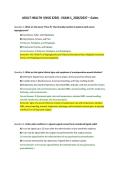
ADULT HEALTH I (NSG 3250) - EXAM 1_2026/2027 – Galen.

Question 1: What are the classic 'Three Ps' that clinically manifest in patients with severe
hyperglycemia?
A) Paresthesia, Pallor, and Palpitations.
B) Polycythemia, Pyrexia, and Pain.
C) Polyuria, Polydipsia, and Polyphagia.
D) Proteinuria, Pruritus, and Papules.
Correct Answer: C (Polyuria, Polydipsia, and Polyphagia.)
Rationale: The 'Three Ps' of hyperglycemia are Polyuria (increased urine), Polydipsia (increased
thirst), and Polyphagia (increased appetite).

········································


Question 2: What are the typical clinical signs and symptoms of a postoperative wound infection?
A) Orthostatic hypotension, decreased urinary output, and local pruritus without pain.
B) A sudden drop in blood pressure, Kussmaul breathing, and fruity-smelling breath.
C) Bradycardia, decreased temperature, decreased WBC, and pale, cold skin around the incision.
D) Increased pulse rate and temperature, elevated WBC, wound swelling, warmth, tenderness,
discharge, and increased pain.
Correct Answer: D (Increased pulse rate and temperature, elevated WBC, wound swelling,
warmth, tenderness, discharge, and increased pain.)
Rationale: Signs of a wound infection include increased pulse rate and temperature, elevated
WBC, wound swelling, warmth, tenderness, discharge, and increased incisional pain. It typically
manifests 5 to 10 days post-surgery.

········································


Question 3: Under what condition is a signed surgical consent form considered legally valid?
A) It can be signed up to 12 hours after the administration of pre-anesthetic sedatives.
B) It can only be signed after the surgeon has performed the first surgical incision.
C) It must be signed before the administration of any psychoactive premedication.
D) It must be witnessed by two physicians if signed after a sedative is given.
Correct Answer: C (It must be signed before the administration of any psychoactive
premedication.)

, Rationale: Surgical consent is legally valid ONLY when signed before the patient receives
psychoactive premedication, as these drugs can impair cognitive function.

········································


Question 4: A patient is undergoing general anesthesia. What is the first clinical sign of Malignant
Hyperthermia that the nurse should monitor for?
A) Dark red or brown urine.
B) A rapid spike in body temperature to 104°F.
C) Tachycardia (heart rate higher than 150 bpm) or an unexpected rise in end-tidal CO2.
D) Rigidity of the jaw and limbs.
Correct Answer: C (Tachycardia (heart rate higher than 150 bpm) or an unexpected rise in end-
tidal CO2.)
Rationale: The first clinical sign of Malignant Hyperthermia is tachycardia (heart rate > 150 bpm)
or an unexpected rise in end-tidal CO2. Elevated body temperature is a late sign.

········································


Question 5: Which general anesthetic is the most potent inhalation anesthetic available, producing
amnesia, skeletal muscle relaxation, and hypnosis?
A) Isoflurane.
B) Nitrous Oxide.
C) Propofol.
D) Vecuronium.
Correct Answer: A (Isoflurane.)
Rationale: Isoflurane is physically stable methyl ethyl ether and is the prototype inhalation
anesthetic. It is the most potent inhalation anesthetic available.

········································


Question 6: A patient is prescribed Acarbose (an Alpha-glucosidase inhibitor). What is the correct
administration instruction?
A) It is administered at bedtime to prevent morning dawn phenomenon.
B) It delays the digestion of carbohydrates and must be taken with the first bite of a meal.
C) It is given as an IV bolus only when blood glucose exceeds 240 mg/dL.
D) It must be taken 30 minutes before breakfast on an empty stomach.

, Correct Answer: B (It delays the digestion of carbohydrates and must be taken with the first bite
of a meal.)
Rationale: Acarbose (an alpha-glucosidase inhibitor) works to delay the digestion of
carbohydrates to diminish post-prandial glucose spikes. The patient must eat right after
administration (with the first bite of food).

········································


Question 7: A diabetic patient has consistently elevated blood glucose levels. The nurse knows this
stresses the kidneys' filtration mechanism, allowing blood proteins to leak into the urine. What
complication does this indicate, and what lab values should be monitored?
A) Diabetic Nephropathy; monitor blood urea nitrogen (BUN) and serum creatinine levels.
B) Autonomic Neuropathy; monitor thyroid stimulating hormone (TSH).
C) Diabetic Retinopathy; monitor intraocular pressure.
D) Sudomotor Neuropathy; monitor liver enzymes (AST and ALT).
Correct Answer: A (Diabetic Nephropathy; monitor blood urea nitrogen (BUN) and serum
creatinine levels.)
Rationale: Consistent hyperglycemia stresses the kidneys' filtration mechanism, allowing blood
proteins to leak into urine, leading to nephropathy. The nurse must monitor BUN (normal 10-20)
and creatinine (normal 0.6-1.2 male, 0.5-1.1 female).

········································


Question 8: A patient has a Stage II pressure ulcer. Which of the following is an appropriate nursing
intervention for this stage?
A) Clean with sterile saline and apply a semipermeable, hydrocolloid, or wet saline dressing.
B) Maintain the wound dry and uncovered to expose it to air.
C) Prepare the patient for immediate surgical debridement.
D) Apply prescribed enzyme preparations to dissolve necrotic tissue.
Correct Answer: A (Clean with sterile saline and apply a semipermeable, hydrocolloid, or wet
saline dressing.)
Rationale: Stage II pressure ulcers involve partial-thickness skin loss of the dermis. Interventions
include cleaning with sterile saline and applying semipermeable, hydrocolloid, or wet saline
dressings.

········································

Document information

Uploaded on
September 7, 2026
Number of pages
19
Written in
2026/2027
Type
Exam (elaborations)
Contains
Questions & answers
$17.34

Wrong document? Swap it for free Within 14 days of purchase and before downloading, you can choose a different document. You can simply spend the amount again.
Written by students who passed
Immediately available after payment
Read online or as PDF

Seller avatar
Reputation scores are based on the amount of documents a seller has sold for a fee and the reviews they have received for those documents. There are three levels: Bronze, Silver and Gold. The better the reputation, the more your can rely on the quality of the sellers work.
MindCraft
3.8
(52)
Sold
445
Followers
10
Items
2892
Last sold
9 hours ago


Why students choose Stuvia

Created by fellow students, verified by reviews

Quality you can trust: written by students who passed their tests and reviewed by others who've used these notes.

Didn't get what you expected? Choose another document

No worries! You can instantly pick a different document that better fits what you're looking for.

Pay as you like, start learning right away

No subscription, no commitments. Pay the way you're used to via credit card and download your PDF document instantly.

Student with book image

“Bought, downloaded, and aced it. It really can be that simple.”

Alisha Student

Working on your references?

Create accurate citations in APA, MLA and Harvard with our free citation generator.

Working on your references?

Frequently asked questions

