
Page 1 of 326
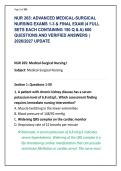
NUR 265: ADVANCED MEDICAL-SURGICAL
NURSING EXAMS 1-3 & FINAL EXAM (4 FULL
SETS EACH CONTAINING 150 Q & A) 600
QUESTIONS AND VERIFIED ANSWERS |
2026/2027 UPDATE
NUR 265: Medical-Surgical Nursing I
Subject: Medical-Surgical Nursing
Section 1: Questions 1-50
1. A patient with chronic kidney disease has a serum
potassium level of 6.8 mEq/L. Which assessment finding
requires immediate nursing intervention?
A. Muscle twitching in the lower extremities
B. Blood pressure of 148/92 mmHg
C. Widening QRS complex on the cardiac monitor
D. Respiratory rate of 22 breaths per minute
❖ Rationale: A serum potassium of 6.8 mEq/L indicates
severe hyperkalemia. Widening of the QRS complex is a
life-threatening cardiac manifestation that can precede
ventricular fibrillation or cardiac arrest. The nurse must
,Page 2 of 326
prepare for emergent interventions such as calcium
gluconate administration, insulin with dextrose, or dialysis.
Muscle twitching is more commonly associated with
hypokalemia or hypocalcemia.
2. A patient with heart failure is receiving furosemide 40 mg IV
push. Which laboratory value should the nurse monitor most
closely?
A. Serum sodium
B. Serum potassium
C. Serum calcium
D. Serum magnesium
❖ Rationale: Furosemide is a loop diuretic that inhibits
sodium and chloride reabsorption in the ascending loop of
Henle, causing significant potassium excretion.
Hypokalemia is a common and potentially dangerous
adverse effect that can precipitate cardiac dysrhythmias,
especially in patients on digitalis preparations.
3. The nurse is caring for a patient with severe vomiting and
diarrhea. Arterial blood gas results show pH 7.25, PaCO2 45
mmHg, and HCO3- 18 mEq/L. What is the patient's acid-base
disorder?
A. Respiratory acidosis
,Page 3 of 326
B. Respiratory alkalosis
C. Metabolic acidosis
D. Metabolic alkalosis
❖ Rationale: The pH is low (7.25), indicating acidosis. The
HCO3- is below normal (18 mEq/L), indicating a metabolic
component. The PaCO2 is normal, suggesting no
respiratory compensation yet. This presentation is
consistent with metabolic acidosis from gastrointestinal
losses of bicarbonate through severe diarrhea or vomiting
(though vomiting typically causes metabolic alkalosis, this
scenario specifies diarrhea as the primary cause).
4. A postoperative patient reports sudden chest pain and
shortness of breath. The nurse notes tachycardia and
decreased oxygen saturation. What is the priority nursing
action?
A. Administer prescribed PRN pain medication
B. Apply oxygen and notify the healthcare provider
immediately
C. Encourage deep breathing and coughing exercises
D. Reposition the patient to the left side
❖ Rationale: Sudden chest pain, shortness of breath, and
decreased oxygen saturation in a postoperative patient
suggest a pulmonary embolism. The priority is to
, Page 4 of 326
administer oxygen to maintain oxygenation and notify the
healthcare provider immediately for further orders (e.g.,
anticoagulation, diagnostic imaging).
5. Which of the following patients is at greatest risk for
developing a pressure injury?
A. A 45-year-old with a fractured femur in traction
B. A 30-year-old with a spinal cord injury who is immobile
C. An 82-year-old with incontinence and decreased mobility
following a stroke
D. A 60-year-old with diabetes who is ambulatory with a cane
❖ Rationale: The elderly patient with incontinence (moisture),
decreased mobility (immobility), and neurological deficit
(stroke) has multiple risk factors for pressure injury
development. The Braden Scale identifies sensory
perception, moisture, activity, mobility, nutrition, and
friction/shear as key risk factors.
6. The nurse is preparing to administer insulin to a patient
with type 1 diabetes. The patient's blood glucose is 65 mg/dL.
What should the nurse do first?
A. Administer the insulin as ordered
B. Hold the insulin and administer 15 grams of rapid-acting
carbohydrate
NUR 265: ADVANCED MEDICAL-SURGICAL
NURSING EXAMS 1-3 & FINAL EXAM (4 FULL
SETS EACH CONTAINING 150 Q & A) 600
QUESTIONS AND VERIFIED ANSWERS |
2026/2027 UPDATE
NUR 265: Medical-Surgical Nursing I
Subject: Medical-Surgical Nursing
Section 1: Questions 1-50
1. A patient with chronic kidney disease has a serum
potassium level of 6.8 mEq/L. Which assessment finding
requires immediate nursing intervention?
A. Muscle twitching in the lower extremities
B. Blood pressure of 148/92 mmHg
C. Widening QRS complex on the cardiac monitor
D. Respiratory rate of 22 breaths per minute
❖ Rationale: A serum potassium of 6.8 mEq/L indicates
severe hyperkalemia. Widening of the QRS complex is a
life-threatening cardiac manifestation that can precede
ventricular fibrillation or cardiac arrest. The nurse must
,Page 2 of 326
prepare for emergent interventions such as calcium
gluconate administration, insulin with dextrose, or dialysis.
Muscle twitching is more commonly associated with
hypokalemia or hypocalcemia.
2. A patient with heart failure is receiving furosemide 40 mg IV
push. Which laboratory value should the nurse monitor most
closely?
A. Serum sodium
B. Serum potassium
C. Serum calcium
D. Serum magnesium
❖ Rationale: Furosemide is a loop diuretic that inhibits
sodium and chloride reabsorption in the ascending loop of
Henle, causing significant potassium excretion.
Hypokalemia is a common and potentially dangerous
adverse effect that can precipitate cardiac dysrhythmias,
especially in patients on digitalis preparations.
3. The nurse is caring for a patient with severe vomiting and
diarrhea. Arterial blood gas results show pH 7.25, PaCO2 45
mmHg, and HCO3- 18 mEq/L. What is the patient's acid-base
disorder?
A. Respiratory acidosis
,Page 3 of 326
B. Respiratory alkalosis
C. Metabolic acidosis
D. Metabolic alkalosis
❖ Rationale: The pH is low (7.25), indicating acidosis. The
HCO3- is below normal (18 mEq/L), indicating a metabolic
component. The PaCO2 is normal, suggesting no
respiratory compensation yet. This presentation is
consistent with metabolic acidosis from gastrointestinal
losses of bicarbonate through severe diarrhea or vomiting
(though vomiting typically causes metabolic alkalosis, this
scenario specifies diarrhea as the primary cause).
4. A postoperative patient reports sudden chest pain and
shortness of breath. The nurse notes tachycardia and
decreased oxygen saturation. What is the priority nursing
action?
A. Administer prescribed PRN pain medication
B. Apply oxygen and notify the healthcare provider
immediately
C. Encourage deep breathing and coughing exercises
D. Reposition the patient to the left side
❖ Rationale: Sudden chest pain, shortness of breath, and
decreased oxygen saturation in a postoperative patient
suggest a pulmonary embolism. The priority is to
, Page 4 of 326
administer oxygen to maintain oxygenation and notify the
healthcare provider immediately for further orders (e.g.,
anticoagulation, diagnostic imaging).
5. Which of the following patients is at greatest risk for
developing a pressure injury?
A. A 45-year-old with a fractured femur in traction
B. A 30-year-old with a spinal cord injury who is immobile
C. An 82-year-old with incontinence and decreased mobility
following a stroke
D. A 60-year-old with diabetes who is ambulatory with a cane
❖ Rationale: The elderly patient with incontinence (moisture),
decreased mobility (immobility), and neurological deficit
(stroke) has multiple risk factors for pressure injury
development. The Braden Scale identifies sensory
perception, moisture, activity, mobility, nutrition, and
friction/shear as key risk factors.
6. The nurse is preparing to administer insulin to a patient
with type 1 diabetes. The patient's blood glucose is 65 mg/dL.
What should the nurse do first?
A. Administer the insulin as ordered
B. Hold the insulin and administer 15 grams of rapid-acting
carbohydrate


