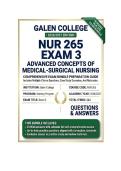
,NUR 265 Exam 3 Advanced Concepts of Medical-Surgical Nursing
Questions And Answers 2026/2027 Galen College
Q1. A patient with a traumatic brain injury has a Glasgow Coma
Scale score that decreases from 13 to 10. What is the nurse's
priority action?
A) Notify the healthcare provider immediately.
B) Allow the patient to sleep undisturbed.
C) Administer the patient's scheduled oral medication.
D) Reassess the patient at the end of the shift.
Correct Answer: A) Notify the healthcare provider immediately.
Rationale: A significant decrease in GCS indicates worsening neurologic
function and may signal increased intracranial pressure or secondary brain
injury.
Q2. Which finding is a late indicator of increased intracranial
pressure?
A) Mild headache
B) Cushing triad
C) Restlessness
D) Nausea
Correct Answer: B) Cushing triad
Rationale: Cushing triad consists of hypertension with widened pulse
pressure, bradycardia, and abnormal respirations and is a late sign of
increased intracranial pressure.
Q3. Which nursing intervention is appropriate for a patient at risk
for increased intracranial pressure?
A) Keep the hips flexed.
B) Place the patient in Trendelenburg position.
C) Keep the head and neck in neutral alignment.
D) Encourage frequent vigorous coughing.
Correct Answer: C) Keep the head and neck in neutral alignment.
,Rationale: Neutral alignment promotes venous drainage from the brain and
helps limit increases in intracranial pressure.
Q4. Which finding in a patient with traumatic brain injury requires
immediate attention?
A) Mild headache
B) Bruising around the forehead
C) Fatigue after assessment
D) New unequal pupils
Correct Answer: D) New unequal pupils
Rationale: New pupillary asymmetry can indicate worsening neurologic
function, intracranial bleeding, or increased intracranial pressure.
Q5. Which position is generally appropriate for a patient with
increased intracranial pressure?
A) Head of bed elevated with the head midline
B) Flat with the neck flexed
C) Trendelenburg
D) Prone with the neck rotated
Correct Answer: A) Head of bed elevated with the head midline
Rationale: Elevating the head while maintaining neutral alignment
promotes cerebral venous drainage and can help reduce intracranial
pressure.
Q6. Why should unnecessary suctioning be avoided in a patient with
increased intracranial pressure?
A) It causes hypoglycemia.
B) It can temporarily increase intracranial pressure.
C) It always causes hypotension.
D) It prevents cerebral oxygenation.
Correct Answer: B) It can temporarily increase intracranial pressure.
, Rationale: Suctioning can stimulate coughing and increase intrathoracic
pressure, which may transiently increase intracranial pressure.
Q7. Which assessment finding may be an early sign of increased
intracranial pressure?
A) Fixed pupils
B) Cushing triad
C) Change in level of consciousness
D) Respiratory arrest
Correct Answer: C) Change in level of consciousness
Rationale: A change in LOC is often one of the earliest and most important
indicators of neurologic deterioration.
Q8. A patient with a head injury develops bradycardia,
hypertension, and widening pulse pressure. What does the nurse
suspect?
A) Hypovolemic shock
B) Neurogenic shock
C) Septic shock
D) Increased intracranial pressure
Correct Answer: D) Increased intracranial pressure
Rationale: Bradycardia, hypertension, and widened pulse pressure are
components of Cushing triad and indicate severe increased intracranial
pressure.
Q9. Which intervention should the nurse include when caring for a
patient at risk for increased intracranial pressure?
A) Maintain a quiet environment.
B) Encourage frequent visitors.
C) Cluster all care activities together.
D) Keep the patient flat.
Correct Answer: A) Maintain a quiet environment.
Questions And Answers 2026/2027 Galen College
Q1. A patient with a traumatic brain injury has a Glasgow Coma
Scale score that decreases from 13 to 10. What is the nurse's
priority action?
A) Notify the healthcare provider immediately.
B) Allow the patient to sleep undisturbed.
C) Administer the patient's scheduled oral medication.
D) Reassess the patient at the end of the shift.
Correct Answer: A) Notify the healthcare provider immediately.
Rationale: A significant decrease in GCS indicates worsening neurologic
function and may signal increased intracranial pressure or secondary brain
injury.
Q2. Which finding is a late indicator of increased intracranial
pressure?
A) Mild headache
B) Cushing triad
C) Restlessness
D) Nausea
Correct Answer: B) Cushing triad
Rationale: Cushing triad consists of hypertension with widened pulse
pressure, bradycardia, and abnormal respirations and is a late sign of
increased intracranial pressure.
Q3. Which nursing intervention is appropriate for a patient at risk
for increased intracranial pressure?
A) Keep the hips flexed.
B) Place the patient in Trendelenburg position.
C) Keep the head and neck in neutral alignment.
D) Encourage frequent vigorous coughing.
Correct Answer: C) Keep the head and neck in neutral alignment.
,Rationale: Neutral alignment promotes venous drainage from the brain and
helps limit increases in intracranial pressure.
Q4. Which finding in a patient with traumatic brain injury requires
immediate attention?
A) Mild headache
B) Bruising around the forehead
C) Fatigue after assessment
D) New unequal pupils
Correct Answer: D) New unequal pupils
Rationale: New pupillary asymmetry can indicate worsening neurologic
function, intracranial bleeding, or increased intracranial pressure.
Q5. Which position is generally appropriate for a patient with
increased intracranial pressure?
A) Head of bed elevated with the head midline
B) Flat with the neck flexed
C) Trendelenburg
D) Prone with the neck rotated
Correct Answer: A) Head of bed elevated with the head midline
Rationale: Elevating the head while maintaining neutral alignment
promotes cerebral venous drainage and can help reduce intracranial
pressure.
Q6. Why should unnecessary suctioning be avoided in a patient with
increased intracranial pressure?
A) It causes hypoglycemia.
B) It can temporarily increase intracranial pressure.
C) It always causes hypotension.
D) It prevents cerebral oxygenation.
Correct Answer: B) It can temporarily increase intracranial pressure.
, Rationale: Suctioning can stimulate coughing and increase intrathoracic
pressure, which may transiently increase intracranial pressure.
Q7. Which assessment finding may be an early sign of increased
intracranial pressure?
A) Fixed pupils
B) Cushing triad
C) Change in level of consciousness
D) Respiratory arrest
Correct Answer: C) Change in level of consciousness
Rationale: A change in LOC is often one of the earliest and most important
indicators of neurologic deterioration.
Q8. A patient with a head injury develops bradycardia,
hypertension, and widening pulse pressure. What does the nurse
suspect?
A) Hypovolemic shock
B) Neurogenic shock
C) Septic shock
D) Increased intracranial pressure
Correct Answer: D) Increased intracranial pressure
Rationale: Bradycardia, hypertension, and widened pulse pressure are
components of Cushing triad and indicate severe increased intracranial
pressure.
Q9. Which intervention should the nurse include when caring for a
patient at risk for increased intracranial pressure?
A) Maintain a quiet environment.
B) Encourage frequent visitors.
C) Cluster all care activities together.
D) Keep the patient flat.
Correct Answer: A) Maintain a quiet environment.