
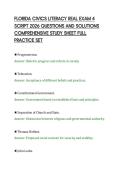
FLORIDA CIVICS LITERACY REAL EXAM 4
SCRIPT 2026 QUESTIONS AND SOLUTIONS
COMPREHENSIVE STUDY SHEET FULL
PRACTICE SET
◉ Progressivism.
Answer: Belief in progress and reform in society.
◉ Toleration.
Answer: Acceptance of different beliefs and practices.
◉ Constitutional Government.
Answer: Government based on established laws and principles.
◉ Separation of Church and State.
Answer: Distinction between religious and governmental authority.
◉ Thomas Hobbes.
Answer: Proposed social contract for security and stability.
◉ John Locke.
,Answer: Advocated natural rights: life, liberty, property.
◉ Montesquieu.
Answer: Introduced separation of powers in government.
◉ Jean Jacques Rousseau.
Answer: Promoted general will and direct democracy.
◉ Join, or Die.
Answer: Franklin's call for colonial unity against Britain.
◉ Stamp Act (1765).
Answer: Tax requiring special stamps on printed materials.
◉ No Taxation Without Representation.
Answer: Colonial protest against lack of parliamentary
representation.
◉ First Continental Congress (1774).
Answer: Delegates gathered to address British grievances.
◉ Intolerable Acts.
, Answer: Punitive laws against colonies after Boston Tea Party.
◉ Common Sense.
Answer: Paine's pamphlet advocating independence from Britain.
◉ Declaration of Independence (1776).
Answer: Document asserting rights to life, liberty, happiness.
◉ Government's Role.
Answer: Main duty is to protect citizens' rights.
◉ Right to Revolt.
Answer: People's right to overthrow oppressive government.
◉ Articles of Confederation (1777-1788).
Answer: First U.S. government framework with weak central
authority.
◉ Sovereign States.
Answer: Independent states with ultimate authority over
themselves.
SCRIPT 2026 QUESTIONS AND SOLUTIONS
COMPREHENSIVE STUDY SHEET FULL
PRACTICE SET
◉ Progressivism.
Answer: Belief in progress and reform in society.
◉ Toleration.
Answer: Acceptance of different beliefs and practices.
◉ Constitutional Government.
Answer: Government based on established laws and principles.
◉ Separation of Church and State.
Answer: Distinction between religious and governmental authority.
◉ Thomas Hobbes.
Answer: Proposed social contract for security and stability.
◉ John Locke.
,Answer: Advocated natural rights: life, liberty, property.
◉ Montesquieu.
Answer: Introduced separation of powers in government.
◉ Jean Jacques Rousseau.
Answer: Promoted general will and direct democracy.
◉ Join, or Die.
Answer: Franklin's call for colonial unity against Britain.
◉ Stamp Act (1765).
Answer: Tax requiring special stamps on printed materials.
◉ No Taxation Without Representation.
Answer: Colonial protest against lack of parliamentary
representation.
◉ First Continental Congress (1774).
Answer: Delegates gathered to address British grievances.
◉ Intolerable Acts.
, Answer: Punitive laws against colonies after Boston Tea Party.
◉ Common Sense.
Answer: Paine's pamphlet advocating independence from Britain.
◉ Declaration of Independence (1776).
Answer: Document asserting rights to life, liberty, happiness.
◉ Government's Role.
Answer: Main duty is to protect citizens' rights.
◉ Right to Revolt.
Answer: People's right to overthrow oppressive government.
◉ Articles of Confederation (1777-1788).
Answer: First U.S. government framework with weak central
authority.
◉ Sovereign States.
Answer: Independent states with ultimate authority over
themselves.


