

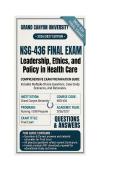
,NSG 436 Final Exam Leadership, Ethics, and Policy in Health Care
Questions And Answers 2026/2027 Grand canyon university
Q1. Which statement best describes leadership in nursing?
A) Enforcing organizational rules without considering staff needs
B) Influencing people toward shared goals while supporting effective care
C) Completing all tasks personally
D) Avoiding responsibility for team outcomes
Correct Answer: B) Influencing people toward shared goals while supporting
effective care
Rationale: Leadership involves influencing and motivating people toward
shared objectives. Effective nursing leadership connects people, resources,
professional values, and patient-care goals.
Q2. Which characteristic best distinguishes an informal leader from
a formal leader?
A) An informal leader has no professional responsibilities.
B) An informal leader influences others without necessarily holding an official
leadership position.
C) An informal leader cannot participate in decision-making.
D) An informal leader is always a manager.
Correct Answer: B) An informal leader influences others without necessarily
holding an official leadership position.
Rationale: Informal leadership develops through credibility, expertise,
relationships, communication, or personal influence rather than through an
appointed organizational position.
Q3. A nurse manager makes all major unit decisions independently
and expects staff to follow directions without discussion. Which
leadership style is most evident?
A) Democratic
B) Laissez-faire
C) Autocratic
D) Servant
Correct Answer: C) Autocratic
Rationale: Autocratic leadership centralizes authority with the leader and
relies heavily on unilateral decision-making and direction.
,Q4. Which situation best illustrates bureaucratic leadership?
A) Staff collectively design a new policy.
B) The leader follows established rules and procedures closely when making
decisions.
C) Staff independently determine all unit practices.
D) The leader motivates through personal charisma.
Correct Answer: B) The leader follows established rules and procedures
closely when making decisions.
Rationale: Bureaucratic leadership emphasizes established policies,
procedures, hierarchy, and organizational rules.
Q5. Which characteristic is most strongly associated with servant
leadership?
A) Promoting the development and well-being of followers
B) Maintaining strict control over all decisions
C) Rewarding only high-performing employees
D) Avoiding involvement in staff development
Correct Answer: A) Promoting the development and well-being of followers
Rationale: Servant leadership places strong emphasis on serving others,
supporting their growth, building relationships, and developing the team.
Q6. Which behavior is most characteristic of transformational
leadership?
A) Enforcing the status quo
B) Using punishment to maintain compliance
C) Inspiring followers through vision and meaningful change
D) Avoiding staff participation
Correct Answer: C) Inspiring followers through vision and meaningful change
Rationale: Transformational leaders create a compelling vision, stimulate
new thinking, encourage development, and motivate followers toward
meaningful improvement.
Q7. A nurse is respected because of advanced clinical expertise and
coworkers routinely seek advice from the nurse. Which source of
power is demonstrated?
, A) Reward power
B) Expert power
C) Coercive power
D) Legitimate power
Correct Answer: B) Expert power
Rationale: Expert power comes from knowledge, specialized skills,
experience, and recognized professional competence.
Q8. Which source of power results primarily from an individual's
official organizational position?
A) Referent power
B) Expert power
C) Legitimate power
D) Informational power
Correct Answer: C) Legitimate power
Rationale: Legitimate power is derived from formal authority associated
with an assigned organizational role or position.
Q9. A nurse manager can provide preferred schedules or other
valued benefits in response to staff performance. Which type of
power is being used?
A) Expert
B) Referent
C) Coercive
D) Reward
Correct Answer: D) Reward
Rationale: Reward power comes from the ability to provide valued positive
consequences, incentives, recognition, or other benefits.
Q10. Which leadership behavior best demonstrates emotional
intelligence?
A) Ignoring one's emotional reactions
B) Recognizing personal emotions and responding appropriately to others
C) Suppressing all disagreement
D) Avoiding feedback
Questions And Answers 2026/2027 Grand canyon university
Q1. Which statement best describes leadership in nursing?
A) Enforcing organizational rules without considering staff needs
B) Influencing people toward shared goals while supporting effective care
C) Completing all tasks personally
D) Avoiding responsibility for team outcomes
Correct Answer: B) Influencing people toward shared goals while supporting
effective care
Rationale: Leadership involves influencing and motivating people toward
shared objectives. Effective nursing leadership connects people, resources,
professional values, and patient-care goals.
Q2. Which characteristic best distinguishes an informal leader from
a formal leader?
A) An informal leader has no professional responsibilities.
B) An informal leader influences others without necessarily holding an official
leadership position.
C) An informal leader cannot participate in decision-making.
D) An informal leader is always a manager.
Correct Answer: B) An informal leader influences others without necessarily
holding an official leadership position.
Rationale: Informal leadership develops through credibility, expertise,
relationships, communication, or personal influence rather than through an
appointed organizational position.
Q3. A nurse manager makes all major unit decisions independently
and expects staff to follow directions without discussion. Which
leadership style is most evident?
A) Democratic
B) Laissez-faire
C) Autocratic
D) Servant
Correct Answer: C) Autocratic
Rationale: Autocratic leadership centralizes authority with the leader and
relies heavily on unilateral decision-making and direction.
,Q4. Which situation best illustrates bureaucratic leadership?
A) Staff collectively design a new policy.
B) The leader follows established rules and procedures closely when making
decisions.
C) Staff independently determine all unit practices.
D) The leader motivates through personal charisma.
Correct Answer: B) The leader follows established rules and procedures
closely when making decisions.
Rationale: Bureaucratic leadership emphasizes established policies,
procedures, hierarchy, and organizational rules.
Q5. Which characteristic is most strongly associated with servant
leadership?
A) Promoting the development and well-being of followers
B) Maintaining strict control over all decisions
C) Rewarding only high-performing employees
D) Avoiding involvement in staff development
Correct Answer: A) Promoting the development and well-being of followers
Rationale: Servant leadership places strong emphasis on serving others,
supporting their growth, building relationships, and developing the team.
Q6. Which behavior is most characteristic of transformational
leadership?
A) Enforcing the status quo
B) Using punishment to maintain compliance
C) Inspiring followers through vision and meaningful change
D) Avoiding staff participation
Correct Answer: C) Inspiring followers through vision and meaningful change
Rationale: Transformational leaders create a compelling vision, stimulate
new thinking, encourage development, and motivate followers toward
meaningful improvement.
Q7. A nurse is respected because of advanced clinical expertise and
coworkers routinely seek advice from the nurse. Which source of
power is demonstrated?
, A) Reward power
B) Expert power
C) Coercive power
D) Legitimate power
Correct Answer: B) Expert power
Rationale: Expert power comes from knowledge, specialized skills,
experience, and recognized professional competence.
Q8. Which source of power results primarily from an individual's
official organizational position?
A) Referent power
B) Expert power
C) Legitimate power
D) Informational power
Correct Answer: C) Legitimate power
Rationale: Legitimate power is derived from formal authority associated
with an assigned organizational role or position.
Q9. A nurse manager can provide preferred schedules or other
valued benefits in response to staff performance. Which type of
power is being used?
A) Expert
B) Referent
C) Coercive
D) Reward
Correct Answer: D) Reward
Rationale: Reward power comes from the ability to provide valued positive
consequences, incentives, recognition, or other benefits.
Q10. Which leadership behavior best demonstrates emotional
intelligence?
A) Ignoring one's emotional reactions
B) Recognizing personal emotions and responding appropriately to others
C) Suppressing all disagreement
D) Avoiding feedback


