

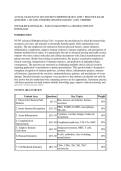
ACTUAL EXAM NU545 ADVANCED PATHOPHYCOLOGY-UNIT 1 PRACTICE EXAM
QUESTION 1-100 AND ANSWERS UPDATED 2026/2027 | 100% VERIFIED
| DETAILED RATIONALES – PASS GUARANTEED A+ GRADED | INSTANT
DOWNLOAD
INTRODUCTION
NU545 Advanced Pathophysiology Unit 1 examines the mechanisms by which the human body
recognizes, prevents, and responds to potentially harmful agents while maintaining tissue
integrity. The unit emphasizes the interaction between physical barriers, innate immunity,
inflammation, complement, adaptive immune responses, immune regulation, and mechanisms of
immune-mediated tissue injury. It is particularly relevant to advanced nursing and health-science
students who must connect molecular and cellular mechanisms with clinical manifestations and
patient outcomes. Rather than relying on memorization, this practice examination emphasizes
clinical reasoning, interpretation of immune responses, and prediction of pathophysiologic
consequences. The questions are structured as challenging multiple-choice clinical scenarios
requiring application of mechanisms to patient presentations. This question bank is designed to
strengthen recognition of immune pathways, cytokine effects, inflammatory patterns, immune-
cell functions, hypersensitivity reactions, immunodeficiency patterns, and mechanisms of tissue
damage. Detailed rationales accompany every question so that students can identify not only the
best answer but also understand why competing answers are less appropriate. Systematic practice
with these questions can help students identify knowledge gaps, improve clinical reasoning, and
approach Unit 1 assessments with greater confidence.
CONTENT AREA OVERVIEW
Content Area Questions Key Topics Weight
1. Physical & Chemical Self- Skin, mucosa, microbiome, barriers,
Q1–10 10%
Defense secretions
PRRs, PAMPs, DAMPs, macrophages,
2. Innate Immune Recognition Q11–20 10%
NK cells
Cytokines, vascular changes, leukocyte
3. Acute Inflammation Q21–30 10%
recruitment
4. Complement &
Q31–40 Complement pathways, C3b, C5a, MAC 10%
Opsonization
5. Adaptive Immune Antigen presentation, MHC, T cells,
Q41–50 10%
Activation memory
B cells, antibodies, class switching,
6. Humoral Immunity Q51–60 10%
neutralization
CD4+, CD8+, Th1, Th2, Th17,
7. Cell-Mediated Immunity Q61–70 10%
cytotoxicity
, 8. Immune Regulation &
Q71–75 Tregs, checkpoints, peripheral tolerance 5%
Tolerance
QUESTIONS 1-100
Q1:
A patient sustains a superficial abrasion contaminated with bacteria. Despite the presence of
organisms on the damaged skin, infection does not immediately develop. Which mechanism
most directly contributes to preventing bacterial colonization at intact neighboring skin?
A) Activation of cytotoxic T lymphocytes
B) Competition from resident microbiota and antimicrobial epithelial products
C) Production of antigen-specific IgG
D) Formation of immune complexes
Rationale: The correct answer is B because resident microbiota compete with potential
pathogens for nutrients and attachment sites, while epithelial cells produce antimicrobial
substances such as defensins. Option A is incorrect because cytotoxic T cells are adaptive
immune cells and are not the primary immediate barrier at intact skin. Option C is incorrect
because antigen-specific IgG develops through adaptive immunity and is not the first-line
barrier. Option D is incorrect because immune complexes are formed by antigen-antibody
interactions and do not normally provide the initial barrier against colonization.
Q2:
A patient with extensive thermal burns develops recurrent bacterial infections despite having
normal circulating neutrophil counts. Which alteration best explains the increased susceptibility?
A) Excessive production of secretory IgA
B) Loss of the physical epithelial barrier
C) Increased T-cell memory formation
D) Increased complement synthesis
Rationale: The correct answer is B because extensive burns destroy the skin's physical barrier,
allowing microorganisms to bypass an important first line of defense. Option A is incorrect
because increased IgA would generally enhance mucosal protection. Option C is incorrect
because T-cell memory is adaptive and does not compensate for destruction of the physical
barrier. Option D is incorrect because increased complement availability would not restore the
lost epithelial barrier.
Q3:
A patient develops recurrent respiratory infections after prolonged exposure to cigarette smoke.
Impaired mucociliary clearance is suspected. Which consequence is most likely?
,A) Increased antigen-specific memory immediately after exposure
B) Reduced removal of microorganisms and particulate material from airway surfaces
C) Increased destruction of infected cells by CD8+ cells
D) Increased antibody class switching within alveoli
Rationale: The correct answer is B because coordinated ciliary movement transports mucus and
trapped organisms toward the pharynx. Cigarette smoke can impair ciliary function and mucus
clearance. Option A is incorrect because memory formation is not the primary consequence of
impaired ciliary activity. Option C is incorrect because CD8+ cytotoxicity occurs after adaptive
immune activation. Option D is incorrect because mucociliary clearance is a mechanical defense
rather than an antibody class-switching mechanism.
Q4:
A patient receiving chronic acid-suppressive therapy develops an enteric bacterial infection more
readily than expected. Which protective mechanism has most likely been weakened?
A) MHC class I presentation
B) Gastric acid-mediated destruction of ingested microorganisms
C) NK-cell recognition of reduced MHC expression
D) Treg-mediated suppression
Rationale: The correct answer is B because gastric acidity is an important chemical defense
against ingested pathogens. Suppression of gastric acid can allow more viable organisms to
reach the intestine. Option A is incorrect because MHC I primarily presents intracellular
peptides to CD8+ T cells. Option C is incorrect because NK cells are not the principal defense
mechanism affected by gastric acid suppression. Option D is incorrect because regulatory T
cells control immune activation rather than gastric microbial killing.
Q5:
A patient has a genetic defect that markedly reduces epithelial defensin production. Which
consequence is most likely?
A) Failure of antibody affinity maturation
B) Increased susceptibility to epithelial microbial invasion
C) Inability to activate CD8+ T cells
D) Loss of immunologic memory
Rationale: The correct answer is B because defensins are antimicrobial peptides produced by
epithelial cells that directly inhibit or damage microorganisms. Their deficiency weakens innate
epithelial defense. Option A is incorrect because affinity maturation occurs primarily in
germinal centers of lymphoid tissues. Option C is incorrect because CD8+ activation depends
mainly on antigen presentation and costimulation. Option D is incorrect because immune
memory depends on long-lived lymphocytes rather than defensins.
, Q6:
A patient develops severe intestinal dysbiosis following broad-spectrum antibiotic therapy.
Which immune consequence is most likely to result?
A) Elimination of all adaptive immune responses
B) Reduced colonization resistance against opportunistic organisms
C) Complete absence of complement activation
D) Permanent loss of neutrophils
Rationale: The correct answer is B because normal microbiota compete with pathogens and
influence local immune function. Disruption can permit opportunistic organisms to proliferate.
Option A is incorrect because antibiotics do not eliminate adaptive immunity. Option C is
incorrect because complement production and activation remain possible. Option D is incorrect
because dysbiosis does not directly cause permanent neutrophil loss.
Q7:
A patient has impaired production of mucus in the respiratory tract. Which defense is most
directly compromised?
A) Antibody-dependent cellular cytotoxicity
B) Trapping and removal of inhaled microorganisms
C) MHC II expression on T cells
D) Clonal deletion of lymphocytes
Rationale: The correct answer is B because mucus traps inhaled particles and microorganisms,
allowing ciliary mechanisms to remove them. Option A is an antibody-mediated effector
mechanism. Option C is incorrect because MHC II is primarily expressed on professional
antigen-presenting cells. Option D concerns immune tolerance rather than airway surface
defense.
Q8:
A patient develops recurrent oral infections after severe salivary gland dysfunction. Which
protective factor has been reduced?
A) CD8+ T-cell receptor diversity
B) Salivary antimicrobial substances and mechanical washing
C) Bone marrow hematopoiesis
D) Complement-independent apoptosis
Rationale: The correct answer is B because saliva provides mechanical cleansing and contains
antimicrobial factors that help control oral microorganisms. Option A is unrelated to salivary
gland function. Option C involves blood-cell production and is not directly impaired by salivary
dysfunction. Option D does not represent the primary oral defense mechanism.
QUESTION 1-100 AND ANSWERS UPDATED 2026/2027 | 100% VERIFIED
| DETAILED RATIONALES – PASS GUARANTEED A+ GRADED | INSTANT
DOWNLOAD
INTRODUCTION
NU545 Advanced Pathophysiology Unit 1 examines the mechanisms by which the human body
recognizes, prevents, and responds to potentially harmful agents while maintaining tissue
integrity. The unit emphasizes the interaction between physical barriers, innate immunity,
inflammation, complement, adaptive immune responses, immune regulation, and mechanisms of
immune-mediated tissue injury. It is particularly relevant to advanced nursing and health-science
students who must connect molecular and cellular mechanisms with clinical manifestations and
patient outcomes. Rather than relying on memorization, this practice examination emphasizes
clinical reasoning, interpretation of immune responses, and prediction of pathophysiologic
consequences. The questions are structured as challenging multiple-choice clinical scenarios
requiring application of mechanisms to patient presentations. This question bank is designed to
strengthen recognition of immune pathways, cytokine effects, inflammatory patterns, immune-
cell functions, hypersensitivity reactions, immunodeficiency patterns, and mechanisms of tissue
damage. Detailed rationales accompany every question so that students can identify not only the
best answer but also understand why competing answers are less appropriate. Systematic practice
with these questions can help students identify knowledge gaps, improve clinical reasoning, and
approach Unit 1 assessments with greater confidence.
CONTENT AREA OVERVIEW
Content Area Questions Key Topics Weight
1. Physical & Chemical Self- Skin, mucosa, microbiome, barriers,
Q1–10 10%
Defense secretions
PRRs, PAMPs, DAMPs, macrophages,
2. Innate Immune Recognition Q11–20 10%
NK cells
Cytokines, vascular changes, leukocyte
3. Acute Inflammation Q21–30 10%
recruitment
4. Complement &
Q31–40 Complement pathways, C3b, C5a, MAC 10%
Opsonization
5. Adaptive Immune Antigen presentation, MHC, T cells,
Q41–50 10%
Activation memory
B cells, antibodies, class switching,
6. Humoral Immunity Q51–60 10%
neutralization
CD4+, CD8+, Th1, Th2, Th17,
7. Cell-Mediated Immunity Q61–70 10%
cytotoxicity
, 8. Immune Regulation &
Q71–75 Tregs, checkpoints, peripheral tolerance 5%
Tolerance
QUESTIONS 1-100
Q1:
A patient sustains a superficial abrasion contaminated with bacteria. Despite the presence of
organisms on the damaged skin, infection does not immediately develop. Which mechanism
most directly contributes to preventing bacterial colonization at intact neighboring skin?
A) Activation of cytotoxic T lymphocytes
B) Competition from resident microbiota and antimicrobial epithelial products
C) Production of antigen-specific IgG
D) Formation of immune complexes
Rationale: The correct answer is B because resident microbiota compete with potential
pathogens for nutrients and attachment sites, while epithelial cells produce antimicrobial
substances such as defensins. Option A is incorrect because cytotoxic T cells are adaptive
immune cells and are not the primary immediate barrier at intact skin. Option C is incorrect
because antigen-specific IgG develops through adaptive immunity and is not the first-line
barrier. Option D is incorrect because immune complexes are formed by antigen-antibody
interactions and do not normally provide the initial barrier against colonization.
Q2:
A patient with extensive thermal burns develops recurrent bacterial infections despite having
normal circulating neutrophil counts. Which alteration best explains the increased susceptibility?
A) Excessive production of secretory IgA
B) Loss of the physical epithelial barrier
C) Increased T-cell memory formation
D) Increased complement synthesis
Rationale: The correct answer is B because extensive burns destroy the skin's physical barrier,
allowing microorganisms to bypass an important first line of defense. Option A is incorrect
because increased IgA would generally enhance mucosal protection. Option C is incorrect
because T-cell memory is adaptive and does not compensate for destruction of the physical
barrier. Option D is incorrect because increased complement availability would not restore the
lost epithelial barrier.
Q3:
A patient develops recurrent respiratory infections after prolonged exposure to cigarette smoke.
Impaired mucociliary clearance is suspected. Which consequence is most likely?
,A) Increased antigen-specific memory immediately after exposure
B) Reduced removal of microorganisms and particulate material from airway surfaces
C) Increased destruction of infected cells by CD8+ cells
D) Increased antibody class switching within alveoli
Rationale: The correct answer is B because coordinated ciliary movement transports mucus and
trapped organisms toward the pharynx. Cigarette smoke can impair ciliary function and mucus
clearance. Option A is incorrect because memory formation is not the primary consequence of
impaired ciliary activity. Option C is incorrect because CD8+ cytotoxicity occurs after adaptive
immune activation. Option D is incorrect because mucociliary clearance is a mechanical defense
rather than an antibody class-switching mechanism.
Q4:
A patient receiving chronic acid-suppressive therapy develops an enteric bacterial infection more
readily than expected. Which protective mechanism has most likely been weakened?
A) MHC class I presentation
B) Gastric acid-mediated destruction of ingested microorganisms
C) NK-cell recognition of reduced MHC expression
D) Treg-mediated suppression
Rationale: The correct answer is B because gastric acidity is an important chemical defense
against ingested pathogens. Suppression of gastric acid can allow more viable organisms to
reach the intestine. Option A is incorrect because MHC I primarily presents intracellular
peptides to CD8+ T cells. Option C is incorrect because NK cells are not the principal defense
mechanism affected by gastric acid suppression. Option D is incorrect because regulatory T
cells control immune activation rather than gastric microbial killing.
Q5:
A patient has a genetic defect that markedly reduces epithelial defensin production. Which
consequence is most likely?
A) Failure of antibody affinity maturation
B) Increased susceptibility to epithelial microbial invasion
C) Inability to activate CD8+ T cells
D) Loss of immunologic memory
Rationale: The correct answer is B because defensins are antimicrobial peptides produced by
epithelial cells that directly inhibit or damage microorganisms. Their deficiency weakens innate
epithelial defense. Option A is incorrect because affinity maturation occurs primarily in
germinal centers of lymphoid tissues. Option C is incorrect because CD8+ activation depends
mainly on antigen presentation and costimulation. Option D is incorrect because immune
memory depends on long-lived lymphocytes rather than defensins.
, Q6:
A patient develops severe intestinal dysbiosis following broad-spectrum antibiotic therapy.
Which immune consequence is most likely to result?
A) Elimination of all adaptive immune responses
B) Reduced colonization resistance against opportunistic organisms
C) Complete absence of complement activation
D) Permanent loss of neutrophils
Rationale: The correct answer is B because normal microbiota compete with pathogens and
influence local immune function. Disruption can permit opportunistic organisms to proliferate.
Option A is incorrect because antibiotics do not eliminate adaptive immunity. Option C is
incorrect because complement production and activation remain possible. Option D is incorrect
because dysbiosis does not directly cause permanent neutrophil loss.
Q7:
A patient has impaired production of mucus in the respiratory tract. Which defense is most
directly compromised?
A) Antibody-dependent cellular cytotoxicity
B) Trapping and removal of inhaled microorganisms
C) MHC II expression on T cells
D) Clonal deletion of lymphocytes
Rationale: The correct answer is B because mucus traps inhaled particles and microorganisms,
allowing ciliary mechanisms to remove them. Option A is an antibody-mediated effector
mechanism. Option C is incorrect because MHC II is primarily expressed on professional
antigen-presenting cells. Option D concerns immune tolerance rather than airway surface
defense.
Q8:
A patient develops recurrent oral infections after severe salivary gland dysfunction. Which
protective factor has been reduced?
A) CD8+ T-cell receptor diversity
B) Salivary antimicrobial substances and mechanical washing
C) Bone marrow hematopoiesis
D) Complement-independent apoptosis
Rationale: The correct answer is B because saliva provides mechanical cleansing and contains
antimicrobial factors that help control oral microorganisms. Option A is unrelated to salivary
gland function. Option C involves blood-cell production and is not directly impaired by salivary
dysfunction. Option D does not represent the primary oral defense mechanism.


