
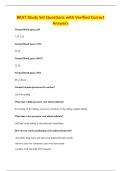
BKAT Study Set Questions with Verified Correct
Answers
Normal blood gases; pH
7.35-7.45
Normal blood gases: CO2
35-45
Normal blood gases: HcO3
22-26
Normal blood gases: PO2
80 or above
Normal vacuum pressures for suction?
120-140 mmHg
What may a high pressure vent alarm indicate?
Pt is biting on the tubing, excessive secretions in the tubing, kinked tubing
What may a low pressure vent alarm indicate?
cuff leak or the tubing is disconnected somewhere
How do you verify positioning of an endotracheal tube?
-auscultate lung bases and apices for bilateral breath sounds
-observe chest for symmetric chest wall movement
-confirm with end tidal CO2 measure
,GOLD STANDARD: chest x-ray
t/f: people with ET tubes should be suctioned routinely
FALSE-- they should be suctioned on an as needed basis
what should ET tube cuff pressure be kept at?
20-25 mmHg
What measures should nurses take to avoid ET tube problems?
-confirm that exit mark on ET tube remains constant when providing patient care,
repositioning, and transporting patient
-maintain proper cuff inflation (listen for an air leak-- if pt can talk, you must inflate more)
-continually monitor SpO2, RR, HR and rhythm, mental status, and ABGs
-pre-oxygenate before suctioning
What should be done if a patient is not tolerating ET tube suctioning?
STOP and manually hyperventilate with 100% oxygen
Measures to prevent aspiration?
-avoid bolus tube feedings
-monitor tube feeding residuals
-maintain HOB at LEAST 30 degrees or greater
-maintain proper ET tube cuff inflation
-perform frequent oral pharyngeal suctioning
-maintain an NG tube connected to low, intermittent suction if feeding tube is placed below
the pylorus
, what are recommendations for preventing ventilator associated pneumonia?
-manage ventilated patients without sedatives whenever possible
-interrupt sedation once a day (spontaneous breathing trials)
-provide early exercise and mobility
-provide regular oral care
-minimize pooling of secretions above the ET tube cuff
-use ET tubes with subglottic secretion drainage for patients likely to require greater than 72
hours of intubation
-keep HOB elevated 30-45 degress
-change ventilator circuit only if visibly soiled or malfunctioning
What is the biggest complication associated with high cervical spinal cord injuries?
BREATHING-- the diaphragm is innervated by C3-C5 levels
C4-diaphragm
will likely need mechanical ventilation mgmt
signs and symptoms of increased intracranial pressure?
-altered LOC
-headache
-bradycardia
-decreased respirations
-acute HTN with widening pulse pressure
-N/V


