
Western Governors University C 207
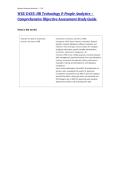
WGU D435: HR Technology & People Analytics –
Comprehensive Objective Assessment Study Guide
C
Terms in this set (41)
Describe the types of components, Components, Functions, and Users of HRIS:
functions, and users of HRIS. Components: HRIS (Human Resource Information Systems)
typically comprise databases, software, hardware, and
networks. They encompass various modules for managing
employee information, payroll, benefits administration,
recruitment, performance management, etc.
Functions: HRIS serves multiple purposes, including employee
data management, payroll processing, time and attendance
tracking, recruitment and applicant tracking, performance
evaluation, training and development, and regulatory
compliance.
Users: Various stakeholders utilize HRIS. HR professionals are
primary users, leveraging the system for personnel
management. Employees access HRIS for tasks like updating
personal information, viewing pay stubs, and requesting time
off. Managers rely on HRIS for approving leave requests,
performance reviews, and accessing team data.
, Describe the HR technology users and Users: HR technology users span across HR
professionals, owners. employees, managers, and sometimes external stakeholders
like recruiters, consultants, or IT support.
Owners: The ownership of HR technology can vary. HR
departments often have primary ownership and responsibility
for HRIS. However, IT departments may assist with technical
support, maintenance, and integration. Sometimes, larger
organizations have dedicated HRIS teams or partners
managing these systems.
What are the functions and benefits of HR Functions: HR administration applications streamline
administration applications? administrative tasks like employee onboarding,
record-
keeping, benefits management, compliance, and generating
reports.
Benefits: These applications enhance efficiency by automating
repetitive tasks, ensuring compliance with regulations,
reducing paperwork, centralizing data, facilitating faster
decision-making, and improving accuracy in HR processes.
What are the functions and benefits of Functions: Service and delivery in HR technology often focus
service and delivery? on providing support to employees, addressing their queries
or concerns regarding HR policies, benefits, or general HR-
related questions.
Benefits: Efficient service and delivery mechanisms improve
employee satisfaction, resolve issues promptly, increase
transparency in HR processes, and foster a positive employee
experience.
What are the functions and benefits of time Functions: Time management applications assist in tracking
management applications? employee attendance, working hours, leave requests, and
scheduling.
Benefits: These applications automate time-tracking, reduce
errors in payroll calculations, help in workforce planning,
ensure compliance with labor regulations, and facilitate better
resource allocation.
What are the functions and benefits of talent Functions: Talent management applications cover
recruitment, management applications? performance management, learning and development,
and
succession planning.
Benefits: They aid in attracting and retaining top talent,
identifying skill gaps, aligning employee goals with
organizational objectives, fostering a culture of continuous
learning, and planning for future leadership needs.
Describe the digital economy and potential The digital economy refers to an economy that is
primarily disruptions in HR? based on digital computing technologies, leveraging the
internet, digital platforms, and data to create and
exchange value. Potential disruptions in HR within this
economy could include the automation of routine tasks,
the use of AI in
recruitment, remote work trends, and the need for upskilling
to adapt to evolving job requirements.
WGU D435: HR Technology & People Analytics –
Comprehensive Objective Assessment Study Guide
C
Terms in this set (41)
Describe the types of components, Components, Functions, and Users of HRIS:
functions, and users of HRIS. Components: HRIS (Human Resource Information Systems)
typically comprise databases, software, hardware, and
networks. They encompass various modules for managing
employee information, payroll, benefits administration,
recruitment, performance management, etc.
Functions: HRIS serves multiple purposes, including employee
data management, payroll processing, time and attendance
tracking, recruitment and applicant tracking, performance
evaluation, training and development, and regulatory
compliance.
Users: Various stakeholders utilize HRIS. HR professionals are
primary users, leveraging the system for personnel
management. Employees access HRIS for tasks like updating
personal information, viewing pay stubs, and requesting time
off. Managers rely on HRIS for approving leave requests,
performance reviews, and accessing team data.
, Describe the HR technology users and Users: HR technology users span across HR
professionals, owners. employees, managers, and sometimes external stakeholders
like recruiters, consultants, or IT support.
Owners: The ownership of HR technology can vary. HR
departments often have primary ownership and responsibility
for HRIS. However, IT departments may assist with technical
support, maintenance, and integration. Sometimes, larger
organizations have dedicated HRIS teams or partners
managing these systems.
What are the functions and benefits of HR Functions: HR administration applications streamline
administration applications? administrative tasks like employee onboarding,
record-
keeping, benefits management, compliance, and generating
reports.
Benefits: These applications enhance efficiency by automating
repetitive tasks, ensuring compliance with regulations,
reducing paperwork, centralizing data, facilitating faster
decision-making, and improving accuracy in HR processes.
What are the functions and benefits of Functions: Service and delivery in HR technology often focus
service and delivery? on providing support to employees, addressing their queries
or concerns regarding HR policies, benefits, or general HR-
related questions.
Benefits: Efficient service and delivery mechanisms improve
employee satisfaction, resolve issues promptly, increase
transparency in HR processes, and foster a positive employee
experience.
What are the functions and benefits of time Functions: Time management applications assist in tracking
management applications? employee attendance, working hours, leave requests, and
scheduling.
Benefits: These applications automate time-tracking, reduce
errors in payroll calculations, help in workforce planning,
ensure compliance with labor regulations, and facilitate better
resource allocation.
What are the functions and benefits of talent Functions: Talent management applications cover
recruitment, management applications? performance management, learning and development,
and
succession planning.
Benefits: They aid in attracting and retaining top talent,
identifying skill gaps, aligning employee goals with
organizational objectives, fostering a culture of continuous
learning, and planning for future leadership needs.
Describe the digital economy and potential The digital economy refers to an economy that is
primarily disruptions in HR? based on digital computing technologies, leveraging the
internet, digital platforms, and data to create and
exchange value. Potential disruptions in HR within this
economy could include the automation of routine tasks,
the use of AI in
recruitment, remote work trends, and the need for upskilling
to adapt to evolving job requirements.


