

Written by students who passed Immediately available after payment Read online or as PDF Wrong document? Swap it for free 4.6 TrustPilot
logo-home
Document preview thumbnail
Preview 1 out of 3 pages
Exam (elaborations)

HESI Case Study: Healthy Newborn Questions & Answers Updated 2026/2027 – HESI Newborn Exam Review, Apgar Score, Newborn Assessment, Thermoregulation, Caput Succedaneum, Acrocyanosis, Umbilical Cord, Newborn Medications, Breastfeeding, Hypoglycemia, PKU Sc

Document preview thumbnail
Preview 1 out of 3 pages

Prepare for HESI Healthy Newborn and maternal-newborn nursing assessments with this comprehensive exam-focused study resource covering essential concepts in newborn assessment, immediate newborn care, thermoregulation, Apgar scoring, newborn safety, physical assessment, feeding, medications, screening, discharge teaching, and common newborn findings. This resource is based on the supplied HESI Case Study: Healthy Newborn content and is designed to help nursing students review high-yield newborn concepts, understand clinical scenarios, identify normal versus abnormal findings, and strengthen prioritization and nursing judgment. HESI CASE STUDY: HEALTHY NEWBORN TOPICS COVERED: • HESI Healthy Newborn questions and answers • HESI newborn case study • HESI maternal newborn nursing • Newborn assessment • Normal newborn findings • Abnormal newborn findings • Immediate newborn care • Apgar scoring • Apgar score interpretation • Acrocyanosis • Newborn heart rate • Newborn respiratory rate • Newborn muscle tone • Newborn color assessment • Newborn cry assessment • Thermoregulation • Radiant warmer • Evaporative heat loss • Radiant heat loss • Newborn temperature assessment • Axillary temperature • Newborn hypothermia • Newborn warming interventions • Caput succedaneum • Molding after vaginal delivery • Scalp swelling • Suture lines • Cephalohematoma versus caput concepts • Umbilical cord assessment • Two arteries and one vein • Umbilical cord abnormalities • Infant identification bands • Infant abduction prevention • Hospital newborn safety • Newborn physical examination • Newborn skin findings • Skin tags • Natal teeth • Oral newborn assessment • Gastrointestinal assessment • Meconium passage • Delayed first stool • Newborn bowel elimination • Gestational age assessment • Plantar creases • Newborn nipples and areola • Term newborn characteristics • Vitamin K administration • Hemorrhagic disease prevention • Erythromycin ophthalmic prophylaxis • Ophthalmia neonatorum • Gonococcal eye infection prevention • Newborn eye care • Newborn bathing • Safe newborn bathing • Temperature stability before bathing • Neonatal hypoglycemia • Blood glucose assessment • Jitteriness in newborns • Mottled skin • Newborn crying • Rooming-in • Breastfeeding • Safe sleep • Infant crib safety • Newborn positioning • Wet blankets and heat loss • Newborn diaper care • Diaper changing • Talc-based powder safety • Diaper dermatitis prevention • Moro reflex • Startle reflex • Newborn reflexes • Swaddling • Normal newborn weight loss • Breastfed newborn weight loss • Formula-fed newborn weight loss • Newborn discharge teaching • Phenylketonuria screening • PKU screening • Newborn metabolic screening • Heel-stick blood collection • Lateral heel puncture • Newborn screening specimen collection • Car seat safety • Newborn discharge preparation APGAR SCORE & IMMEDIATE NEWBORN ASSESSMENT Review the five components of the Apgar assessment and how newborn findings influence the score. The case includes a newborn who is alert and active, has a strong cry, a heart rate of 172, respiratory rate of 50, flexed extremities, pink body coloration, and blue feet. This section reinforces assessment of: • Appearance • Pulse • Grimace • Activity • Respiration • Acrocyanosis • Normal newborn vital signs • Muscle tone • Respiratory effort • Immediate newborn adaptation NEWBORN THERMOREGULATION Temperature regulation is a major focus of newborn nursing care. The supplied case covers drying the newborn, radiant warmer use, wet blankets, newborn caps, and temperature assessment. Review concepts involving: • Evaporative heat loss • Radiant heat loss • Convective heat loss • Conductive heat loss • Drying the newborn • Radiant warmer • Maintaining a neutral thermal environment • Monitoring axillary temperature • Preventing neonatal hypothermia • Rewarming interventions • Temperature stability before bathing NEWBORN HEAD ASSESSMENT The resource covers normal and abnormal head findings following vaginal birth, including molding and caput succedaneum. Review: • Molding • Caput succedaneum • Scalp edema • Swelling crossing suture lines • Effects of vaginal delivery • Parent education regarding normal newborn head findings • Differentiating normal birth-related findings from findings requiring further evaluation UMBILICAL CORD ASSESSMENT The newborn physical assessment includes evaluation of the umbilical cord and identification of the expected number of vessels. Review the significance of: • Two umbilical arteries • One umbilical vein • Abnormal cord vessel findings • Umbilical cord assessment • Reporting abnormal newborn findings NEWBORN SAFETY & INFANT ABDUCTION PREVENTION Hospital newborn safety is another major concept. The resource reviews identification bands and procedures used to maintain newborn security. Topics include: • Newborn identification bands • Matching infant and parent identification • Verification when returning the infant • Infant abduction prevention • Newborn security • Hospital infant safety • Rooming-in safety NEWBORN PHYSICAL ASSESSMENT The case study includes multiple physical assessment findings and asks the nurse to determine which findings are expected and which require additional assessment or reporting. Topics include: • Skin assessment • Head assessment • Oral assessment • Gastrointestinal assessment • Umbilical assessment • Extremity assessment • Neurologic/reflex assessment • Gestational-age characteristics • Normal versus abnormal findings NATAL TEETH & NEWBORN ORAL FINDINGS Review assessment of teeth present at birth and appropriate nursing response when unusual oral findings are identified. The material covers: • Natal teeth • Loose teeth • Oral assessment • Aspiration risk considerations • Reporting unusual newborn findings NEWBORN ELIMINATION The resource addresses the expected timing of meconium passage and the significance of delayed bowel movements. Review: • Meconium • First stool • Newborn bowel movements • Delayed meconium passage • Possible gastrointestinal obstruction • Newborn gastrointestinal assessment GESTATIONAL AGE & TERM NEWBORN CHARACTERISTICS The supplied material includes findings associated with an infant born at approximately 38 weeks' gestation. Topics include: • Plantar creases • Raised areola • Defined nipples • Term newborn characteristics • Gestational age assessment • Physical maturity findings NEWBORN MEDICATIONS Review the purpose and administration principles for common newborn prophylactic medications. VITAMIN K: • Prevention of vitamin-K-deficiency bleeding • Newborn clotting support • Vitamin K administration at birth • Newborn medication teaching ERYTHROMYCIN: • Ophthalmic prophylaxis • Ophthalmia neonatorum prevention • Newborn eye medication • Application to the conjunctival sac • Timing of prophylactic eye treatment • Prevention of serious neonatal eye infection NEWBORN BATHING & TEMPERATURE STABILITY The case emphasizes that newborn bathing should be considered when the infant's temperature is stable. Review: • Temperature assessment before bathing • Safe newborn bathing • Maintaining warmth • Post-bath temperature monitoring • Prevention of cold stress NEONATAL HYPOGLYCEMIA The case includes a newborn who develops crying, mottled skin, and shaking/jitteriness. Review the nursing response to possible neonatal hypoglycemia, including: • Jitteriness • Shaking • Mottled skin • Blood glucose assessment • Glucometer use • Early recognition of neonatal hypoglycemia • Nursing prioritization ROOMING-IN & SAFE SLEEP The resource includes an important newborn safety scenario involving a sleeping mother and infant. Review: • Rooming-in • Safe infant positioning • Crib safety • Avoiding unsafe bed-sharing • Returning the newborn to the crib • Parent safety education • Nursing intervention for an infant found beside a sleeping parent NEWBORN DIAPER & SKIN CARE The case reviews diaper changing and appropriate newborn skin care. Topics include: • Diaper changing • Parent participation in newborn care • Diaper dermatitis • Alcohol-free wipes • Avoiding irritating products • Avoiding talc-based powders • Infant respiratory safety • Inguinal skin-fold care NEWBORN REFLEXES The Moro reflex is included in the case study and is presented as a normal response to certain stimuli. Review: • Moro reflex • Startle response • Sudden movement • Loud noises • Newborn reflex assessment • Swaddling • Normal neurologic findings NORMAL NEWBORN WEIGHT LOSS The case includes a newborn whose weight decreases during the first several days after birth. Review: • Expected early newborn weight loss • Birth weight • Daily newborn weight • Breastfed newborns • Formula-fed newborns • Monitoring newborn weight • Parent education before discharge NEWBORN METABOLIC SCREENING & PKU The resource includes questions regarding phenylketonuria screening and specimen collection. Review: • PKU • Phenylalanine metabolism • Newborn metabolic screening • Early identification of metabolic disorders • Heel-stick collection • Lateral heel puncture • Newborn screening card/form • Appropriate blood specimen collection NEWBORN DISCHARGE TEACHING The final portion of the case emphasizes preparation for discharge and safe transition home. Review: • Newborn follow-up • Discharge teaching • Infant car seat safety • Newborn identification • Parent education • Follow-up appointments • Safe transportation • Newborn care at home WHO CAN BENEFIT FROM THIS RESOURCE? This HESI Healthy Newborn study resource can be useful for: • BSN nursing students • Maternal-newborn nursing students • Obstetric nursing students • Pediatric nursing students • Nursing school students • HESI exam candidates • Students reviewing newborn assessment • Students preparing for maternal-newborn exams • Students studying newborn care • Students reviewing normal newborn findings • Students preparing for case-study style questions • Students practicing nursing prioritization and clinical judgment HIGH-YIELD NEWBORN CONCEPTS INCLUDED: Apgar scoring Acrocyanosis Newborn vital signs Thermoregulation Radiant warmer Heat loss Caput succedaneum Molding Umbilical cord vessels Newborn identification Infant abduction prevention Natal teeth Meconium passage Gestational-age findings Vitamin K Erythromycin Newborn bathing Neonatal hypoglycemia Rooming-in Safe sleep Diaper care Moro reflex Newborn weight loss PKU screening Heel-stick collection Newborn discharge Car seat safety Use this resource to review newborn assessment concepts, identify priority nursing actions, reinforce normal newborn findings, and prepare for HESI-style maternal-newborn and nursing examinations. IMPORTANT NOTE: This is an independently prepared study resource based on the supplied HESI Healthy Newborn content. It is not an official HESI, Elsevier, Evolve, Nightingale College, or other institutional publication, and no affiliation or guarantee that the material will appear on a live examination is implied. Always use your school's current course materials and official study resources alongside independent preparation materials. INSTANT DOWNLOAD – ACCESS YOUR STUDY RESOURCE AND BEGIN REVIEWING ANYTIME.

Content preview

Nightingale College BSN 366


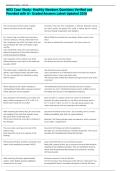
HESI Case Study: Healthy Newborn Questions Verified and
Provided with A+ Graded Answers Latest Updated 2026


The nurse places the infant under a radiant Convective heat loss from evaporation is reduced. Rationale: Drying
warmer and starts to dry him quickly. the infant quickly and placing him under a radiant warmer reduces
heat loss through evaporation and radiation.


At 1 minute of age, the infant is alert and active, Which APGAR score should the nurse assign? (Enter numeric value
and has a strong cry. He has a heart rate of 172 only.)
and a respiratory rate of 50. The infant's arms and One point is deducted for acrocyanosis. The correct score is 9
legs are flexed, the color of his body is pink,
and the
color of both feet is blue. The nurse continues a
physical assessment of the infant looking for
normal and abnormal findings.

Upon inspection of the umbilical cord, which One artery and one vein are present
finding should the nurse report to the healthcare Two arteries and one vein should be present.
provider (HCP)?


The infant's head is molded from the vaginal How should the nurse respond?
delivery. Upon seeing the baby, the parent says, Caput succedaneum is an edematous area on the head from pressure
"Oh, he is so beautiful, but something is wrong against the cervix. It may cross suture lines.
with his head." "His head has been molded from delivery through the birth canal, which
is normal."


Which response by the mother indicates an "The identification bands will be rechecked any time my baby is
understanding of infant safety measures to prevent returned to my room." Identification bands must be verified to ensure
infant abduction at the hospital? the safety and security of all hospitalized newborns.


Upon admission to the transition care nursery, the Place the infant in a radiant warmer and monitor his temperature
baby's axillary temperature is 97.4° F (36.3° C). Rationale: The baby's temperature is not within normal range, which is
Which action should the nurse take? 97.7° F to 99.5° F (36.5° C to 37.5° C). The infant should remain in the
radiant heat warmer until her temperature has stabilized.


While examining the infant's head, the nurse notes Document the finding in the record - due to molding, this is a normal
soft swelling of the scalp that extends across finding immediately post birth via vaginal delivery.
the suture lines of the fetal skull.
Which action should the nurse take in response to Rationale: This finding indicates caput succedaneum, which commonly
this finding? occurs after a vaginal birth.


The nurse notes a skin tag on the side of the Document the findings and notify the pediatrician
infant's hand. Skin tags are a common finding on a newborn assessment. They can be
What should the nurse do in response to this harmless, but the pediatrician should be informed.
finding?


Which physical finding, if present, should the nurse Loose nasal teeth that are not covered by the gums
report to the healthcare provider (HCP)? Natal teeth, present at birth, are an unusual occurrence that should be
reported to the healthcare provider. They are sometimes found in
infants with developmental abnormalities and syndromes, including
cleft lip and palate.


When examining the baby's gastrointestinal No bowel movement in the first 48 hours
system, which finding warrants additional The first meconium stool should pass within 48 hours. Obstruction may
assessment by the nurse? be suspected if there is no bowel movement in the first 48 hours.


Document information

Uploaded on
September 6, 2026
Number of pages
3
Written in
2026/2027
Type
Exam (elaborations)
Contains
Questions & answers
$15.99

Wrong document? Swap it for free Within 14 days of purchase and before downloading, you can choose a different document. You can simply spend the amount again.
Written by students who passed
Immediately available after payment
Read online or as PDF

Seller avatar
Reputation scores are based on the amount of documents a seller has sold for a fee and the reviews they have received for those documents. There are three levels: Bronze, Silver and Gold. The better the reputation, the more your can rely on the quality of the sellers work.
LectDeniz
5.0
(1)
Sold
21
Followers
16
Items
5281
Last sold
10 months ago


Why students choose Stuvia

Created by fellow students, verified by reviews

Quality you can trust: written by students who passed their tests and reviewed by others who've used these notes.

Didn't get what you expected? Choose another document

No worries! You can instantly pick a different document that better fits what you're looking for.

Pay as you like, start learning right away

No subscription, no commitments. Pay the way you're used to via credit card and download your PDF document instantly.

Student with book image

“Bought, downloaded, and aced it. It really can be that simple.”

Alisha Student

Working on your references?

Create accurate citations in APA, MLA and Harvard with our free citation generator.

Working on your references?

Frequently asked questions
