

Written by students who passed Immediately available after payment Read online or as PDF Wrong document? Swap it for free 4.6 TrustPilot
logo-home
Document preview thumbnail
Preview 1 out of 4 pages
Exam (elaborations)

HESI Perioperative Care Questions & Answers Updated 2026/2027 – HESI Perioperative Nursing Exam, Preoperative & Postoperative Care, Surgical Nursing, PACU, Anesthesia, Wound Care & Patient Safety – Instant Download

Document preview thumbnail
Preview 1 out of 4 pages

# HESI Perioperative Care Questions & Answers Updated 2026/2027 – Instant Download Prepare for **HESI Perioperative Care** with this comprehensive, exam-focused nursing study resource covering essential concepts in **preoperative, intraoperative, and postoperative nursing care**. This resource is designed for nursing students reviewing **perioperative nursing, surgical patient care, preoperative assessment, postoperative management, anesthesia, PACU care, surgical safety, wound care, pain management, mobility, transfusion therapy, IV therapy, and clinical nursing priorities**. The supplied material follows a detailed patient scenario involving a client undergoing **left hip replacement surgery**, providing question-and-answer review across the complete perioperative continuum—from preoperative assessment and surgical preparation through PACU recovery, postoperative complications, wound assessment, blood loss, transfusion, mobility, and discharge-related care. ## TOPICS COVERED ### PREOPERATIVE NURSING CARE Review important concepts related to preoperative assessment and preparation, including: * Preoperative assessment * Preoperative vital signs * Blood pressure assessment * Hypertension before surgery * Medication reconciliation * Anticoagulant therapy * Warfarin and surgery * Bleeding risk * Diuretic therapy * Preoperative laboratory testing * WBC interpretation * Infection screening * Surgical readiness * Preoperative teaching * NPO status * Aspiration prevention * Surgical consent * Informed consent * Patient education * Surgical site verification * Wrong-site surgery prevention * Universal Protocol * Surgical safety The material includes scenarios involving abnormal blood pressure and elevated WBC levels requiring nursing follow-up before surgery. ### PREOPERATIVE MEDICATION MANAGEMENT Review the nursing considerations associated with medications taken before surgery, particularly **anticoagulants such as warfarin**. Important concepts include: * Anticoagulant therapy * Warfarin * Surgical bleeding risk * Medication withholding * Preoperative medication instructions * Communication with the surgeon * Medication reconciliation * Surgical preparation * Patient teaching ### PREOPERATIVE PATIENT EDUCATION The resource covers patient teaching related to: * Deep breathing exercises * Coughing exercises * Pulmonary hygiene * Postoperative respiratory complications * Early ambulation * Bedrest complications * Pressure injuries * Thrombus formation * Constipation * Atelectasis * Mobility * Postoperative pain * Patient-controlled analgesia * PCA safety ### PAIN MANAGEMENT & PCA Review nursing care related to postoperative pain management, including: * Postoperative pain * Pain assessment * Patient-controlled analgesia * PCA pumps * PCA safety mechanisms * Opioid administration * Patient education * Fear of overdose * Therapeutic communication * Emotional support The material also includes therapeutic communication scenarios involving a client who becomes emotional while discussing pain and memories associated with a deceased family member. ### THERAPEUTIC COMMUNICATION Strengthen your review of therapeutic nursing communication through scenarios involving emotional distress. Topics include: * Active listening * Therapeutic presence * Offering self * Open-ended responses * Acknowledging feelings * Emotional support * Grief-related communication * Client-centered communication * Therapeutic nursing responses ### SURGICAL CONSENT & PATIENT RIGHTS Review important surgical safety concepts involving: * Surgical consent * Informed consent * Client understanding * Consent signatures * Nursing responsibilities * Patient rights * Surgical verification * Surgical site marking * Wrong-site surgery prevention * Wrong-procedure prevention * Wrong-patient prevention * Universal Protocol * Time-out procedures ### INTRAOPERATIVE NURSING CARE The material covers essential intraoperative nursing responsibilities, including: * Operating room nursing * OR safety * Surgical positioning * Positioning injuries * Risk for perioperative positioning injury * General anesthesia * Circulating nurse responsibilities * Surgical time-out * Procedure verification * Site verification * Patient identification * Surgical safety protocols ### SURGICAL POSITIONING Review why appropriate positioning is a major nursing priority during surgery. Topics include: * Perioperative positioning * Positioning injuries * Pressure injury prevention * Nerve injury prevention * Safe positioning * Surgical table safety * Intraoperative nursing responsibilities ### SURGICAL TIME-OUT Review the final verification process before surgery begins, including: * Correct patient * Correct procedure * Correct surgical site * Surgical time-out * Universal Protocol * Wrong-site surgery prevention * Patient safety ### POST-ANESTHESIA CARE UNIT (PACU) Review immediate postoperative nursing care following general anesthesia. Topics include: * PACU nursing care * Post-anesthesia assessment * Airway management * Level of consciousness * Respiratory assessment * Positioning after anesthesia * Side-lying position * Airway protection * Drainage of secretions * Postoperative vital signs * Recovery from anesthesia The material includes a scenario involving a client who is not responding to verbal stimuli after general anesthesia and requires appropriate positioning to maintain airway safety. ### POSTOPERATIVE ASSESSMENT Review systematic postoperative assessment, including: * Vital signs * Level of consciousness * Respiratory status * Breath sounds * Surgical dressing assessment * Drainage assessment * Incision assessment * Bowel sounds * IV therapy * Pain assessment * Mobility * Complication monitoring ### SURGICAL WOUND CARE The resource includes postoperative wound assessment and sterile dressing-change concepts. Topics include: * Surgical incision assessment * Dressing assessment * Clean, dry, intact documentation * Sanguineous drainage * Wound drainage * Incision separation * Dehiscence * Sterile technique * Surgical asepsis * Sterile gloves * Wound cleansing * Sterile dressing changes * Documentation A scenario involving a **2-cm separation at the inferior portion of a surgical incision** reinforces recognition and documentation of wound dehiscence. ### WOUND DRAINAGE & HEMOVAC CARE Review postoperative drainage management, including: * Sanguineous drainage * Surgical dressing drainage * Hemovac drains * Measuring drainage * Emptying drains * Re-establishing suction * Monitoring blood loss * Marking drainage * Inspecting linens * Reporting abnormal findings * Hemoglobin and hematocrit ### POSTOPERATIVE HEMORRHAGE & BLOOD LOSS Review nursing priorities when excessive postoperative bleeding is suspected. Topics include: * Surgical blood loss * Sanguineous drainage * Hemoglobin * Hematocrit * Blood-volume assessment * Hemorrhage monitoring * Surgical complications * Provider notification * Packed red blood cells ### BLOOD TRANSFUSION The material includes nursing care associated with **packed red blood cell transfusion**. Review: * PRBC administration * Blood bank procedures * Blood transfusion priorities * Normal saline compatibility * Blood administration tubing * IV fluid management * Transfusion rates * Transfusion safety * Blood-loss management * Hemoglobin and hematocrit * Nursing priorities ### IV FLUIDS & IV CALCULATIONS The resource also contains calculation-based nursing questions involving IV therapy. Topics include: * IV flow rates * Drops per minute * Drop factor * mL/hour * IV infusion calculations * IV antibiotic administration * Cefazolin * Infusion pumps * Lactated Ringer's solution * Normal saline * IV medication administration Example calculations include determining an IV rate using a **15 gtt/mL drop factor** and calculating an infusion rate for a medication diluted in 50 mL and administered over 30 minutes. ### POSTOPERATIVE RESPIRATORY CARE Review postoperative pulmonary complications and assessment techniques, including: * Atelectasis * Breath sounds * Respiratory assessment * Deep breathing * Coughing * Pulmonary hygiene * Early mobilization * Post-anesthesia respiratory care * Alveolar collapse * Respiratory complication prevention ### POSTOPERATIVE MOBILITY Review the importance of early mobilization following surgery. Topics include: * Early ambulation * Physical therapy * Safe transfer techniques * Mobility after hip replacement * Independence * Fall prevention * Bedrest complications * Pressure injury prevention * Thrombus prevention * Constipation prevention * Atelectasis prevention * Patient independence * Sense of control ### PSYCHOSOCIAL NURSING CARE The supplied material also addresses psychosocial responses to surgery and temporary dependence. Review: * Situational low self-esteem * Helplessness * Loss of independence * Emotional support * Patient autonomy * Mobility and independence * Therapeutic communication * Coping with surgery * Recovery-related anxiety ### HESI PERIOPERATIVE CARE EXAM PREPARATION This resource is useful for students preparing to review: **HESI Perioperative Care | HESI Surgical Nursing | HESI Preoperative Care | HESI Postoperative Care | Perioperative Nursing | Surgical Nursing | PACU Nursing | Operating Room Nursing | Anesthesia Nursing | Wound Care | Patient Safety | Blood Transfusion | IV Therapy | Postoperative Complications | Nursing Fundamentals** Use the material for targeted review of **clinical judgment, nursing priorities, patient safety, assessment, intervention, documentation, medication management, postoperative monitoring, and perioperative nursing concepts**. ## HIGH-YIELD PERIOPERATIVE NURSING CONCEPTS Key concepts represented in the material include: **Preoperative assessment → medication reconciliation → abnormal findings → surgical consent → surgical site verification → patient education → OR preparation → positioning → surgical time-out → PACU assessment → airway protection → postoperative monitoring → wound assessment → drainage monitoring → Hemovac management → blood-loss assessment → transfusion → mobility → sterile wound care → dehiscence recognition.** This makes the resource suitable for students who want to review the entire **perioperative nursing process** rather than isolated concepts. ## IDEAL FOR * Nursing students * BSN students * HESI exam preparation * Perioperative nursing students * Fundamentals of nursing students * Surgical nursing students * Medical-surgical nursing students * Nursing entrance and course examinations * Nursing school review * HESI Perioperative Care preparation * Clinical nursing review * Patient safety review * Postoperative nursing review * Preoperative nursing review * PACU review ### UPDATED 2026/2027 – INSTANT DOWNLOAD Use this **HESI Perioperative Care Questions & Answers** resource to reinforce critical nursing concepts related to surgical patient preparation, intraoperative safety, postoperative assessment, pain management, wound care, mobility, blood transfusion, IV therapy, and clinical nursing priorities. **Updated 2026/2027 | Instant Download | HESI Perioperative Care | Surgical Nursing | Preoperative & Postoperative Nursing | PACU | Nursing Exam Review** **Disclaimer:** This is an independent educational study resource based on the material supplied for this listing. It is not an official HESI, Elsevier/Evolve, Nightingale College, or testing-provider publication. It does not guarantee specific live-exam questions, scores, or results.

Content preview

Nightingale College BSN 246


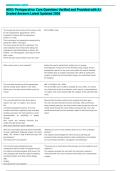
HESI: Perioperative Care Questions Verified and Provided with A+
Graded Answers Latest Updated 2026


The 63-year-old client arrives at the surgery center BP of 160/88 mmHg.
for her preoperative appointment. She is
scheduled to undergo left hip replacement
surgery in 1 week.
The nurse begins the preoperative assessment by
taking the client's vital signs.
The nurse reviews the client's medications. The
client indicates that she has been taking two
medications; hydrochlorothiazide, a diuretic, and
warfarin , an anticoagulant, every day for more
than a year.
Which vital sign requires follow-up by the nurse?


What nursing action is most important? Explain the need to withhold the warfarin prior to surgery.
Anticoagulants increase the risk for bleeding during surgery and the
postoperative period, so the nurse must explain the need to withhold
the warfarin prior to surgery and instruct the client to contact the
surgeon to determine how long before surgery the medication should
be stopped.


The nurse then reviews the client's preoperative WBC of 14,000/μL (4.0 x 10⁹/L).
lab test results drawn earlier in the week. The normal WBC count is 4,000 to 10,000/μL (4.0-10 x 109/L). An increase
Which serum lab value requires follow-up by the may indicate the onset of an infection, which may be a contraindication
nurse? to surgery. The nurse should notify the surgeon of this abnormal lab
value.


The nurse talks with the client about what to Demonstrate the deep breathing and coughing technique again.
expect the day of surgery and during The client has demonstrated incorrect technique. When performing
the deep breathing exercises, the client should inhale through the nose and
immediate postoperative period. The nurse exhale slowly through the mouth without pursing the lips. The nurse
provides instructions regarding cough and deep should demonstrate the entire procedure again for best learning by the
breathing exercises. The client performs a return client.
demonstration by breathing in deeply
through
their mouth and exhaling forcefully and
rapidly through pursed lips.
What action should the nurse implement?

When the nurse begins teaching about the benefits "Bedsores are one of many problems that can occur from prolonged
of early mobilization following surgery, the client bedrest."
states, "Oh, I know if I stay in bed very long I will This response acknowledges the client's previous learning and
get bedsores." promotes further learning related to other complications of immobility
How should the nurse respond? such as thrombus formation, constipation, and atelectasis.


The nurse discusses postoperative pain "The pump has a control device that prevents you from taking too much
management with the client and explains the use medicine."
of a patient-controlled analgesia (PCA) pump. The This response provides the client with the information needed to
client expresses fear that they might accidentally understand that she cannot overdose herself while she is sedated after
overdose herself, since they will be sleepy surgery.
after
surgery.
How should the nurse respond?


Document information

Uploaded on
September 6, 2026
Number of pages
4
Written in
2026/2027
Type
Exam (elaborations)
Contains
Questions & answers
$15.99

Wrong document? Swap it for free Within 14 days of purchase and before downloading, you can choose a different document. You can simply spend the amount again.
Written by students who passed
Immediately available after payment
Read online or as PDF

Seller avatar
Reputation scores are based on the amount of documents a seller has sold for a fee and the reviews they have received for those documents. There are three levels: Bronze, Silver and Gold. The better the reputation, the more your can rely on the quality of the sellers work.
LectDeniz
5.0
(1)
Sold
21
Followers
16
Items
5281
Last sold
10 months ago


Why students choose Stuvia

Created by fellow students, verified by reviews

Quality you can trust: written by students who passed their tests and reviewed by others who've used these notes.

Didn't get what you expected? Choose another document

No worries! You can instantly pick a different document that better fits what you're looking for.

Pay as you like, start learning right away

No subscription, no commitments. Pay the way you're used to via credit card and download your PDF document instantly.

Student with book image

“Bought, downloaded, and aced it. It really can be that simple.”

Alisha Student

Working on your references?

Create accurate citations in APA, MLA and Harvard with our free citation generator.

Working on your references?

Frequently asked questions
