

Written by students who passed Immediately available after payment Read online or as PDF Wrong document? Swap it for free 4.6 TrustPilot
logo-home
Document preview thumbnail
Preview 1 out of 2 pages
Exam (elaborations)

HESI A2 Anatomy Main Questions & Answers Updated 2026/2027 – HESI A2 Anatomy Study Guide, BIO 201 Human Anatomy & Physiology Exam Review – Instant Download

Document preview thumbnail
Preview 1 out of 2 pages

Prepare for the HESI A2 Anatomy section with this comprehensive exam-focused study resource covering essential human anatomy, physiology, body systems, anatomical structures, cellular biology, tissues, cardiovascular anatomy, respiratory anatomy, digestive anatomy, urinary anatomy, reproductive anatomy, integumentary system, nervous system, endocrine system, and immune system concepts. This HESI A2 Anatomy study material is organized around important questions and answer-focused concepts designed to help students review high-yield Anatomy & Physiology material efficiently. The resource covers important concepts including biopsy procedures, urinary and reproductive anatomy, digestive processes, nutrition, heart anatomy, skin structures, cellular transport, eye anatomy, renal physiology, pituitary function, blood vessels, skeletal anatomy, DNA, respiratory anatomy, menstrual cycle, nutrient absorption, cerumen, epidermal cells, sprains, stomach protection, anaerobic respiration, respiratory structures, bone anatomy, apocrine glands, sympathetic nervous system effects, wrist anatomy, epidermal layers, phagocytosis, and thrombocyte function. KEY TOPICS INCLUDED: ANATOMICAL STRUCTURES & TERMINOLOGY • Human anatomical terminology • Body structures • Organ systems • Anatomical locations • Superior and inferior • Anterior and posterior • Medial and lateral • Proximal and distal • Body cavities • Anatomical position • Major organs and tissues CELLULAR BIOLOGY • Cell membrane • Cell transport • Cellular structures • DNA • Genetic code • Macromolecules • Cell specialization • Cellular function • Lysosomes • Cellular homeostasis SKELETAL SYSTEM • Femur • Ulna • Radius • Vomer • Calcaneus • Carpals • Skull • Long bones • Bone anatomy • Ligaments • Sprains • Skeletal structures • Joint anatomy MUSCULAR SYSTEM • Muscle anatomy • Muscle contraction • Smooth muscle • Skeletal muscle • Cardiac muscle • Sympathetic stimulation • Cardiac output • Muscle physiology INTEGUMENTARY SYSTEM • Skin anatomy • Epidermis • Keratinocytes • Stratum lucidum • Thick skin • Arrector pili muscles • Goose bumps • Ceruminous glands • Cerumen • Apocrine glands • Sweat glands • Skin pigmentation • Skin structures • Skin protection CARDIOVASCULAR SYSTEM • Heart anatomy • Left ventricle • Heart wall thickness • Blood vessels • Brachial vein • Coronary circulation • Thrombocytes • Platelets • Blood clotting • Cardiac output • Sympathetic nervous system • Cardiovascular physiology RESPIRATORY SYSTEM • Upper respiratory tract • Pharynx • Bronchioles • Lungs • Terminal bronchioles • Respiratory structures • Gas exchange • Respiratory anatomy • Anaerobic respiration • Lactic acid DIGESTIVE SYSTEM • Oral cavity • Digestion • Stomach • Hydrochloric acid • Digestive enzymes • Gastric mucus • Pepsin • Nutrient absorption • Small intestine • Digestive physiology URINARY SYSTEM • Urinary system • Kidneys • Nephrons • Collecting tubules • Antidiuretic hormone • ADH • Water reabsorption • Urinary filtrate • Urethra • Urinary physiology REPRODUCTIVE SYSTEM • Male reproductive system • Female reproductive system • Ovaries • Urethra • Menstrual cycle • 28-day menstrual cycle • Reproductive anatomy • Reproductive physiology NERVOUS SYSTEM • Nervous system • Sympathetic nervous system • Autonomic regulation • Pituitary gland • Pituitary tumors • Nervous system effects • Hormonal regulation • Brain anatomy ENDOCRINE SYSTEM • Pituitary gland • Antidiuretic hormone • ADH • Hormones • Endocrine regulation • Growth regulation • Homeostasis • Hormonal control EYE & SPECIAL SENSES • Eye anatomy • Cone cells • Color vision • Retina • Visual receptors • Sensory physiology IMMUNE SYSTEM & BLOOD • White blood cells • Phagocytosis • Lysosomes • Thrombocytes • Platelets • Blood clotting • Immune defense • Cellular defense HIGH-YIELD CONCEPTS INCLUDED: • A biopsy involves removing a small tissue sample for examination, commonly under a microscope. • In males, the urethra participates in both the urinary and reproductive systems. • Digestion begins in the oral cavity. • Large amounts of carotenoid-rich foods can contribute to yellow-orange skin coloration. • The left ventricle has the thickest wall because it pumps blood through the systemic circulation. • Arrector pili muscle contraction contributes to goosebumps. • The cell membrane regulates movement of substances into and out of the cell. • Cone photoreceptors are responsible for color vision. • ADH increases water reabsorption in the kidney collecting ducts. • Pituitary abnormalities can affect endocrine regulation and produce neurological or visual symptoms. • The antecubital region contains important veins used for blood collection. • The vomer contributes to the nasal septum. • DNA carries genetic information. • Bronchioles are conducting airways within the lungs. • The average menstrual cycle is commonly described as approximately 28 days. • The small intestine is the major site of nutrient absorption. • Excess cerumen may accumulate in the external auditory canal. • Keratinocytes are the predominant cells of the epidermis. • A sprain involves injury to a ligament. • Gastric mucus helps protect the stomach lining from acid and digestive enzymes. • Ceruminous glands produce earwax, or cerumen. • Anaerobic metabolism can result in increased lactic acid production. • The pharynx is part of the upper respiratory tract. • The calcaneus is located in the foot and forms the heel. • Apocrine glands are associated with body odor and become active particularly after puberty. • Sympathetic stimulation can increase cardiac output. • The radius and ulna are forearm bones that articulate with the wrist. • The stratum lucidum is found in thick skin. • Lysosomes contain enzymes involved in intracellular digestion and cellular cleanup. • Thrombocytes, or platelets, play a major role in blood clotting. WHO CAN BENEFIT FROM THIS RESOURCE? This resource is suitable for: • HESI A2 students • Nursing school applicants • Pre-nursing students • Nursing entrance exam candidates • Healthcare program applicants • Allied health students • BIO 201 students • Human Anatomy & Physiology students • Students reviewing anatomy before the HESI • Students preparing for Anatomy & Physiology assessments • Students seeking high-yield A&P review • Students who want a convenient digital study resource WHY USE THIS HESI A2 ANATOMY RESOURCE? Anatomy & Physiology requires students to remember a large number of structures, functions, locations, processes, and relationships between body systems. This resource brings many of these concepts together in a focused question-and-answer format, making it useful for targeted review and reinforcement. Review major organs, anatomical terminology, tissues, cellular structures, body systems, physiology, skeletal anatomy, cardiovascular anatomy, respiratory anatomy, digestive processes, urinary physiology, reproductive anatomy, nervous system functions, endocrine regulation, and integumentary structures. Use this resource as a supplemental study tool together with your course materials, textbooks, instructor resources, and other legitimate HESI preparation resources. UPDATED 2026/2027 • HESI A2 ANATOMY • BIO 201 • HUMAN ANATOMY & PHYSIOLOGY • EXAM REVIEW • STUDY GUIDE • QUESTIONS & ANSWERS • INSTANT DOWNLOAD Educational disclaimer: This resource is intended for educational study and exam preparation. It is not an official HESI/Evolve product and is not represented as a guaranteed reproduction of any live examination.

Content preview

Grand Canyon University BIO 201


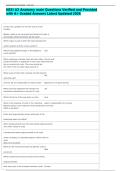
HESI A2 Anatomy main Questions Verified and Provided
with A+ Graded Answers Latest Updated 2026


A man has a growth on his skin and a small
sample


Biopsy needs to be removed and observed under a
microscope. What procedure will be used?

Which organ is part of both the male reproductive


urethra system and the urinary system?

Where does digestion begin in the digestive oral
cavity system?


When assessing a female client who describes Carrots and
squash herself as a vegetarian in the nurse notes that she
has an unusual skin color. The nurse should ask
the client if she has eaten large amount of:


What cavity of the heart normally has the thickest
left
ventricle wall?

Arrector pili are responsible for which action Appearance of goose bumps


What structure regulates the transport of cell
membrane substances in and out of a cell


Which structure of the eye picks up color cone


What is the response of cells in the collecting water is reabsorbed from urinary
filtrate tubules in the nephrons when antidiuretic hormone
(ADH) is secreted?


Client has large pituitary tumor what part of the


Head body does this effect?

When drawing blood from the antecubital region,brachial
vein which vessel is used


A professional boxer gets punched in the nose


vomer resulting in a deviated septum. Which bone is
most
likely to be involved

What are the macromolecules the genetic code is
DNA
carried on

Which anatomical structure houses the terminal


lung bronchioles

How many days is the average menstrual cycle? 28 days

Document information

Uploaded on
September 5, 2026
Number of pages
2
Written in
2026/2027
Type
Exam (elaborations)
Contains
Questions & answers
$15.99

Wrong document? Swap it for free Within 14 days of purchase and before downloading, you can choose a different document. You can simply spend the amount again.
Written by students who passed
Immediately available after payment
Read online or as PDF

Seller avatar
Reputation scores are based on the amount of documents a seller has sold for a fee and the reviews they have received for those documents. There are three levels: Bronze, Silver and Gold. The better the reputation, the more your can rely on the quality of the sellers work.
LectDeniz
5.0
(1)
Sold
21
Followers
16
Items
5281
Last sold
10 months ago


Why students choose Stuvia

Created by fellow students, verified by reviews

Quality you can trust: written by students who passed their tests and reviewed by others who've used these notes.

Didn't get what you expected? Choose another document

No worries! You can instantly pick a different document that better fits what you're looking for.

Pay as you like, start learning right away

No subscription, no commitments. Pay the way you're used to via credit card and download your PDF document instantly.

Student with book image

“Bought, downloaded, and aced it. It really can be that simple.”

Alisha Student

Working on your references?

Create accurate citations in APA, MLA and Harvard with our free citation generator.

Working on your references?

Frequently asked questions

