

Page 1 of 175
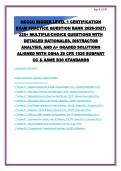
NCCCO RIGGER LEVEL 1 CERTIFICATION
DETAILED RATIONALES, DISTRACTOR
ANALYSIS, AND A+ GRADED SOLUTIONS
ALIGNED WITH OSHA 29 CFR 1926 SUBPART
# TABLE OF CONTENTS
| Section | Topic Area | Questions | Domain Weight* |
|---------|-----------|-----------|----------------|
| **Section 1** | Rigging Fundamentals & Rigger Responsibilities | 1-25 | Technical Knowledge (13%) |
| **Section 2** | Sling Types, Materials, and Applications | 26-50 | Technical Knowledge (13%) |
| **Section 3** | Rigging Hardware & Below-the-Hook Devices | 51-75 | Technical Knowledge (13%) |
| **Section 4** | Sling Angles, Hitches, and Tension Calculations | 76-100 | Execution (42%) |
| **Section 5** | Load Weight Estimation & Center of Gravity | 101-125 | Scope (15%) / Execution (42%) |
| **Section 6** | Inspection Criteria & Removal-from-Service | 126-155 | Inspection (30%) |
| **Section 7** | OSHA & ASME Standards and Regulations | 156-175 | Technical Knowledge (13%) |
| **Section 8** | Communication, Signals, and Lift Planning | 176-195 | Scope (15%) / Execution (42%) |
| **Section 9** | Hazard Identification & Safe Practices | 196-215 | Scope (15%) |
| **Section 10** | Comprehensive Scenario-Based Questions | 216-225 | All Domains |
, Page 2 of 175
# SECTION 1: RIGGING FUNDAMENTALS & RIGGER RESPONSIBILITIES
## Questions 1-25
### Question 1
What is the PRIMARY responsibility of a Level I Rigger?
A) To operate the crane during lifting operations
B) To supervise all crane lifts on the worksite
C) To perform basic rigging tasks under the direction of a qualified person
D) To engineer and design lift plans for complex loads
**Correct Answer: C**
**Rationale:** A Rigger Level I is qualified to perform basic rigging tasks under the
supervision of a qualified person. The Level I rigger is not authorized to operate cranes,
supervise lifts, or engineer lift plans—these are responsibilities of crane operators, supervisors,
or advanced riggers.
**Distractor Analysis:**
- **A:** Operating the crane is the responsibility of a certified crane operator, not a rigger.
- **B:** Supervising lifts is typically the role of a lift supervisor or qualified person, not a Level
I rigger.
- **D:** Engineering lift plans for complex loads exceeds the scope of a Level I Rigger and is
reserved for more advanced personnel.
---
, Page 3 of 175
### Question 2
Which of the following is NOT a basic responsibility of a Rigger Level I?
A) Inspect rigging hardware before use
B) Identify rigging hazards in the work area
C) Determine the center of gravity for complex, off-center loads
D) Select appropriate slings for a routine lift
**Correct Answer: C**
**Rationale:** Determining the center of gravity for complex, off-center loads exceeds the
scope of a Rigger Level I and is a responsibility reserved for more advanced riggers or engineers.
Level I riggers perform basic rigging tasks and inspections under supervision.
**Distractor Analysis:**
- **A:** Inspecting rigging hardware is a fundamental responsibility of all riggers.
- **B:** Identifying rigging hazards is a basic safety responsibility of a Level I Rigger.
- **D:** Selecting appropriate slings for routine lifts is within the Level I scope.
---
### Question 3
According to OSHA 29 CFR 1926 Subpart CC, when is a qualified rigger REQUIRED?
A) Only during crane assembly and disassembly
B) During assembly, disassembly, and any time a worker is in the fall zone hooking or
unhooking a load
, Page 4 of 175
C) Only when lifting loads over 10,000 pounds
D) Only when working at heights above 15 feet
**Correct Answer: B**
**Rationale:** OSHA Subpart CC (1926.1404) requires a qualified rigger for assembly,
disassembly, and any time workers are in the fall zone hooking or unhooking a load. This is a
critical safety requirement.
**Distractor Analysis:**
- **A:** This is partially correct but incomplete—riggers are also required when workers are in
the fall zone.
- **C:** OSHA does not specify a weight threshold for requiring a qualified rigger.
- **D:** Height alone does not determine the requirement for a qualified rigger.
---
### Question 4
What is the maximum penalty OSHA can issue for a willful or repeated violation in 2026?
A) $16,131
B) $50,000
C) $161,323
D) $250,000
**Correct Answer: C**
NCCCO RIGGER LEVEL 1 CERTIFICATION
DETAILED RATIONALES, DISTRACTOR
ANALYSIS, AND A+ GRADED SOLUTIONS
ALIGNED WITH OSHA 29 CFR 1926 SUBPART
# TABLE OF CONTENTS
| Section | Topic Area | Questions | Domain Weight* |
|---------|-----------|-----------|----------------|
| **Section 1** | Rigging Fundamentals & Rigger Responsibilities | 1-25 | Technical Knowledge (13%) |
| **Section 2** | Sling Types, Materials, and Applications | 26-50 | Technical Knowledge (13%) |
| **Section 3** | Rigging Hardware & Below-the-Hook Devices | 51-75 | Technical Knowledge (13%) |
| **Section 4** | Sling Angles, Hitches, and Tension Calculations | 76-100 | Execution (42%) |
| **Section 5** | Load Weight Estimation & Center of Gravity | 101-125 | Scope (15%) / Execution (42%) |
| **Section 6** | Inspection Criteria & Removal-from-Service | 126-155 | Inspection (30%) |
| **Section 7** | OSHA & ASME Standards and Regulations | 156-175 | Technical Knowledge (13%) |
| **Section 8** | Communication, Signals, and Lift Planning | 176-195 | Scope (15%) / Execution (42%) |
| **Section 9** | Hazard Identification & Safe Practices | 196-215 | Scope (15%) |
| **Section 10** | Comprehensive Scenario-Based Questions | 216-225 | All Domains |
, Page 2 of 175
# SECTION 1: RIGGING FUNDAMENTALS & RIGGER RESPONSIBILITIES
## Questions 1-25
### Question 1
What is the PRIMARY responsibility of a Level I Rigger?
A) To operate the crane during lifting operations
B) To supervise all crane lifts on the worksite
C) To perform basic rigging tasks under the direction of a qualified person
D) To engineer and design lift plans for complex loads
**Correct Answer: C**
**Rationale:** A Rigger Level I is qualified to perform basic rigging tasks under the
supervision of a qualified person. The Level I rigger is not authorized to operate cranes,
supervise lifts, or engineer lift plans—these are responsibilities of crane operators, supervisors,
or advanced riggers.
**Distractor Analysis:**
- **A:** Operating the crane is the responsibility of a certified crane operator, not a rigger.
- **B:** Supervising lifts is typically the role of a lift supervisor or qualified person, not a Level
I rigger.
- **D:** Engineering lift plans for complex loads exceeds the scope of a Level I Rigger and is
reserved for more advanced personnel.
---
, Page 3 of 175
### Question 2
Which of the following is NOT a basic responsibility of a Rigger Level I?
A) Inspect rigging hardware before use
B) Identify rigging hazards in the work area
C) Determine the center of gravity for complex, off-center loads
D) Select appropriate slings for a routine lift
**Correct Answer: C**
**Rationale:** Determining the center of gravity for complex, off-center loads exceeds the
scope of a Rigger Level I and is a responsibility reserved for more advanced riggers or engineers.
Level I riggers perform basic rigging tasks and inspections under supervision.
**Distractor Analysis:**
- **A:** Inspecting rigging hardware is a fundamental responsibility of all riggers.
- **B:** Identifying rigging hazards is a basic safety responsibility of a Level I Rigger.
- **D:** Selecting appropriate slings for routine lifts is within the Level I scope.
---
### Question 3
According to OSHA 29 CFR 1926 Subpart CC, when is a qualified rigger REQUIRED?
A) Only during crane assembly and disassembly
B) During assembly, disassembly, and any time a worker is in the fall zone hooking or
unhooking a load
, Page 4 of 175
C) Only when lifting loads over 10,000 pounds
D) Only when working at heights above 15 feet
**Correct Answer: B**
**Rationale:** OSHA Subpart CC (1926.1404) requires a qualified rigger for assembly,
disassembly, and any time workers are in the fall zone hooking or unhooking a load. This is a
critical safety requirement.
**Distractor Analysis:**
- **A:** This is partially correct but incomplete—riggers are also required when workers are in
the fall zone.
- **C:** OSHA does not specify a weight threshold for requiring a qualified rigger.
- **D:** Height alone does not determine the requirement for a qualified rigger.
---
### Question 4
What is the maximum penalty OSHA can issue for a willful or repeated violation in 2026?
A) $16,131
B) $50,000
C) $161,323
D) $250,000
**Correct Answer: C**


