
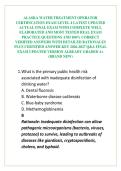
ALASKA WATER TREATMENT OPERATOR
CERTIFICATION EXAM LEVEL 4 LATEST UPDATED
ACTUAL FINAL EXAM WITH COMPLETE WELL
ELABORATED AND MOST TESTED REAL EXAM
PRACTICE QUESTIONS AND 100% CORRECT
VERIFIED ANSWERS WITH DETAILED RATIONALES
PLUS CERTIFIED ANSWER KEY 2026-2027 Q&A FINAL
EXAM UPDATED VERSION ALREADY GRADED A+
(BRAND NEW)
1. What is the primary public health risk
associated with inadequate disinfection of
drinking water?
A. Dental fluorosis
B. Waterborne disease outbreaks
C. Blue-baby syndrome
D. Methemoglobinemia
B
Rationale: Inadequate disinfection can allow
pathogenic microorganisms (bacteria, viruses,
protozoa) to survive, leading to outbreaks of
diseases like giardiasis, cryptosporidiosis,
cholera, and typhoid.
,2. Which of the following waterborne pathogens is
most resistant to chemical disinfection?
A. Escherichia coli (E. coli)
B. Giardia lamblia
C. Cryptosporidium parvum
D. Legionella pneumophila
C
Rationale: Cryptosporidium oocysts have a
thick outer shell making them highly resistant
to traditional chemical disinfectants like
chlorine. They are primarily removed through
physical processes like filtration.
3. The primary purpose of coagulation in water
treatment is to:
A. Kill pathogenic bacteria
B. Oxidize iron and manganese
C. Neutralize the electrical charge of particles
D. Increase the pH of the water
C
Rationale: Coagulation destabilizes the
negative charges on suspended particles,
, allowing them to come together. This is the
first step in forming larger, settleable floc.
4. After coagulation, what is the next step in
conventional water treatment?
A. Filtration
B. Disinfection
C. Sedimentation
D. Flocculation
D
Rationale: Flocculation is the gentle mixing
phase that encourages destabilized particles to
collide and form larger, heavier floc particles
that can then be settled out.
5. What is the primary operational control for
optimizing the sedimentation process?
A. Filter backwash rate
B. Coagulant dose and pH
C. Chlorine residual
D. Fluoride concentration
B
Rationale: Effective sedimentation relies on
, well-formed, heavy floc. The coagulant dose
and pH directly control the floc formation
process (coagulation/flocculation), which
determines how well particles will settle.
6. A rapid sand filter operates most effectively
when it:
A. Is backwashed on a strict, fixed schedule
regardless of headloss
B. Has been in service for a short time after
backwashing
C. Is approaching terminal headloss
D. Has developed a slight "schmutzdecke" or
has a ripened filter bed
D
Rationale: A "ripened" filter bed, one that has
been in service for a short time after a
backwash, actually filters more effectively. The
initial accumulation of particles improves the
filter's ability to trap smaller particles.
7. The most common cause of "mudball"
formation in a filter is:
CERTIFICATION EXAM LEVEL 4 LATEST UPDATED
ACTUAL FINAL EXAM WITH COMPLETE WELL
ELABORATED AND MOST TESTED REAL EXAM
PRACTICE QUESTIONS AND 100% CORRECT
VERIFIED ANSWERS WITH DETAILED RATIONALES
PLUS CERTIFIED ANSWER KEY 2026-2027 Q&A FINAL
EXAM UPDATED VERSION ALREADY GRADED A+
(BRAND NEW)
1. What is the primary public health risk
associated with inadequate disinfection of
drinking water?
A. Dental fluorosis
B. Waterborne disease outbreaks
C. Blue-baby syndrome
D. Methemoglobinemia
B
Rationale: Inadequate disinfection can allow
pathogenic microorganisms (bacteria, viruses,
protozoa) to survive, leading to outbreaks of
diseases like giardiasis, cryptosporidiosis,
cholera, and typhoid.
,2. Which of the following waterborne pathogens is
most resistant to chemical disinfection?
A. Escherichia coli (E. coli)
B. Giardia lamblia
C. Cryptosporidium parvum
D. Legionella pneumophila
C
Rationale: Cryptosporidium oocysts have a
thick outer shell making them highly resistant
to traditional chemical disinfectants like
chlorine. They are primarily removed through
physical processes like filtration.
3. The primary purpose of coagulation in water
treatment is to:
A. Kill pathogenic bacteria
B. Oxidize iron and manganese
C. Neutralize the electrical charge of particles
D. Increase the pH of the water
C
Rationale: Coagulation destabilizes the
negative charges on suspended particles,
, allowing them to come together. This is the
first step in forming larger, settleable floc.
4. After coagulation, what is the next step in
conventional water treatment?
A. Filtration
B. Disinfection
C. Sedimentation
D. Flocculation
D
Rationale: Flocculation is the gentle mixing
phase that encourages destabilized particles to
collide and form larger, heavier floc particles
that can then be settled out.
5. What is the primary operational control for
optimizing the sedimentation process?
A. Filter backwash rate
B. Coagulant dose and pH
C. Chlorine residual
D. Fluoride concentration
B
Rationale: Effective sedimentation relies on
, well-formed, heavy floc. The coagulant dose
and pH directly control the floc formation
process (coagulation/flocculation), which
determines how well particles will settle.
6. A rapid sand filter operates most effectively
when it:
A. Is backwashed on a strict, fixed schedule
regardless of headloss
B. Has been in service for a short time after
backwashing
C. Is approaching terminal headloss
D. Has developed a slight "schmutzdecke" or
has a ripened filter bed
D
Rationale: A "ripened" filter bed, one that has
been in service for a short time after a
backwash, actually filters more effectively. The
initial accumulation of particles improves the
filter's ability to trap smaller particles.
7. The most common cause of "mudball"
formation in a filter is:


